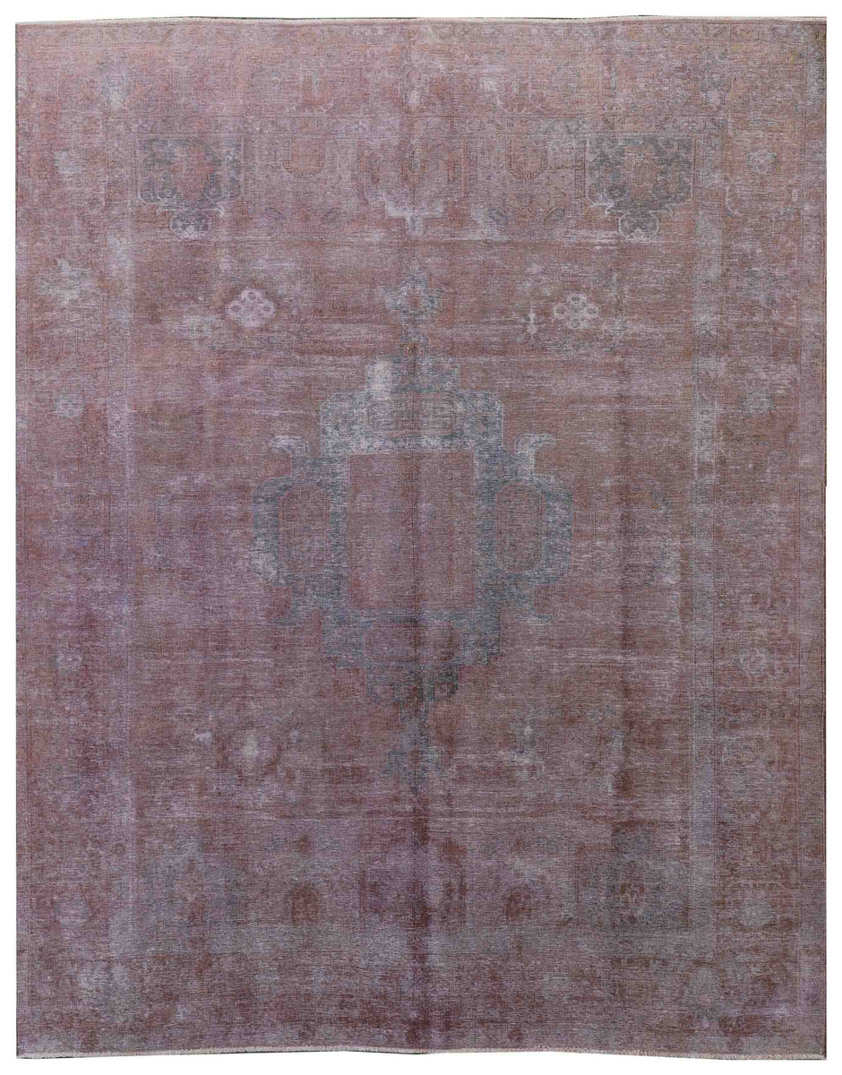
Mauve spreads softly across this rug, with grey traces of floral ornament visible through the colour. A faint medallion provides a central focus, although its edges merge gently into the surrounding field. Towards the perimeter, small flowers and scrolling details gather into a quieter tonal frame. Changes between pale rose, grey and muted lilac give the surface a layered appearance. At 378 × 277 cm, this rug can establish a substantial area of colour beneath a large seating arrangement. Its subdued drawing would work especially well with furniture that has a strong silhouette, allowing the floor to remain interesting without adding crisp pattern at every point.
Cream upholstery would lighten the mauve, while walnut could give it a warmer setting. Persian medallion layouts have a long decorative history, with a central device organising flowers, foliage and surrounding borders. Classical weaving developed elaborate versions of that arrangement, and later rugs continued to adapt it. In this vintage overdyed example, the composition is encountered through small tonal changes rather than sharply separated colours.
The medallion becomes more apparent when the rug is viewed as a whole; closer inspection brings out the smaller interruptions around it. That shift is part of its appeal. Soft grey textiles would connect with the outlines, while a little warm pink elsewhere could pick up the field. Plain curtains and uncluttered furniture groupings would leave the rug's quieter variations easier to appreciate across the broad surface.