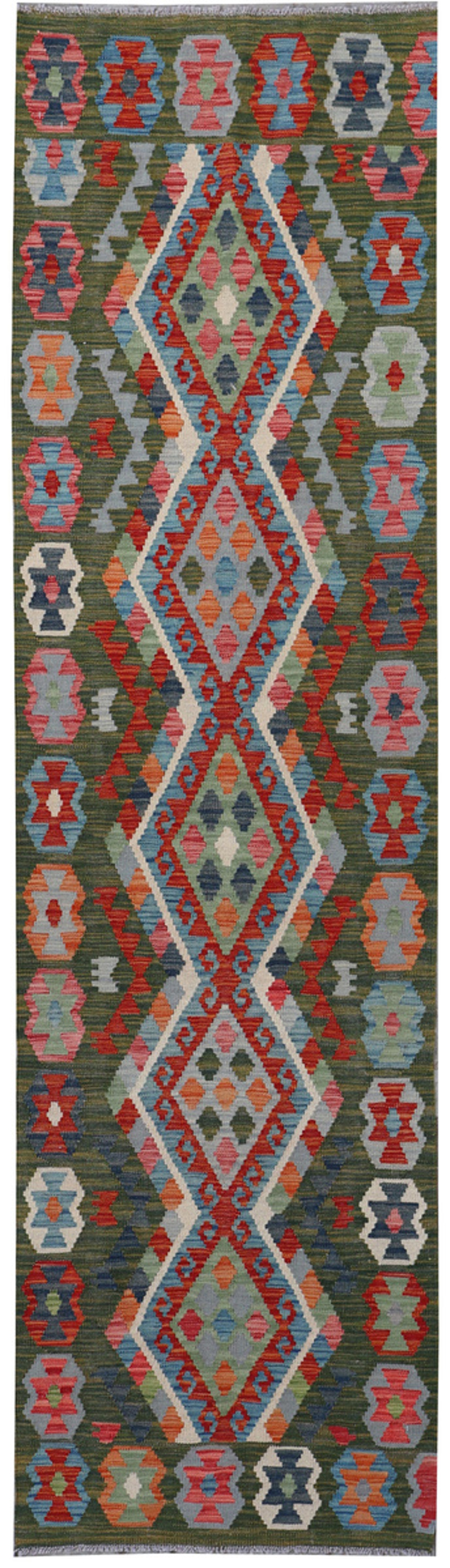
Four layered diamonds run down the olive ground of this Afghan kilim runner. Red, blue, cream and muted green bands enclose changing clusters of smaller figures. Pale pointed outlines separate the central sequence from the side areas, where colourful roundels form long rows. Each centre has a slightly different internal balance, while their repeated broad shape gives the length a clear organising line. The olive field remains visible between the larger and smaller motifs. Fine horizontal changes add depth to the green, and brighter red accents appear both inside the diamonds and within the border units.
The end rows bring the roundel sequence across the width, completing a continuous frame around the four principal forms. The kilim tradition creates pattern within a flatwoven textile, using coloured wefts interlaced with supporting warp threads. Its surface has no knotted pile. A long format makes repeated geometry particularly effective: shared outlines can establish direction while their contents change along the cloth.
This runner demonstrates that principle through its four medallions and the smaller enclosing units that accompany them down both sides. In a hallway, the olive could connect with timber furniture and cream-painted walls. Red or blue accessories would draw out selected details without requiring another strong pattern. Keeping a clear margin along the sides would show the roundel rows, while an unobstructed central line would preserve the progression of all four diamonds.