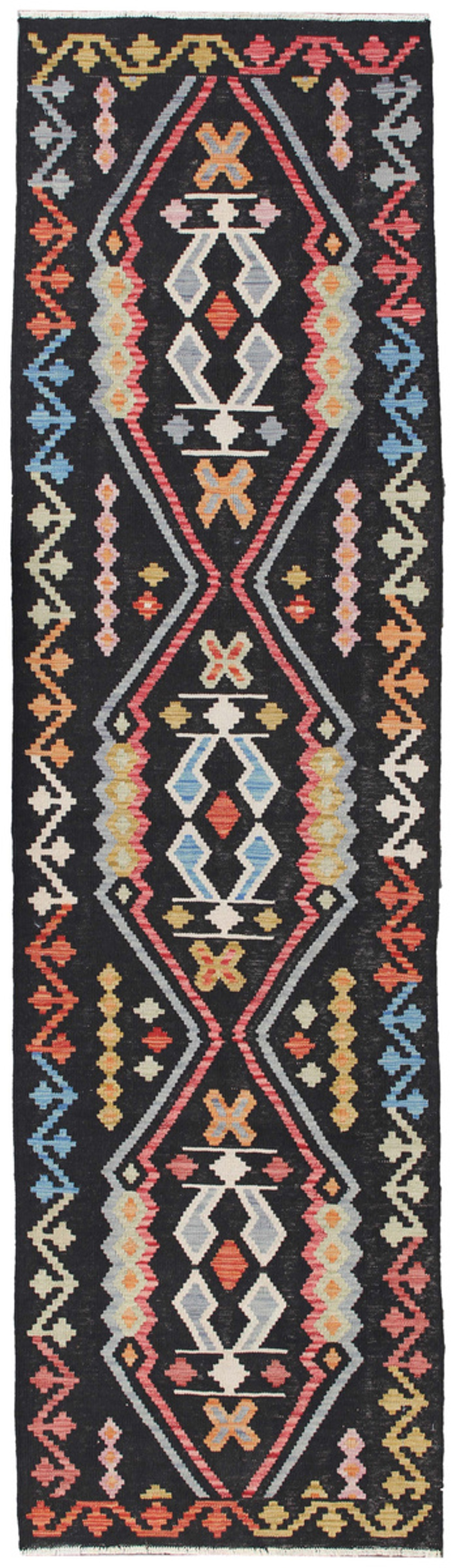
Linked pale diamond outlines create a clear route along the black field of this Afghan kilim runner. Inside them, angular emblems and small contrasting centres repeat in a measured sequence. Pink, soft blue and ochre add colour to the cream drawing. Along the sides, zigzag lines and little lozenges introduce a lighter, more varied rhythm around the central chain. The dark background makes the individual shapes easy to recognise. Open black spaces separate the principal motifs, so the runner remains legible despite its narrow proportions. Small changes of colour prevent the repeated outlines from looking identical.
The end bands continue the angular linework, giving the composition a firm finish. The overall effect is graphic, with detail concentrated in a limited number of clearly drawn forms. Flatwoven kilims are made by interlacing coloured wefts with warp threads. Their design forms within the textile structure rather than through a raised knotted pile. Angular motifs and stepped lines are particularly compatible with this method. In an Afghan runner, repeating units can be linked along the length, adapting the broader geometric language of flatweaving to a more directional furnishing.
This runner would provide definition against pale timber or stone in a hallway. Cream woodwork could echo the outlines, while a small coloured accessory would pick up one of the quieter accents. It could also sit beside a bed in a room with plain fabrics. A clear margin of flooring would preserve the side zigzags and allow the central chain to guide the eye through the space.