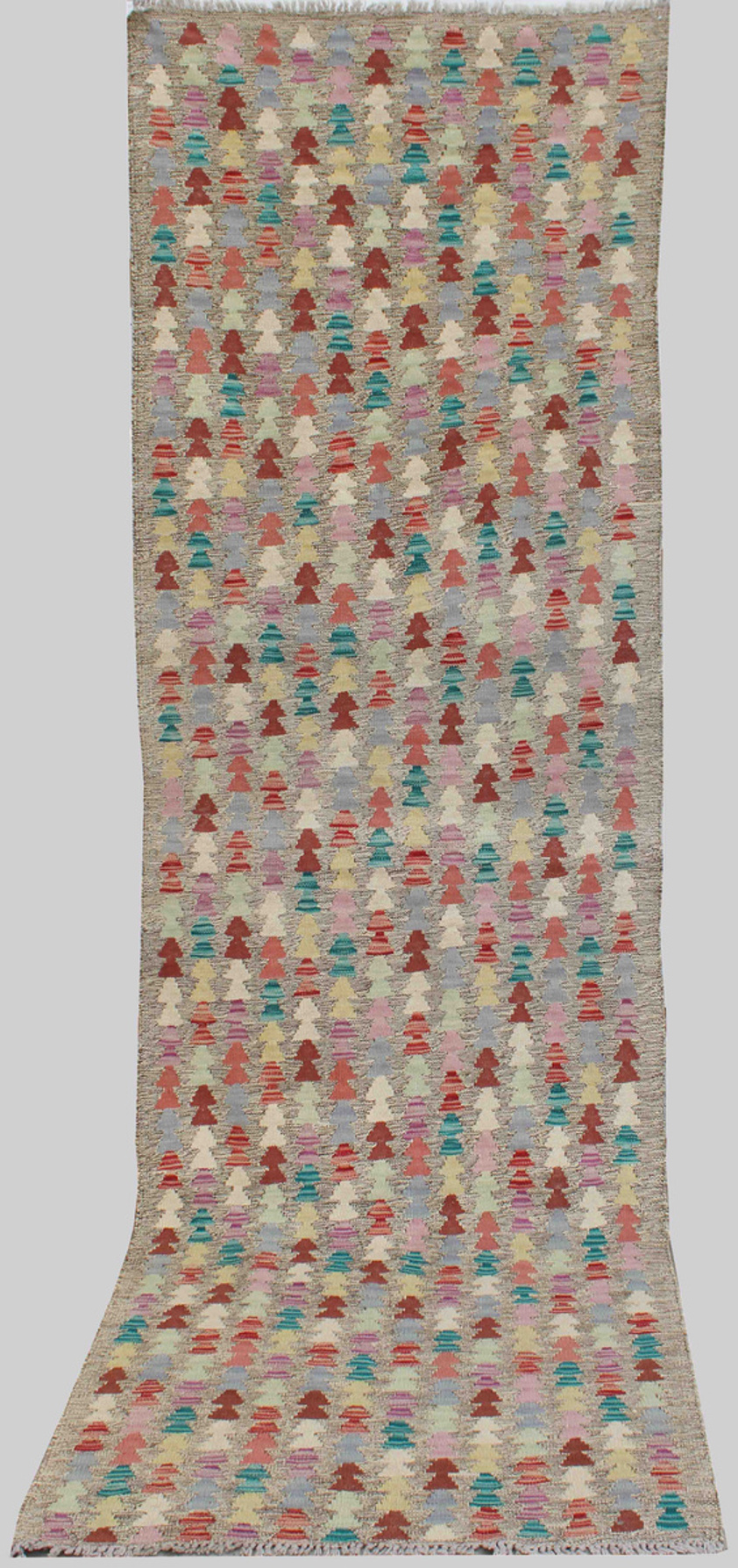
Small tree-like forms repeat through the long pale field of this rug. Their stacked triangular outlines vary between coral, turquoise, ochre, cream and darker brown, with little horizontal marks introducing finer detail inside selected shapes. The rows are closely arranged, but changes of colour stop them from becoming a uniform grid. A quieter pale margin contains the repeat at the sides. The small scale is important to its character. From a distance, the coloured forms gather into a light, evenly patterned strip; nearby, their individual tiers and tiny divisions become easier to follow.
Some figures are pale and almost merge with the ground, while their darker neighbours provide short points of emphasis. Leaving a clear section beside the furniture would preserve both the lengthwise movement and these much finer changes within the rows. Afghan kilims belong to a longstanding regional tradition of flatwoven textiles for domestic use. Repeated geometric motifs can be organised into bands, columns or closely spread fields, with internal detail and colour creating variations among related forms.
This rug gives a simple triangular subject many different accents within an elongated setting. The 295 × 93 cm proportions would give the pattern a clear direction in a passage or beside a bed. Plain surroundings would allow the little coloured silhouettes to remain distinct. A turquoise or warm coral accessory could refer to one part of the palette, while natural timber would connect with the ochre and brown notes.