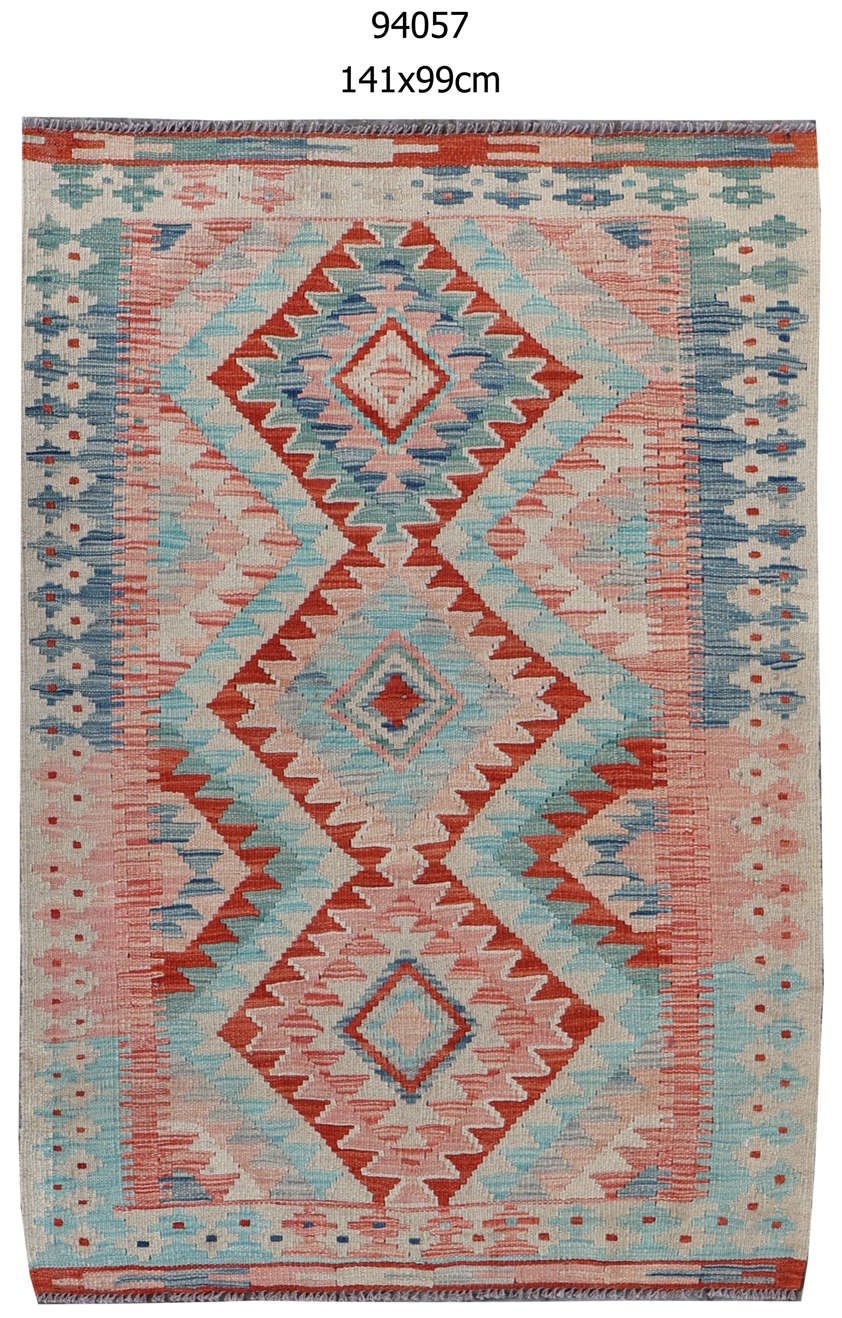
Three red diamond outlines run through the middle of this Afghan kilim rug. Pale blue, pink and cream bands surround their changing geometric centres, while smaller side figures add fine detail near the perimeter. A pale frame repeats compact angular units, and short end strips finish the arrangement. Fine horizontal shading softens the broad bands. The upper centre is more densely stepped, the middle lighter and more open, and the lower one introduces further nested lines. Their shared diamond shape gives the changing interiors a clear overall sequence.
Kilim construction forms pattern through coloured wefts crossing warp threads. The textile has no knotted pile. Stepped boundaries can organise repeated enclosures while their internal proportions and colours vary. Afghan kilims use this flexibility to balance a recognisable principal arrangement with individual differences between its larger motifs, connecting them with smaller surrounding figures through recurring colours and a shared angular vocabulary.
This rug would suit pale wood, cream upholstery and softly coloured walls. A muted blue or pink accessory could echo selected bands. An open table would leave parts of all three centres visible, preserving their different interiors. Keeping the pale frame exposed would show the finer repeat around the field. Quiet neighbouring patterns would allow the narrow red outlines to remain clear and let the horizontal colour variations add subtle texture at closer range.