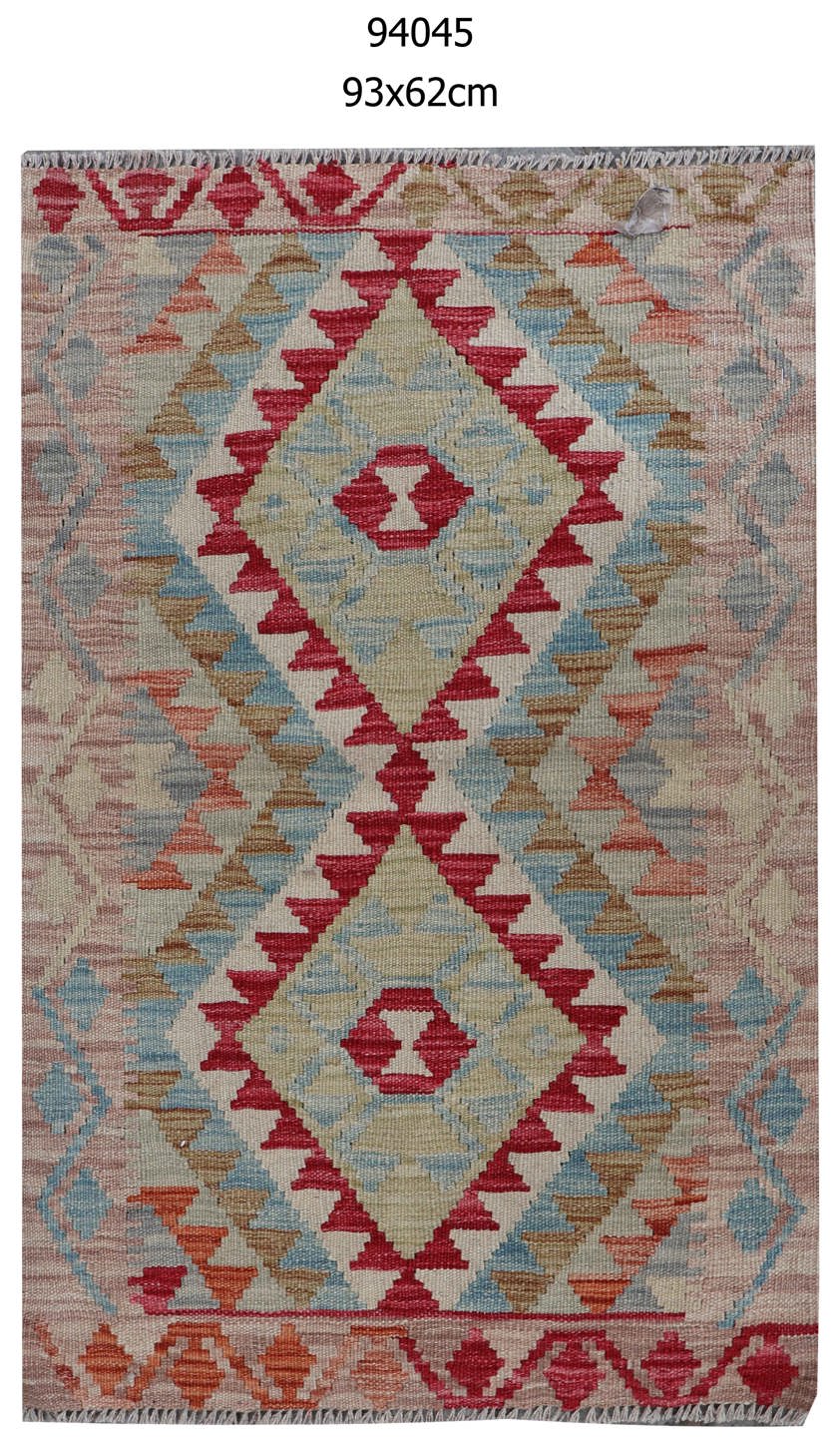
Red pointed diamonds surround pale centres on this Afghan kilim rug. Blue and cream layers expand towards the field, while warm ochre and peach bands introduce softer intervals between the stronger outlines. Small angular figures occupy the sides, and narrow turning lines help frame the ends. The paired arrangement is clear, with the red points providing more emphasis than the small internal details. Fine horizontal shading adds depth to the pale blue and yellow. The upper and lower centres share their structure but differ slightly in colouring.
The side figures are more widely spaced, giving the larger forms room to remain dominant. A narrow edge completes the rectangle without adding a heavy separate border around the softly varied field and its connected stepped bands. Kilim flatweaving creates pattern through coloured wefts crossing warp threads. It produces a flat textile without a raised layer of knotted pile. Nested angular boundaries can build a major motif from a small centre, while related units fill the surrounding spaces.
Afghan kilims use these changes of scale to balance a readable principal pair with finer differences of shade and internal figure across the wider composition.This rug would work beside a plain cream chair or natural timber bed. Pale blue accessories would echo the broad bands, and a little ochre would connect with the warmer layers. Keeping both diamonds uncovered would preserve their balance. Quiet surrounding fabrics would allow the fine framing lines and smaller side details to remain visible at closer range.