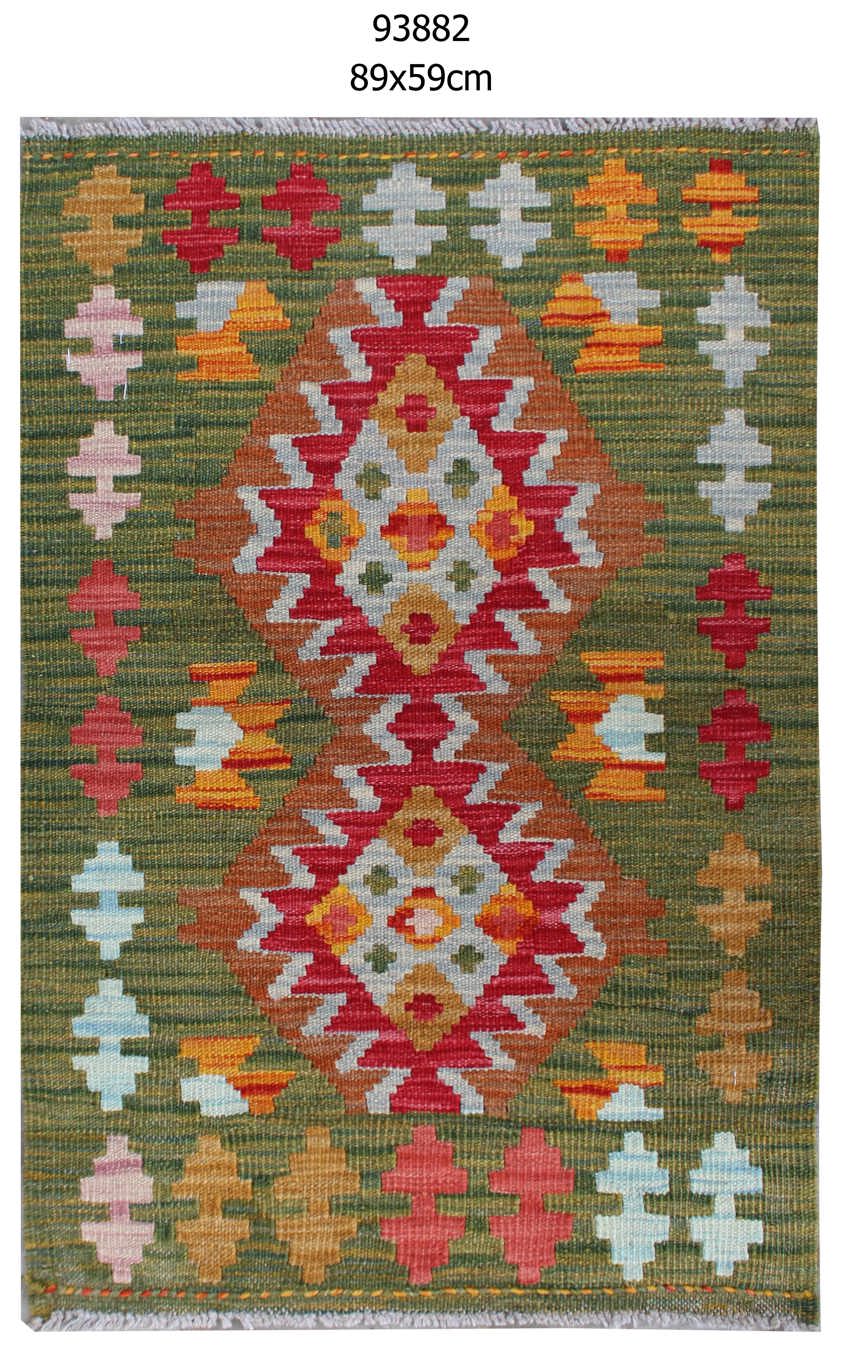
Red pointed medallions create a bold pair on the green field of this Afghan kilim rug. Pale interiors contain compact yellow, orange and olive figures, while cream steps sharpen the surrounding outlines. Small angular units occupy the side areas in red, pink, yellow and white. The composition fills the compact surface but preserves a clear distinction between the larger centres and their more openly spaced companions. Fine horizontal colour shifts add depth to the green and red. Pale bands make the pointed edges particularly legible, while the two interiors vary slightly in their smaller details.
The outer finish is narrow, allowing the scattered perimeter figures to supply the frame. Their changing colours connect with the centres without repeating the same density of internal pattern. The stepped arrangement is well suited to kilim flatweaving. Coloured wefts cross warp threads to create pattern in a flat textile without knotted pile. Nested boundaries can build a dominant motif from a small centre, while related units repeat at a finer scale. Afghan kilims use these structural possibilities to balance an ordered paired composition with individual differences of colour and detail throughout the surrounding field.
This rug would complement natural wood, plain cream fabrics and softly coloured walls. Red or ochre accessories could echo the warm centres, while muted green upholstery would continue the ground. Keeping both medallions visible would preserve their layered structure. Quiet neighbouring patterns would allow the smaller side figures to remain legible and make their colour changes apparent nearby.