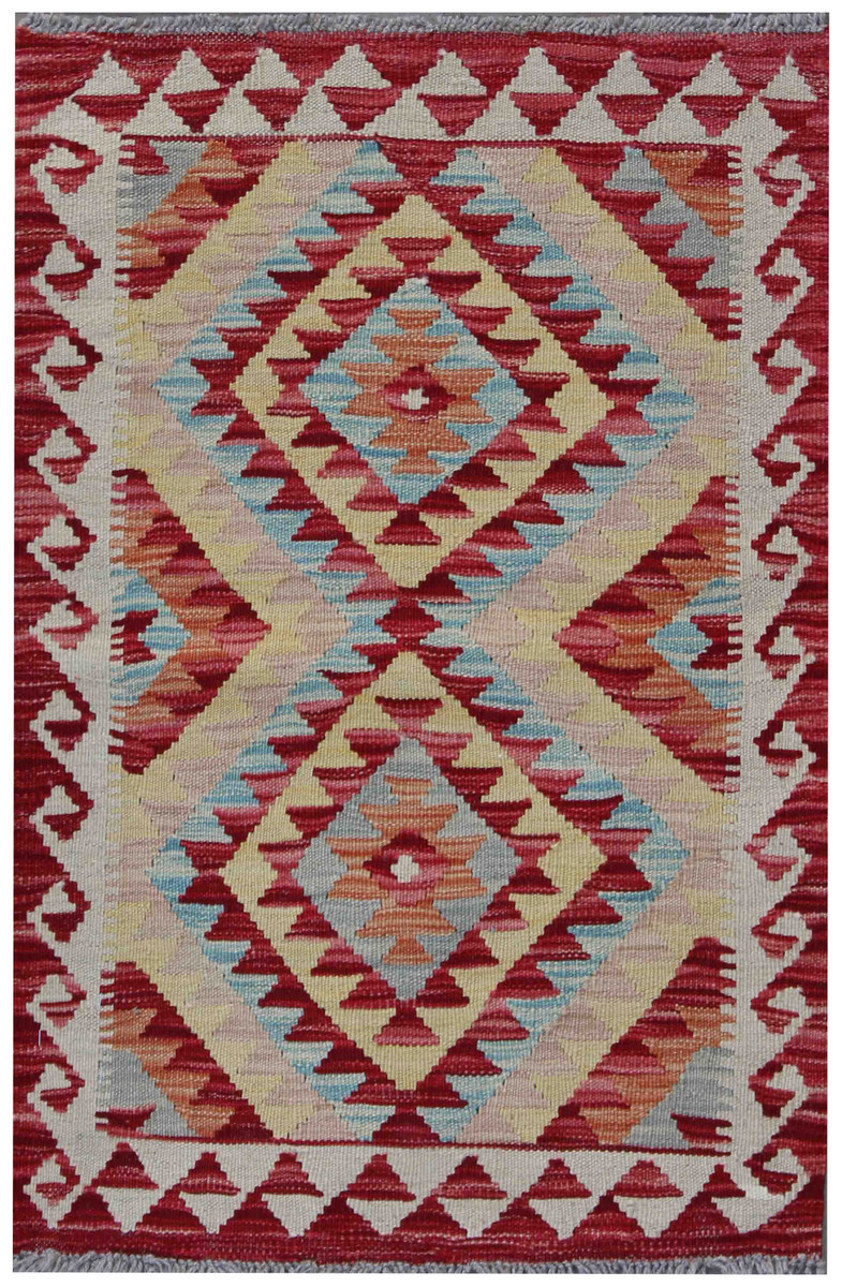
Red and pale blue stepped bands surround two yellow centres on this Afghan kilim rug. Small red, blue and warm orange figures occupy the interiors, while cream layers separate the stronger colours. The side areas contain larger angular red shapes, and a cream frame carries repeated red hooks. Pale pointed units mark the ends, giving the central pair a clear surrounding rhythm. The nested outlines broaden towards the sides before narrowing where the two centres meet. Fine horizontal shading adds texture to the red and blue. The upper and lower interiors differ slightly, preserving individuality within their shared structure.
Cream provides a steady light interval around the darker bands, keeping the several layers distinct within the rug's compact proportions. The geometry follows the possibilities of kilim flatweaving. Coloured wefts cross warp threads to create pattern directly within a flat textile without knotted pile. A stepped boundary can expand around a small centre or become a repeated unit in the frame. Afghan kilims use these changes of scale to connect dominant motifs with finer surrounding details while retaining a coherent arrangement.
This rug would work beside a bed or plain upholstered chair. Cream fabrics would echo the light bands, and pale wood would balance the warmer red. A blue accessory could connect with the cooler layers. Keeping both centres uncovered would show their differences, while quiet surrounding patterns would give the outer hooks room to remain visible as a second decorative rhythm.