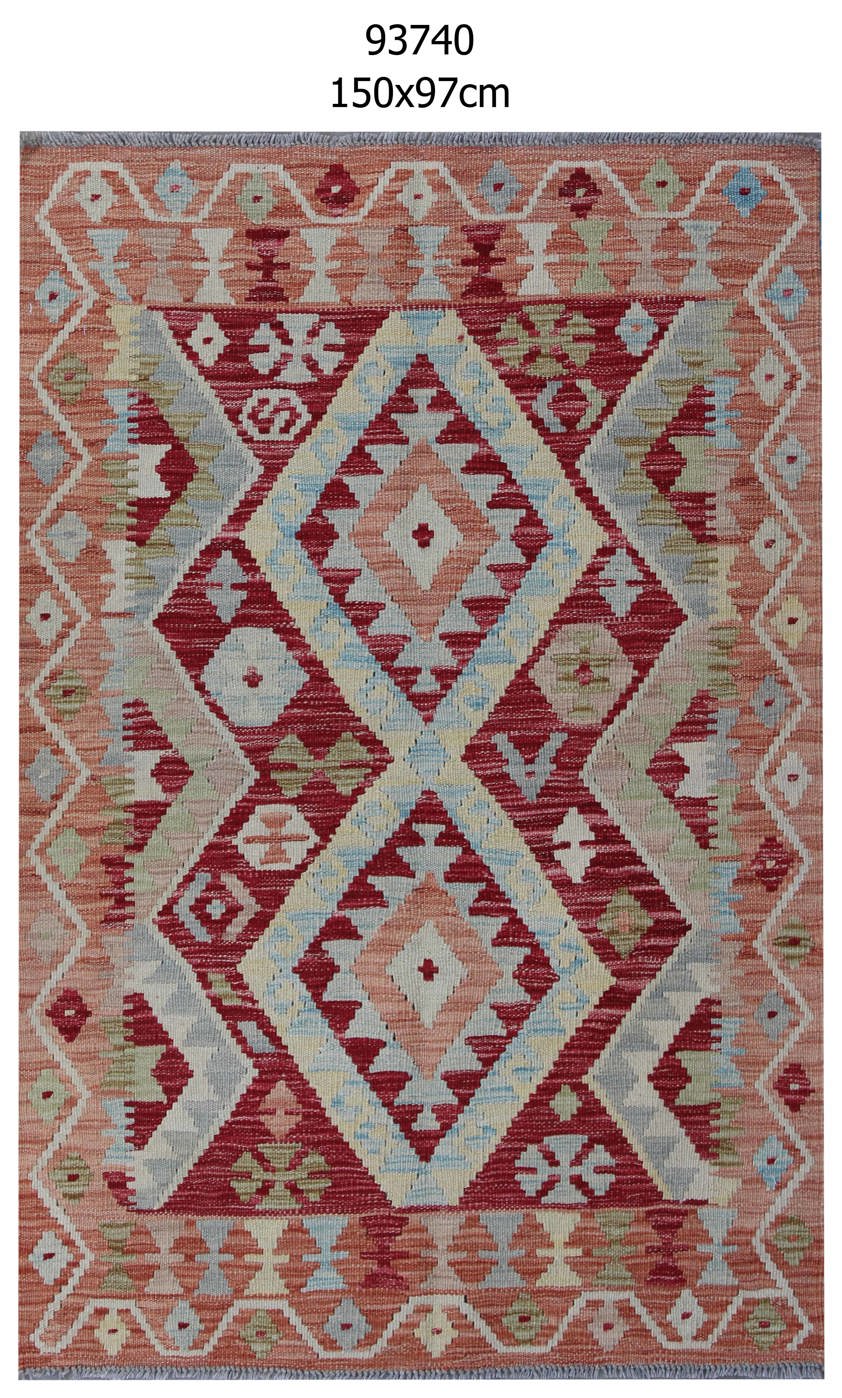
Pale blue zigzag bands enclose two red diamond centres on this Afghan kilim rug. Cream and peach details lighten their interiors, while small pale emblems occupy the surrounding burgundy field. A warm-toned frame carries compact upright figures in blue, cream and red. Its fine outer line turns around separate diamond details, giving the whole arrangement a clearly marked boundary. The principal blue bands have a broader scale than the smaller border figures. Their changing width creates movement through the central pair, while red supplies a steady background contrast.
Fine horizontal tonal shifts are visible in the peach and blue. The outer frame repeats several field colours, connecting the larger medallions with a faster rhythm of small geometric units. The arrangement uses the structural language of kilim flatweaving. Coloured wefts interlace with the warp to form a flat patterned textile without knotted pile. Stepped diagonals and connected bands can organise a central field, while related angular units define the perimeter.
Afghan kilims use this relationship between scale and repetition to give a layered composition clear focus without separating its border from the principal design. This rug would work with pale wood, plain cream fabrics and muted blue accessories. A table with slender legs would leave more of the zigzag outlines visible. Warm neutral walls would relate to the frame, while burgundy details elsewhere could echo the field. Keeping the perimeter exposed would preserve the full sequence of smaller border figures.