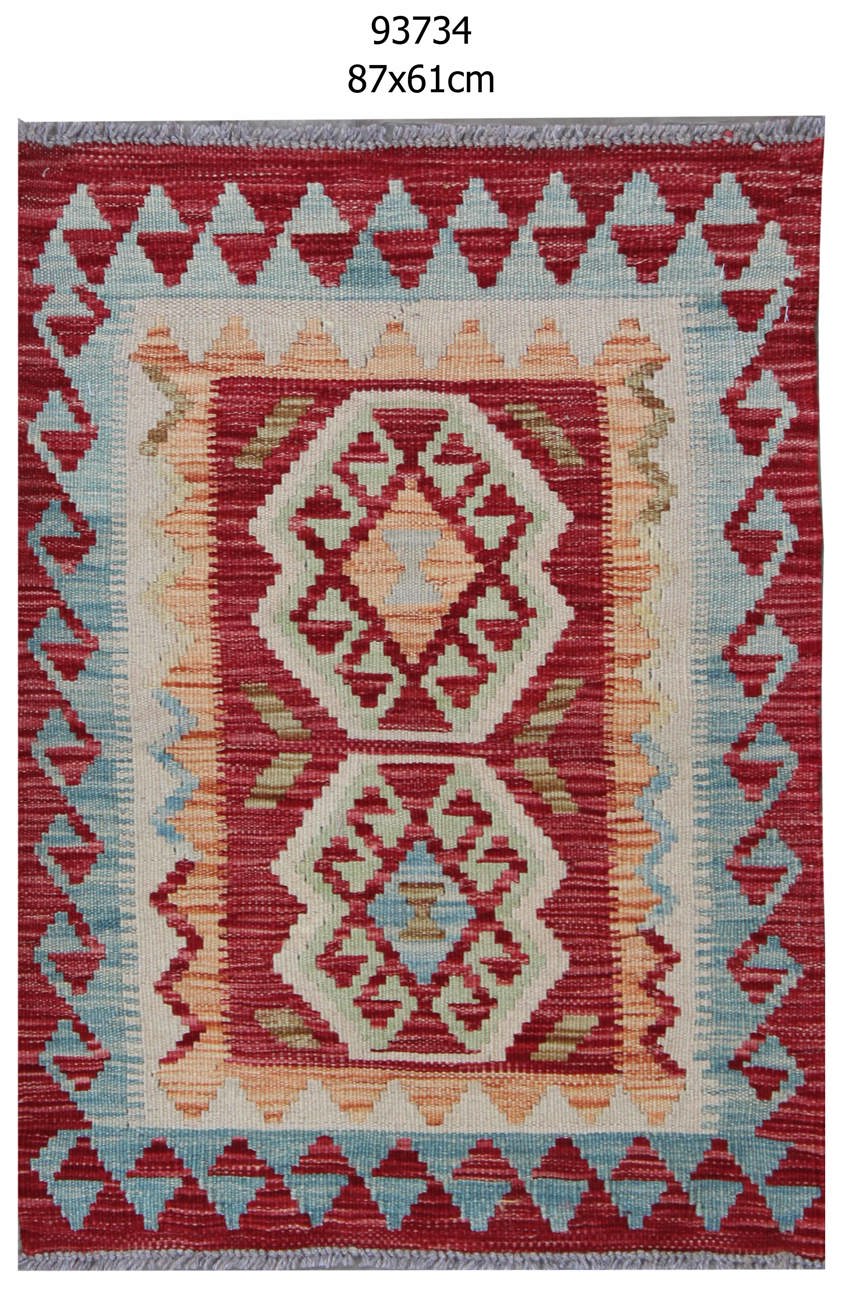
A pale blue frame surrounds the red central panel of this Afghan kilim rug. Two cream hooked centres contain smaller warm-toned and blue figures, enclosed by narrow ochre bands. The outer blue area carries repeated red motifs, while pointed pale shapes line the ends. The contrast between light frame and darker middle gives the compact composition a definite sense of enclosure. The two centres share a stepped outline, with different colours occupying their innermost figures. Fine horizontal shading is visible through red, blue and cream. Ochre introduces warmth at the boundary of the panel, separating it from the cooler frame. The outer repeat moves at a quicker pace than the paired centres, giving the design a useful balance between broad structure and smaller ornament.
Kilim flatweaving forms a patterned textile by interlacing coloured wefts with warp threads. Its surface has no knotted pile. The meeting of adjoining colours can create stepped outlines, hooks and narrow framing bands. Afghan kilims use the same geometric vocabulary at different scales, allowing larger medallions and finer perimeter units to remain related while establishing distinct areas within one coherent composition.
This rug would suit a bedside or intimate sitting space with plain cream fabrics. Pale blue accessories could draw attention to the frame, and natural timber would complement the warmer ochre details. An uncovered position would preserve both centres. Quiet walls would allow the contrast between the red panel and its lighter surroundings to remain the principal decorative feature.