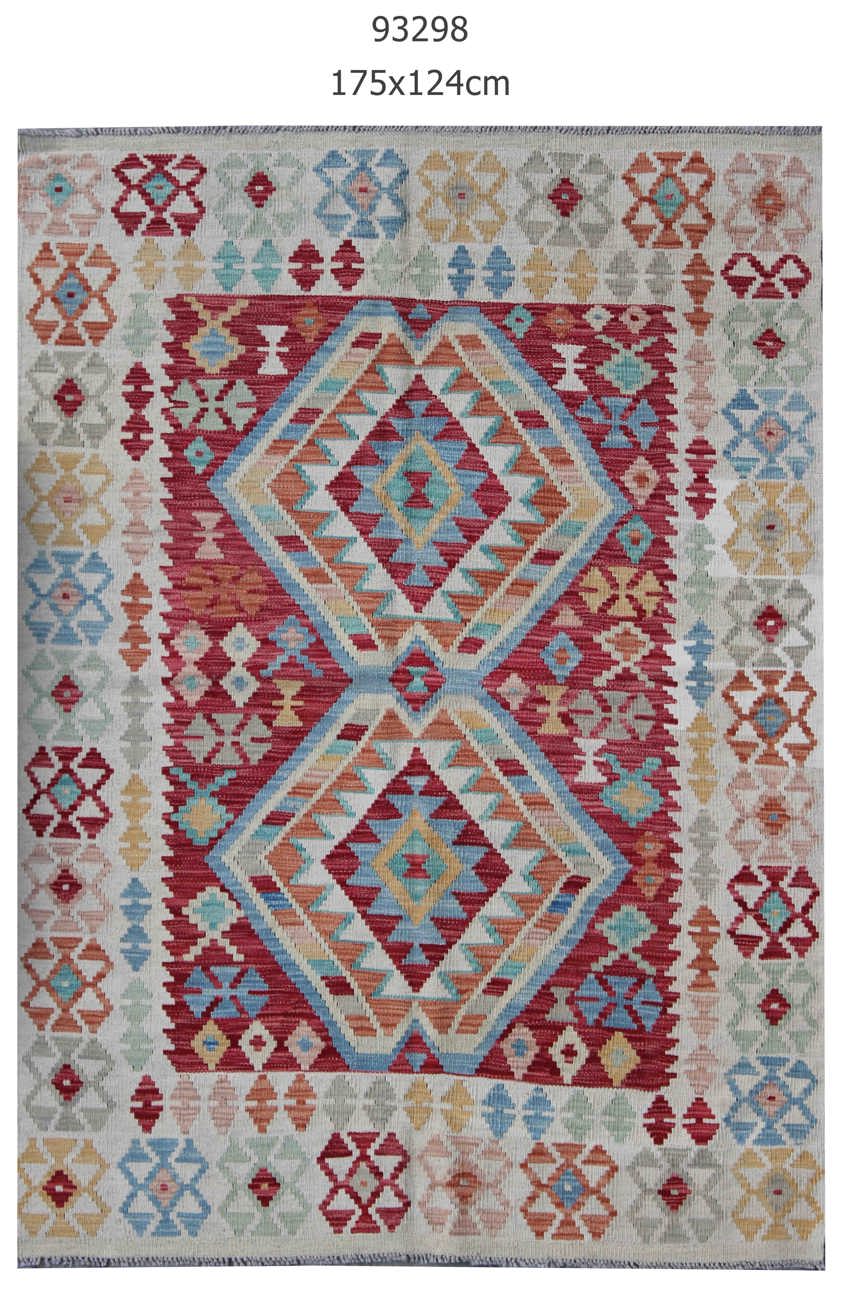
Two blue-edged diamonds sit within the red central panel of this Afghan kilim rug. Their nested interiors combine cream, muted yellow, pink and smaller contrasting forms. Around the panel, a broad pale border carries angular emblems and small lozenges in a more open arrangement. The contrast between the warm centre and lighter frame makes the composition easy to understand at a glance. The central pair has a pronounced stepped outline, with several colour bands adding depth around each diamond. Small motifs fill the red spaces between them.
Fine horizontal tonal changes soften both field and border, giving the flat surface a gently shaded character. The outer details differ in scale and emphasis, providing interest around the principal panel without competing with its stronger colours. Kilims are flatwoven textiles, their visible designs made as coloured wefts pass through the warp. They differ from carpets in which knots create a raised pile. Angular boundaries and repeated geometric shapes work closely with the woven structure.
In Afghanistan, kilim furnishings include both unframed all-over patterns and clearly enclosed central compositions, with the relationship between field and border contributing much of their decorative character. This rug could bring warmth to a small sitting room or bedroom with plain furniture. Pale fabrics would echo the border, while blue accessories could draw out the central outlines. A low, open table would preserve the twin-diamond sequence. Natural wood would complement the red without requiring further strong colour, allowing the rug to remain the main patterned feature.