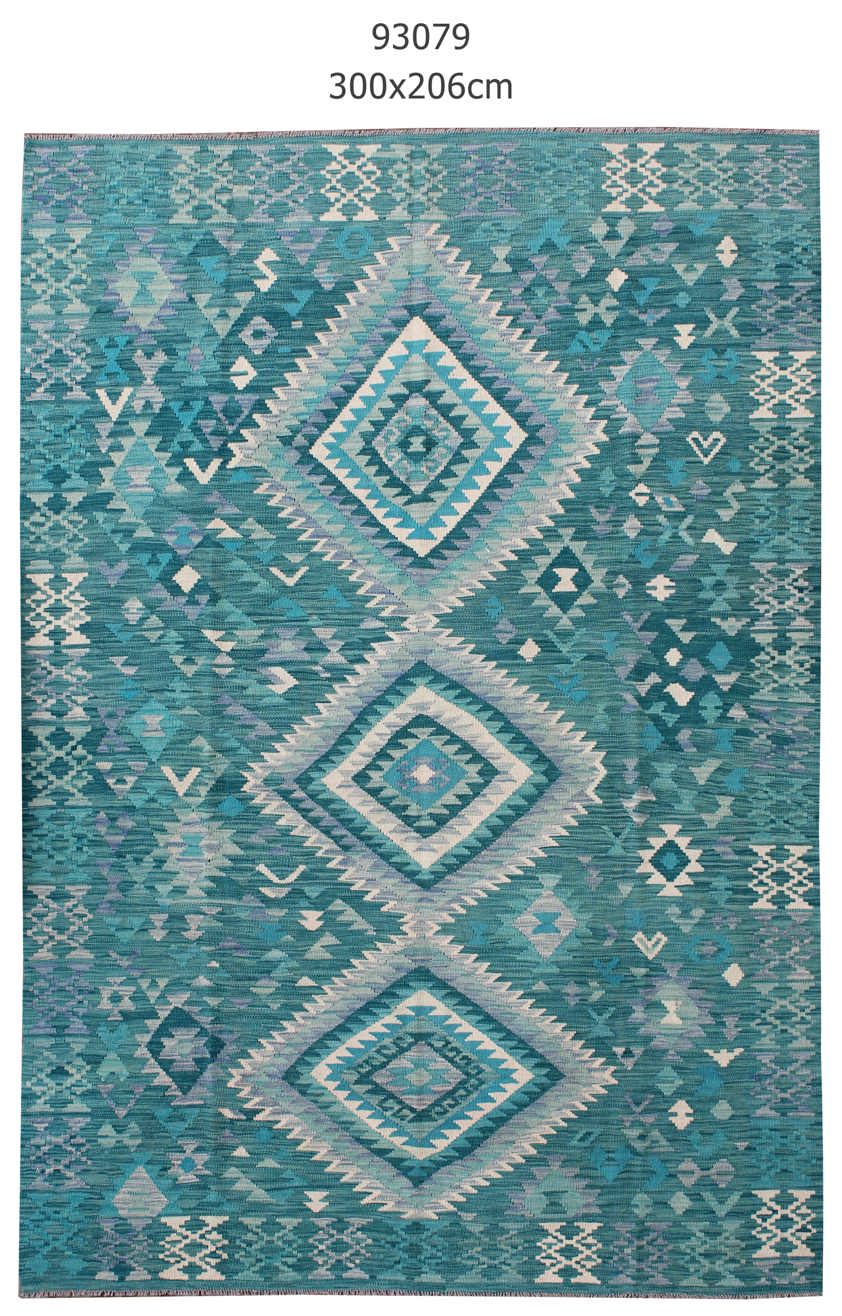
A sequence of three nested diamonds defines this large Afghan kilim rug. Ivory outlines surround blue and teal centres, creating a bright vertical chain against the turquoise field. Small angular figures and compact lozenges fill the surrounding spaces, while lighter groups at the ends provide a subtle frame. The whole composition is held together by its cool, closely related colours. At 300 × 206 cm, the rug has enough scale for both the principal motifs and the finer field pattern to be appreciated. The diamonds differ slightly in their internal colour balance, giving each one a distinct emphasis. Across the ground, horizontal variations move between richer teal and softer blue-green.
This visual grain adds depth behind the pale geometry and stops the repeated structure from feeling overly uniform. Afghan kilims are part of a wider domestic flatweaving tradition that includes floor coverings, bags and other useful textiles. Geometric designs form an established element of this repertoire, with lozenges and stepped outlines occurring in many arrangements. Related motifs are shared across neighbouring regions, so the shapes themselves do not identify a precise weaving community or fixed meaning.
Here, their effect depends on scale, repetition and the contrast with the turquoise ground. This rug could give a sitting room a coherent colour foundation or define a larger furniture group. Pale upholstery would echo the ivory outlines, while warm wood would balance the cool field. Leaving part of the central chain unobstructed would help preserve the long decorative rhythm that makes the composition distinctive.