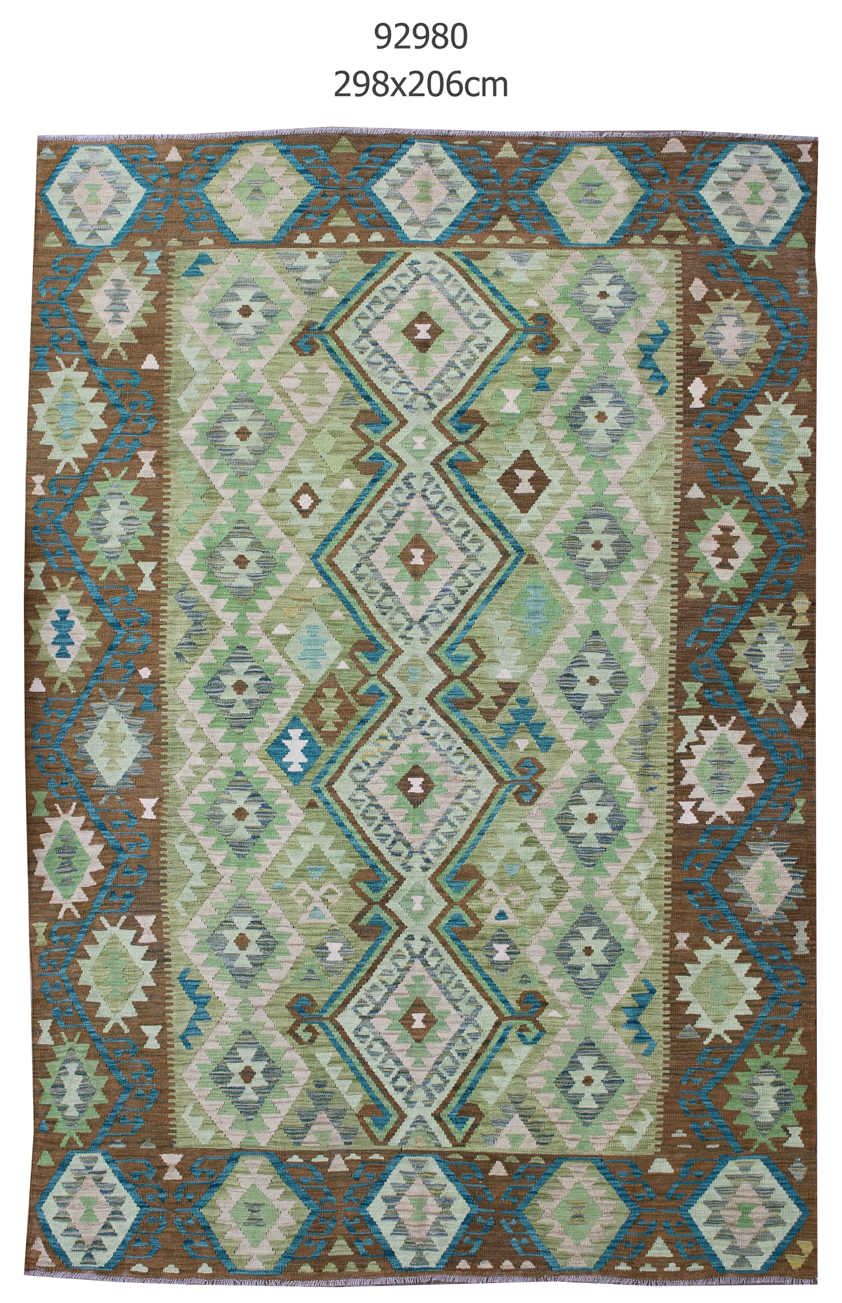
A dark outer border gives this Afghan kilim rug a pronounced frame, setting off a green and cream central field. Linked diamond medallions run along the middle, their angular outlines traced in blue and pale tones. Smaller lozenges fill the surrounding spaces, creating a layered relationship between the central chain and the repeated side details. The border is substantial, with large pale geometric forms appearing against blue-brown surroundings. Along the ends, broader medallion shapes repeat the field's vocabulary in a more compact band.
Green passages shift gently in tone across the surface, giving the light centre a softer appearance than the firm outlines might suggest. The contrast between dark frame and pale interior is the rug's strongest decorative feature. Afghan weaving encompasses both piled carpets and flatwoven furnishings. Kilims belong to the latter category, with their decoration formed in the cloth itself. Repeated diamonds can be enlarged into principal medallions, reduced to small fillers or carried around a border.
That flexibility allows a coherent pattern to develop across several distinct zones without relying on identical details everywhere. This rug measures 298 by 206 cm and would provide a grounded centre for a living room. Green fabric, natural wood and cream walls would connect with its lighter field, while the dark border could relate to stained furniture or metalwork. Keeping the perimeter exposed would preserve the strong framing effect, even where a sofa or table partly covers the central chain.