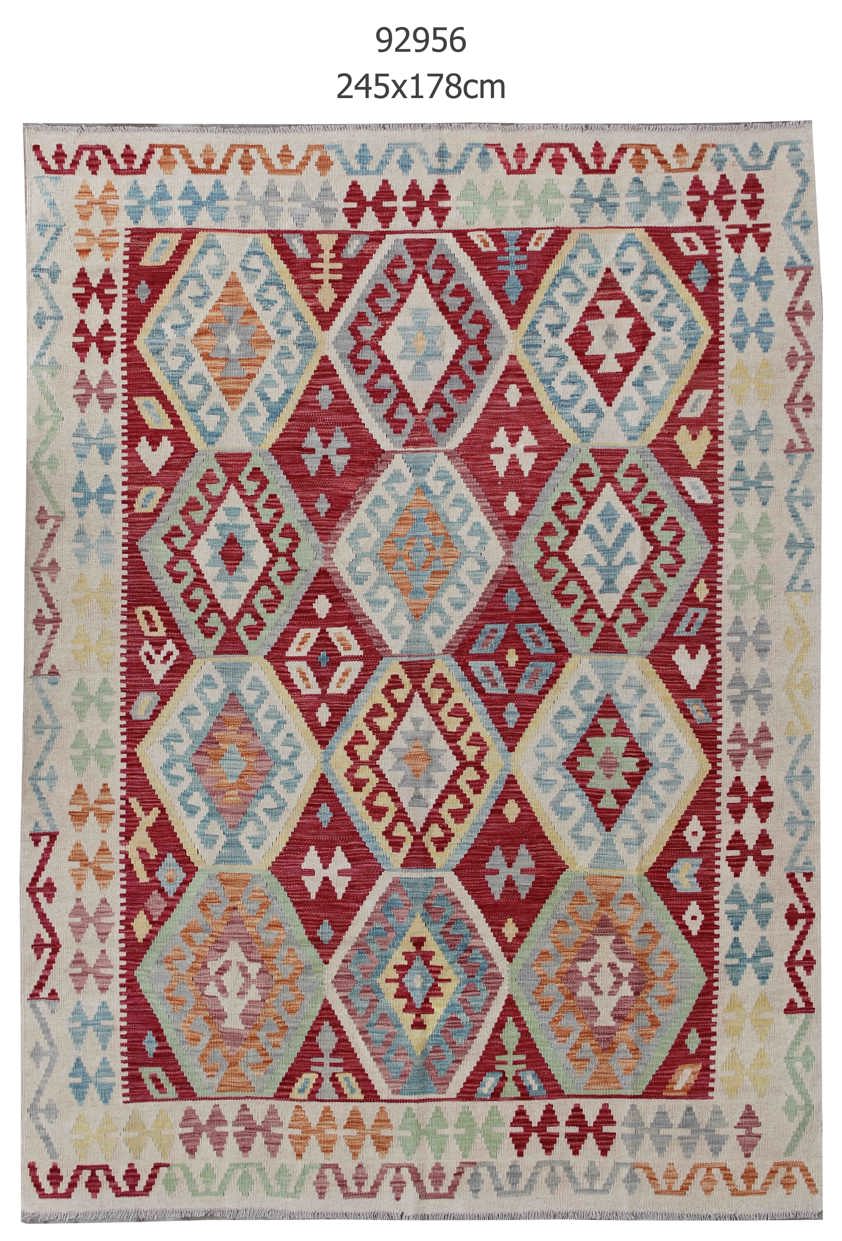
Linked hexagons create a strong vertical rhythm in this traditional Afghan kilim rug. A red ground sets off pale blue, cream and ochre, with the larger shapes arranged in staggered rows. Within each outline, nested diamonds introduce another layer of colour and angular detail, so the eye moves between the overall lattice and its individual centres. The central pattern is substantial and clearly drawn, while the pale outer border uses much smaller motifs. This change of scale gives the design a useful balance: the field feels bold, but the surrounding edge remains light. Blue outlines intersect with cream bands, and occasional green details ease the transition between the warmer red and ochre passages.
Fine horizontal tonal variation adds movement within the larger areas. Geometric lozenges and related polygonal forms are well represented in Afghan textile traditions. Museum collections include both floor coverings and bags decorated with such patterns, showing how a shared vocabulary could be adapted to different domestic objects. In a kilim, the woven surface itself carries the decoration, giving colour boundaries and changes of direction particular visual importance.
This rug would make an effective partner for a plain rectangular sofa or a wooden dining table, where the repeated hexagons can remain legible around the furniture. The blue offers an easy connection with painted cabinetry or cushions, while the red brings warmth to pale floors. Its cream border provides a distinct transition between the patterned centre and the surrounding room.