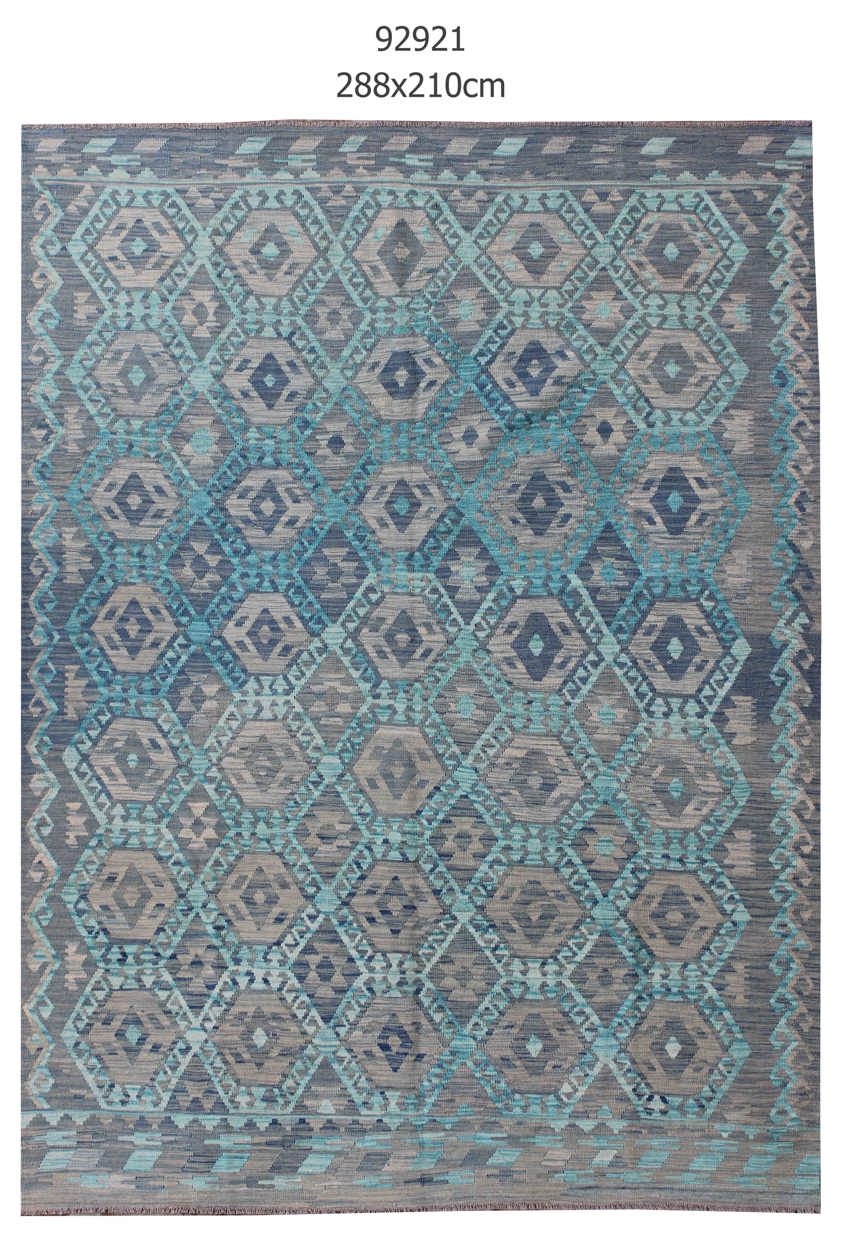
Rows of hexagonal medallions give this blue-grey Afghan kilim rug a steady, all-over rhythm. Their cream and pale blue outlines enclose smaller dark centres, while teal appears between them in finer geometric marks. The repeat is closely arranged but remains legible through the contrast between the broad shapes and their lighter borders. At the ends, narrow diagonal bands introduce a change in direction. Fine hooks and small angular devices around the sides connect these bands to the field.
The colour is deliberately restrained, with grey, muted blue and warmer pale tones supplying variation rather than bright accents. Horizontal changes in intensity add a softly layered quality. The use of repeated medallions illustrates the flexibility of flatwoven design. Kilims create pattern through the woven fabric without a knotted pile, making outlines and the meeting of colours central to their appearance. Within Afghan textile traditions, a geometric unit can be multiplied across a field while smaller related devices fill the intervals, producing complexity without losing a clear organising principle.
This rug could bring a composed pattern to a room with pale upholstery, dark oak or simple painted furniture. The teal notes offer a link to blue-green accessories, while the cream would connect with lighter walls. Its evenly distributed ornament makes it useful where furniture will cover part of the centre, since the visible side areas retain much of the same decorative character as the middle.