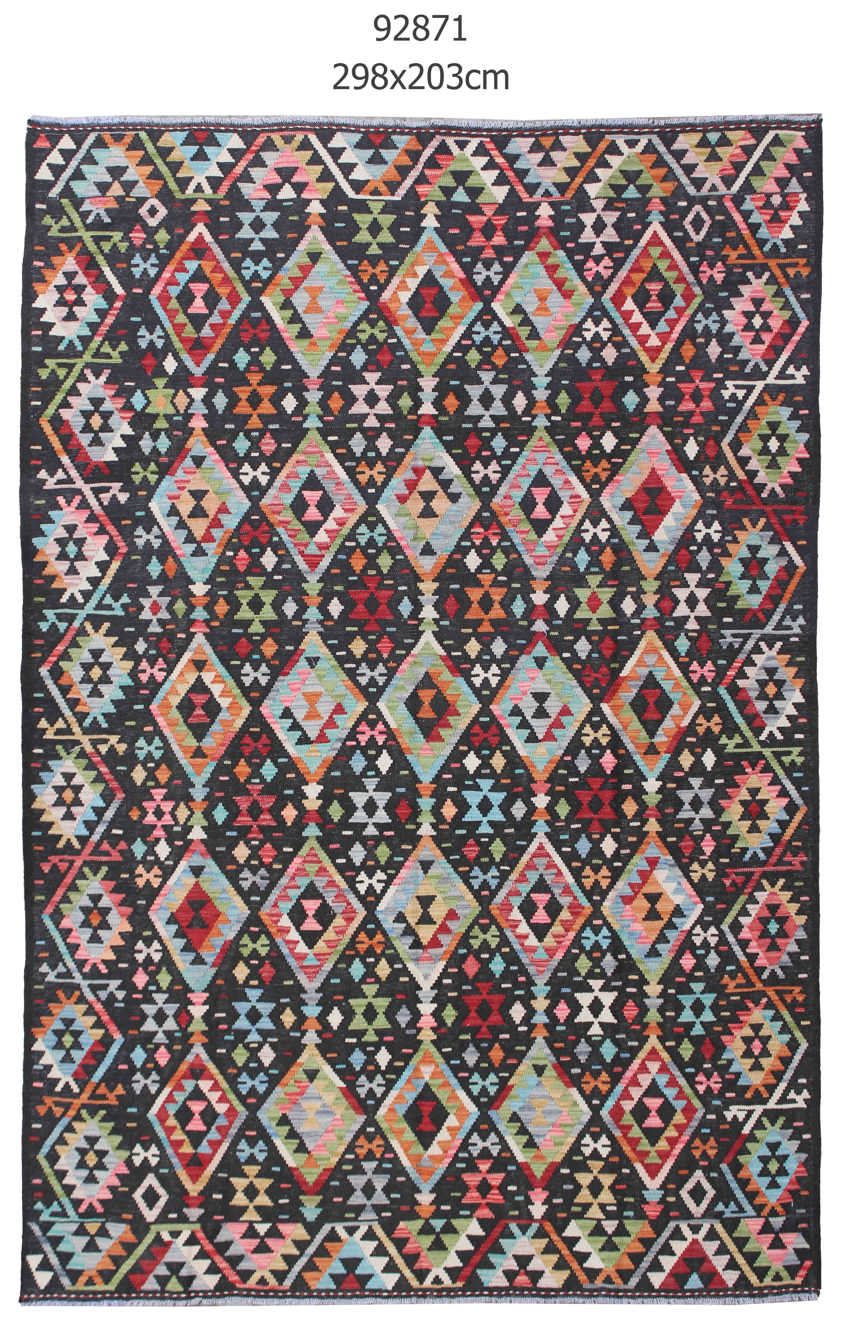
A dark ground gives the many coloured diamonds on this rug unusual clarity. Red, pale blue, cream, yellow and green appear in a close sequence of small and larger shapes, with thin light lines separating the individual units. The pattern spreads across almost the entire surface, and the narrow outer frame keeps attention on the energetic arrangement rather than creating a broad perimeter. Some diamonds carry little nested centres; others open into branching, serrated forms. Between them, tiny pale triangles establish a second, finer rhythm.
This change of scale is central to the design: from a distance the rug reads as a colourful overall pattern, while closer inspection reveals the many small decisions that make up its surface. In Afghan textile design, geometry provides a way of creating complex ornament from a relatively economical group of shapes. Kilims are flatweaves, distinguished from pile rugs by their woven surface.
The meeting of differently coloured areas makes edges and outlines especially important, helping explain the strength of stepped diamonds and angular repeats within this wider textile tradition. This rug would suit a room needing a confident patterned anchor, particularly one with plain upholstery or dark wooden pieces. Picking up just the ochre or pale blue elsewhere would allow the other colours to remain concentrated on the floor. Its closely worked visual character also offers an effective counterpoint to broad, unadorned walls and simple contemporary furniture.