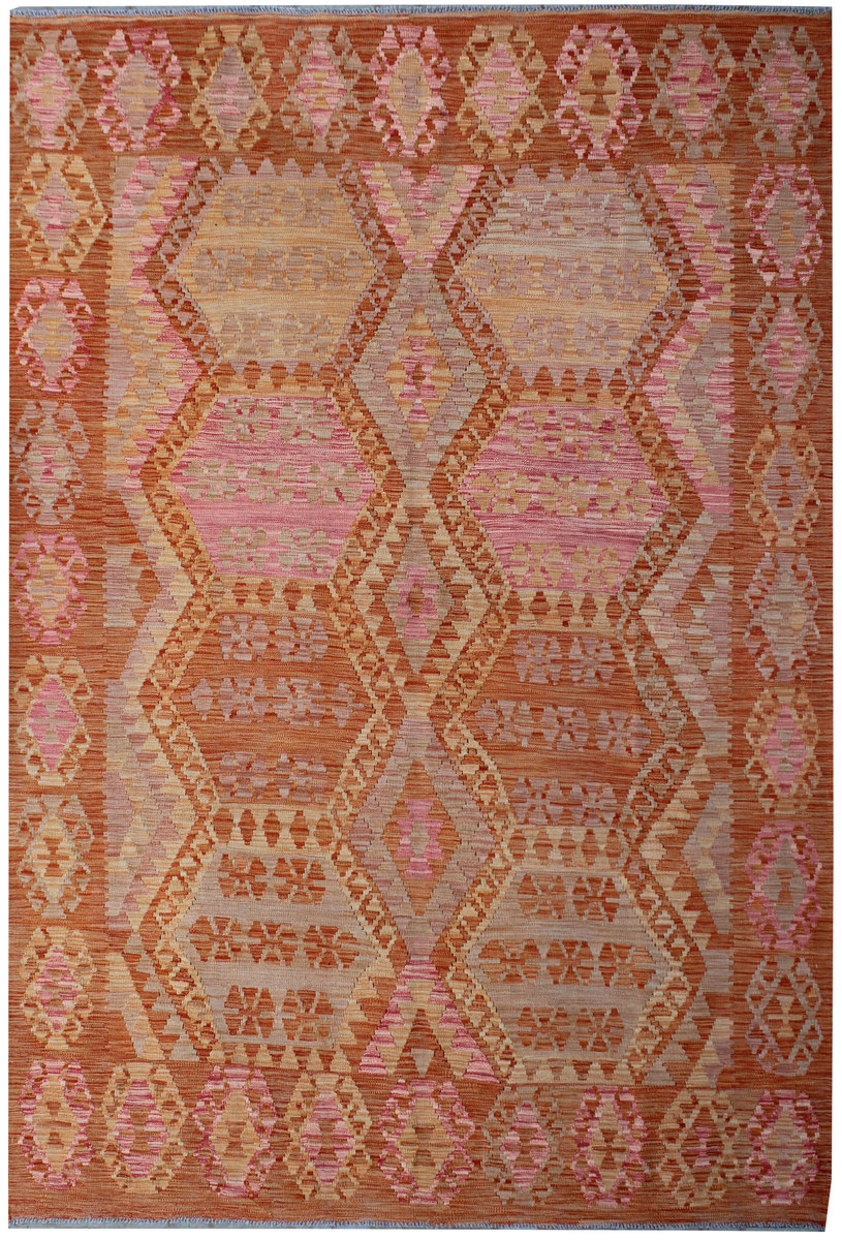
Six broad hexagons occupy the field of this rug, set in two columns around a narrow chain of diamonds. Their interiors change from pale ochre near the top to pink and deeper earth tones below. Darker angular outlines distinguish the compartments without making them seem detached from the finely streaked ground. Along the ends, rows of small diamonds introduce a denser, more animated scale of pattern. This rug measures 304 × 204 cm. Its substantial field would suit a generous seating arrangement, where the larger shapes could remain visible around the furniture.
Pale upholstery would relate to the upper hexagons, while a pink or rust accent could pick up the warmer lower passages. The central chain provides a useful line along which to place a table. Afghan textiles have long used geometric forms across different types of household furnishing. The same basic lozenge can serve as a medallion or become one element in a much smaller repeat. On this rug, that contrast of scale gives structure to the design: broad compartments create space within the field, and smaller figures draw attention towards its boundaries.
Fine horizontal streaks pass through the hexagons and their surroundings, keeping the surface visually connected. The softer colours make the large shapes less emphatic than their outlines initially suggest. Seen from the side of a room, the paired columns would read first; nearer the rug, the many small figures and changes of tone would become more apparent.