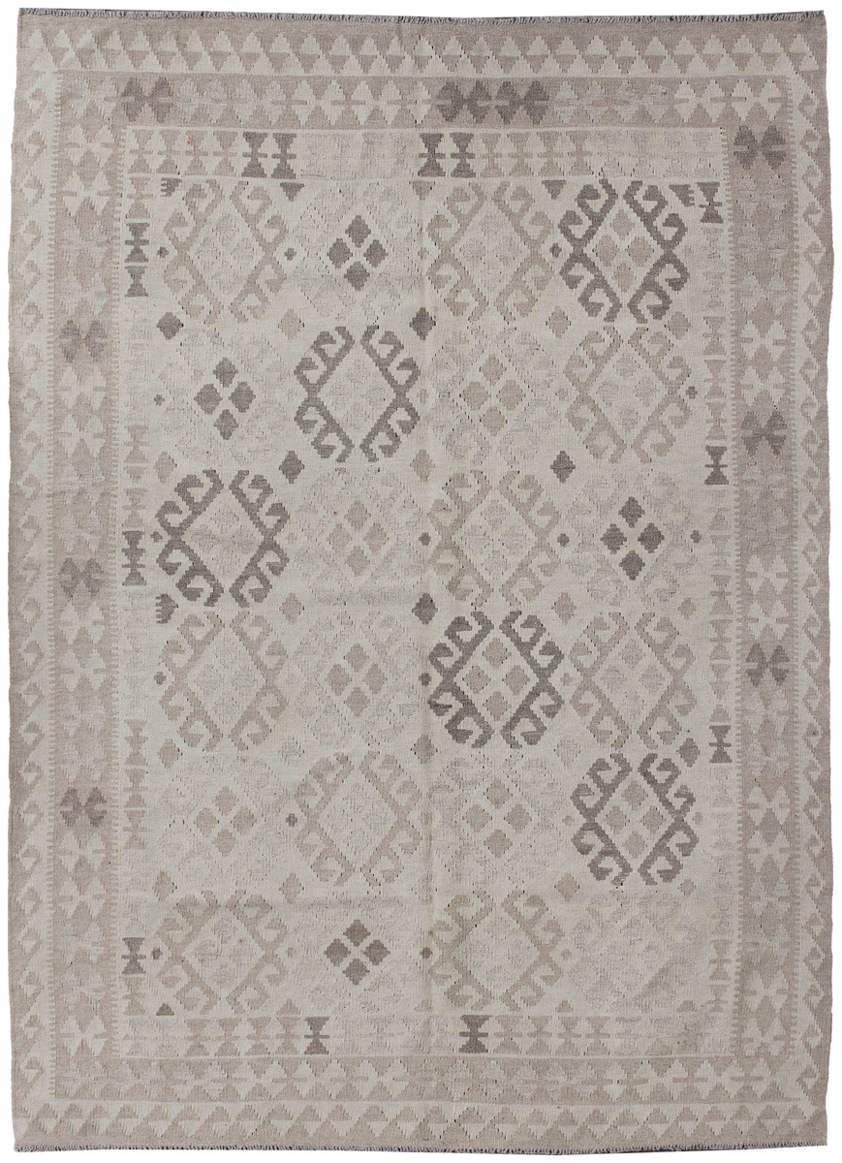
Open grey diamonds form a loose arrangement across this rug, their edges turning into curled angular hooks. Paler taupe versions of the same motif sit between them, with small dark lozenge clusters adding concentrated accents. The light ground keeps the individual forms separate. Around the perimeter, narrow rows of triangles and tiny geometric figures create a layered frame. This rug measures 239 × 172 cm and would bring quiet detail to a sitting room or bedroom. Grey fabrics could echo the stronger medallions, while cream upholstery would pick up the ground colour.
The absence of a dominant centre allows some flexibility in furniture placement: a table can overlap the interior while leaving several complete motifs visible elsewhere. Kilim design is part of Afghanistan’s broader household textile history. Angular forms recur across rugs and smaller furnishings, with considerable variation in their arrangement. A hooked diamond can be repeated densely, joined into a chain or left as an independent figure.
Here the open placement gives the pale ground an important decorative role. The colour differences become more evident on closer inspection, particularly where a darker hook sits beside a barely outlined neighbour. Fine tonal grain softens the neutral passages. The border remains deliberately smaller in scale, enclosing the field with a steady rhythm and giving the dispersed medallions a clear outer limit against the surrounding floor.