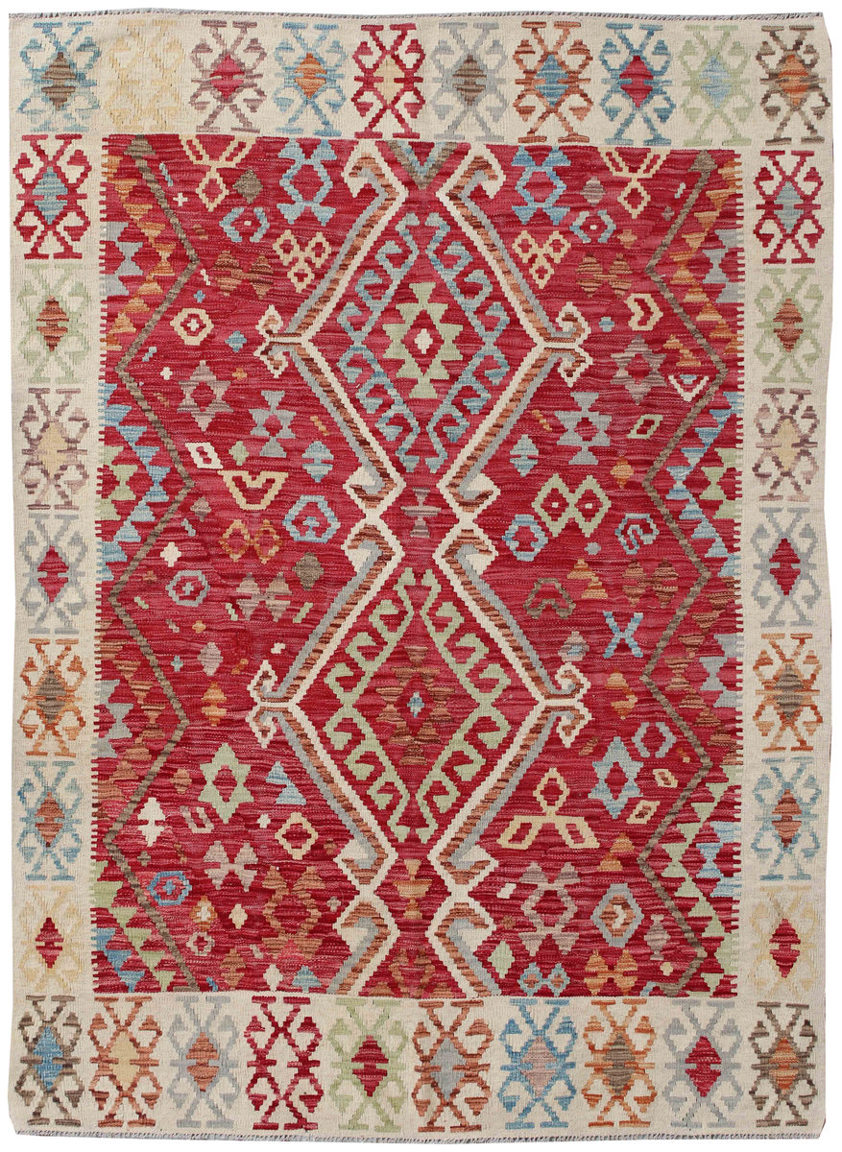
Two large hooked diamonds establish the main axis of this rug. Cream lines stand against a warm red ground, turning outward into curled geometric extensions. Smaller lozenges, zigzags and angular figures fill the surrounding field, with pale blue and ochre providing quieter accents. The border changes to a light ground and repeats compact geometric forms in a sequence of different colours. The hooked outlines give the paired centres a more expansive character than their size alone might suggest. They reach into the surrounding pattern while remaining easy to distinguish.
At 240 × 175 cm, this rug would suit a sitting area with plain upholstered furniture. Cream would echo the strong central drawing, while blue grey could connect with the smaller details. A compact table would leave enough of the hooked sides visible to retain the design’s main character. In Afghan kilims, a relatively small group of angular motifs can support complex compositions. Diamonds, hooks and repeated filler forms are also encountered within other domestic textile traditions of the region, where they are adapted to different proportions and functions.
This example gives the larger outlines priority without leaving the surrounding field unworked. Fine horizontal changes in the red add visual texture between the motifs. The pale border is especially useful within the composition, enclosing the dense interior with a quieter rhythm and giving the whole rug a clearly readable edge against the floor.