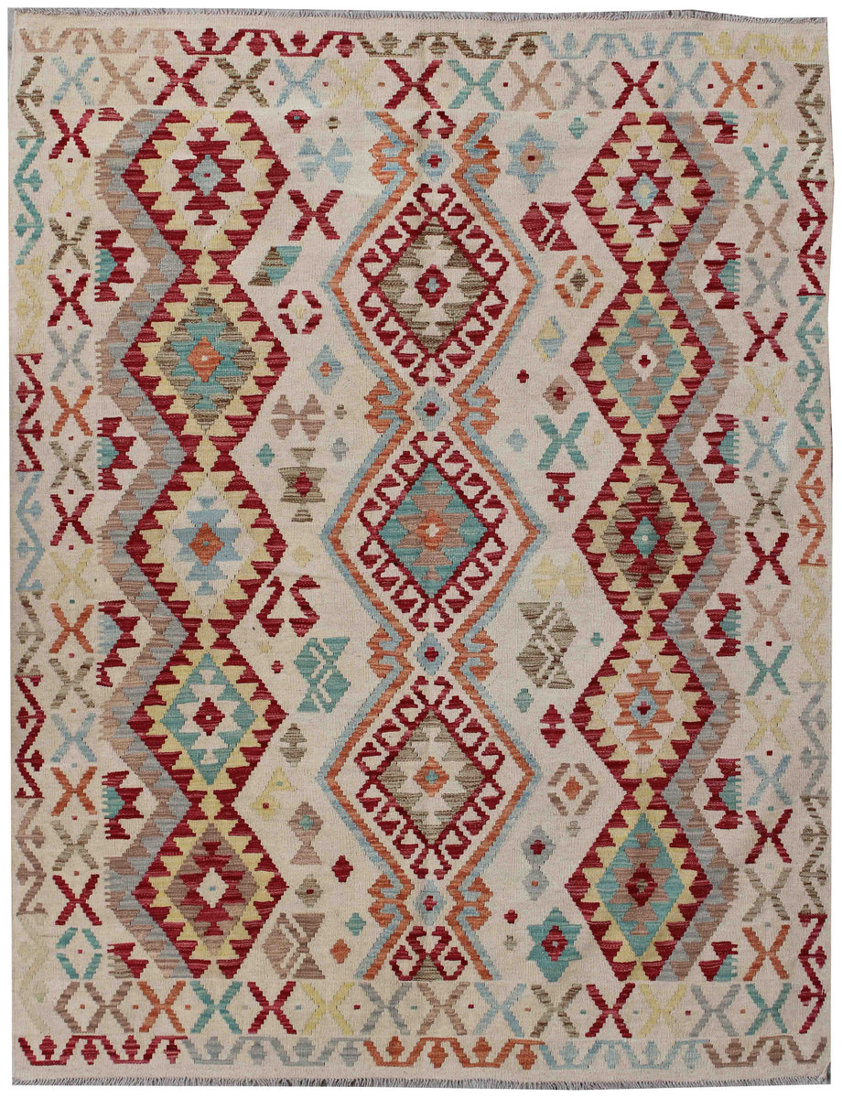
Three columns of medallions give this rug a varied vertical structure. The centre contains larger burgundy outlined forms, while the side columns alternate between pale blue interiors and warmer cream or ochre details. Small crossed figures, diamonds and hooked marks occupy the light ground around them. A narrow angular border closes the design without separating it heavily from the field. There is considerable detail within this relatively restrained palette. Burgundy supplies the strongest outlines, but the blue and cream interiors keep the composition light.
At 233 × 178 cm, this traditional Afghan kilim would work well in a modest sitting room, especially with plain cream seating or grey blue fabrics. A small central table would still leave the side columns and their changing medallions on view. Afghanistan’s household textile traditions include geometric rugs and bags, where familiar angular forms are arranged in many combinations. Kilims share that vocabulary, and their distinction often lies in the relationship between large structural shapes and the smaller marks around them.
Here the central column creates an axis while the side groups establish a more varied rhythm. The lightly mottled colour passages add a soft visual texture beneath the precise outlines. The more one looks, the more individual differences become apparent between neighbouring forms. Burgundy details could be drawn into a room through a single accessory, leaving the pale ground and cooler centres to determine the broader atmosphere.