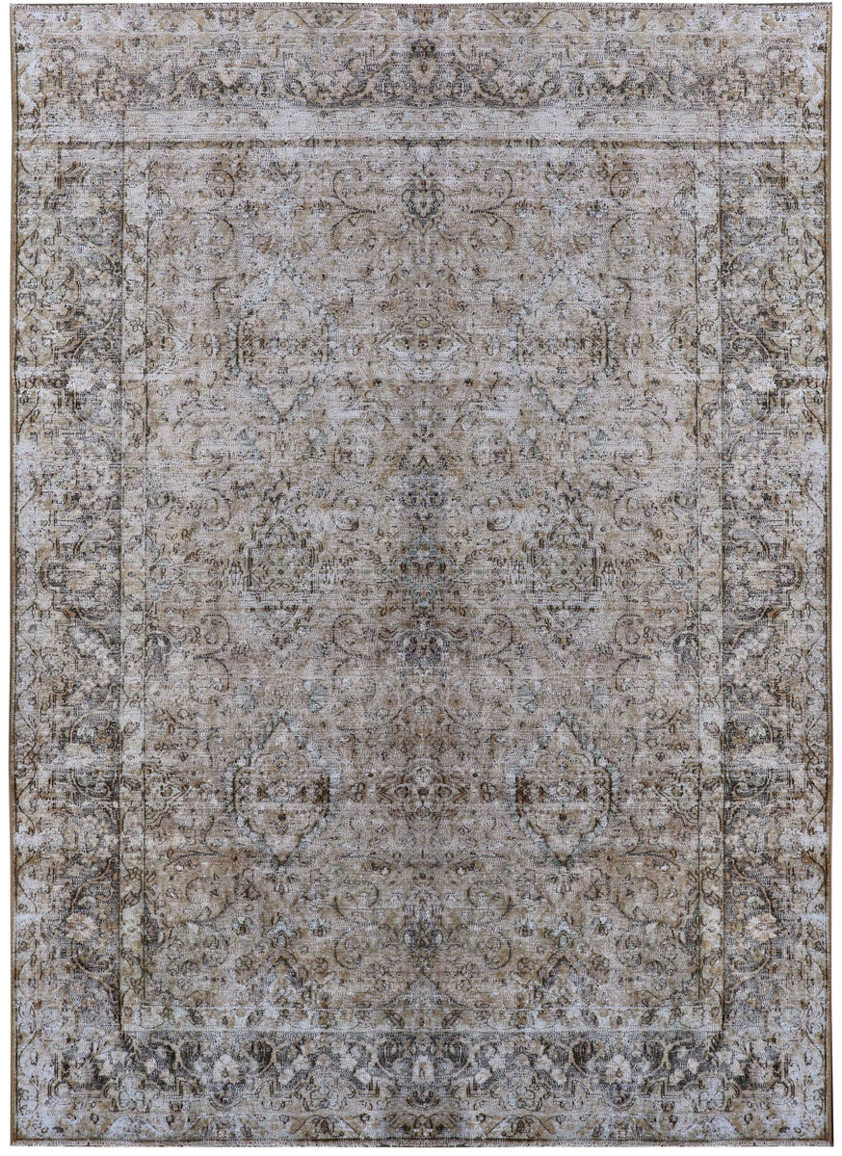
Grey and brown draw the varied ornament of this rug into a close tonal range. Fine floral figures spread across the field, their darker outlines appearing and receding as the background changes. Pale cream interruptions lift parts of the pattern, while a sequence of rectangular borders supplies a firmer outer structure. The design remains detailed even though its contrasts are relatively gentle. This is a rug that reveals more at close range. Small leaves and curling connections create an intricate surface, yet from farther away they merge into a quieter field.
The frame is clearer than any single central feature, giving the overall composition a grounded, architectural quality. Variations of light and dark contribute to the visual texture without requiring a strong accent colour. Persian carpet design has a long history of combining ornamented fields with surrounding border systems. Floral motifs can spread continuously or gather around a central arrangement, with framing bands controlling their scale and direction. That compositional heritage remains relevant here.
The vintage overdyed designation describes the rug's catalogued character; the photograph does not establish a particular weaving town or a precise date. Its muted palette would work beside stone, warm grey upholstery or dark timber. In a sitting room it could connect several neutral materials without making them appear identical. Let a portion of the darker border remain visible around a coffee table, so the rug's carefully layered frame can give definition to the furniture above it.