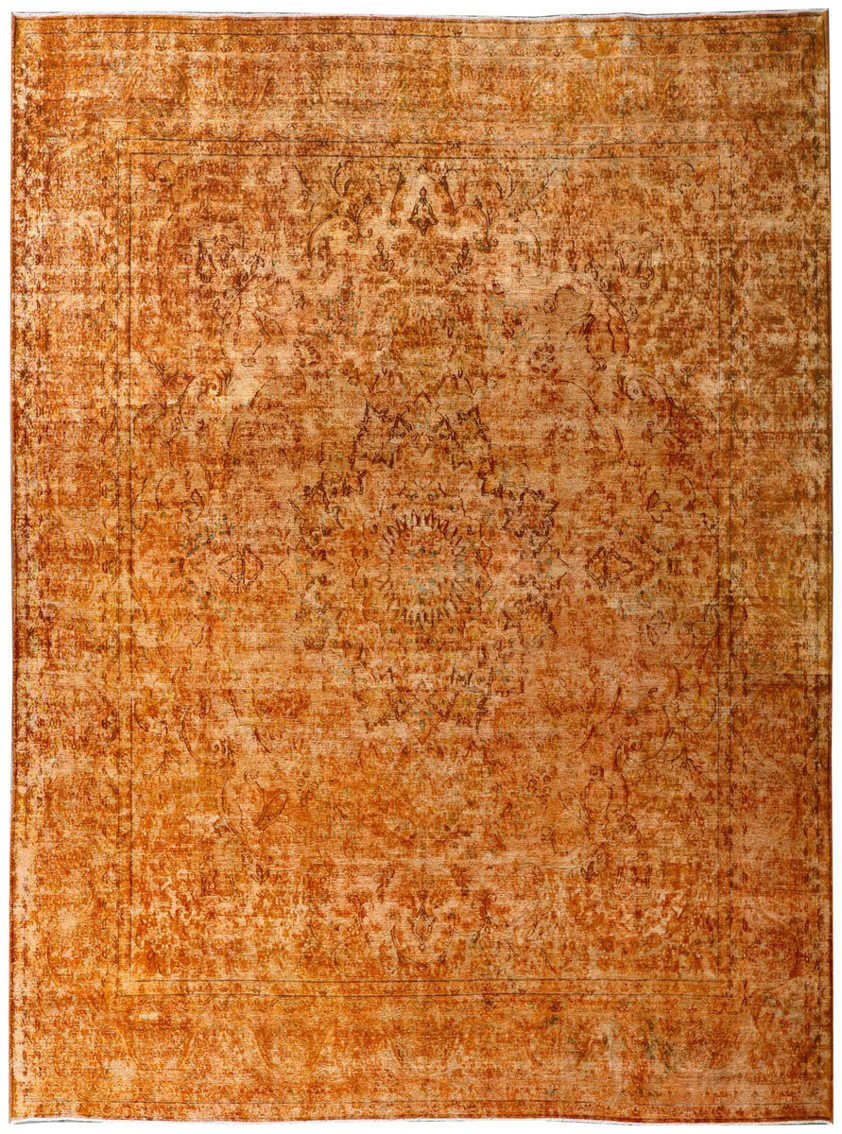
Amber-orange colour fills the broad field of this vintage Persian overdyed rug. Fine darker floral traces remain visible beneath it, with lighter passages revealing parts of the branching framework. Several pale rectangular lines mark the border structure, and the outer areas contain more compact ornament than the middle. The pattern changes in clarity across the surface, sometimes appearing as small distinct motifs and elsewhere merging into the warm ground. Those shifts give the rug visual depth without relying on a large contrast between its field and surrounding frame.
In Persian carpet design, the enclosing border provides order around both medallion compositions and continuous floral fields. Narrow guard lines clarify its boundaries, while smaller repeated forms establish a different pace from the larger motifs inside. This rug retains that distinction in a closely related orange palette. The overdyed colour becomes a major part of the decorative effect, with the traditional structure contributing quieter detail beneath the more immediately noticeable warmth of the surface.
Beside plain cream furniture, the amber would create a clear focus. Dark timber could offer a grounding companion, while rust-coloured ceramics would connect with the deeper passages. An open placement would reveal the tonal changes across the middle. Keeping the outer bands partly visible would show the finer rectangular divisions and allow the quieter floral traces to remain an appreciable part of the complete arrangement.