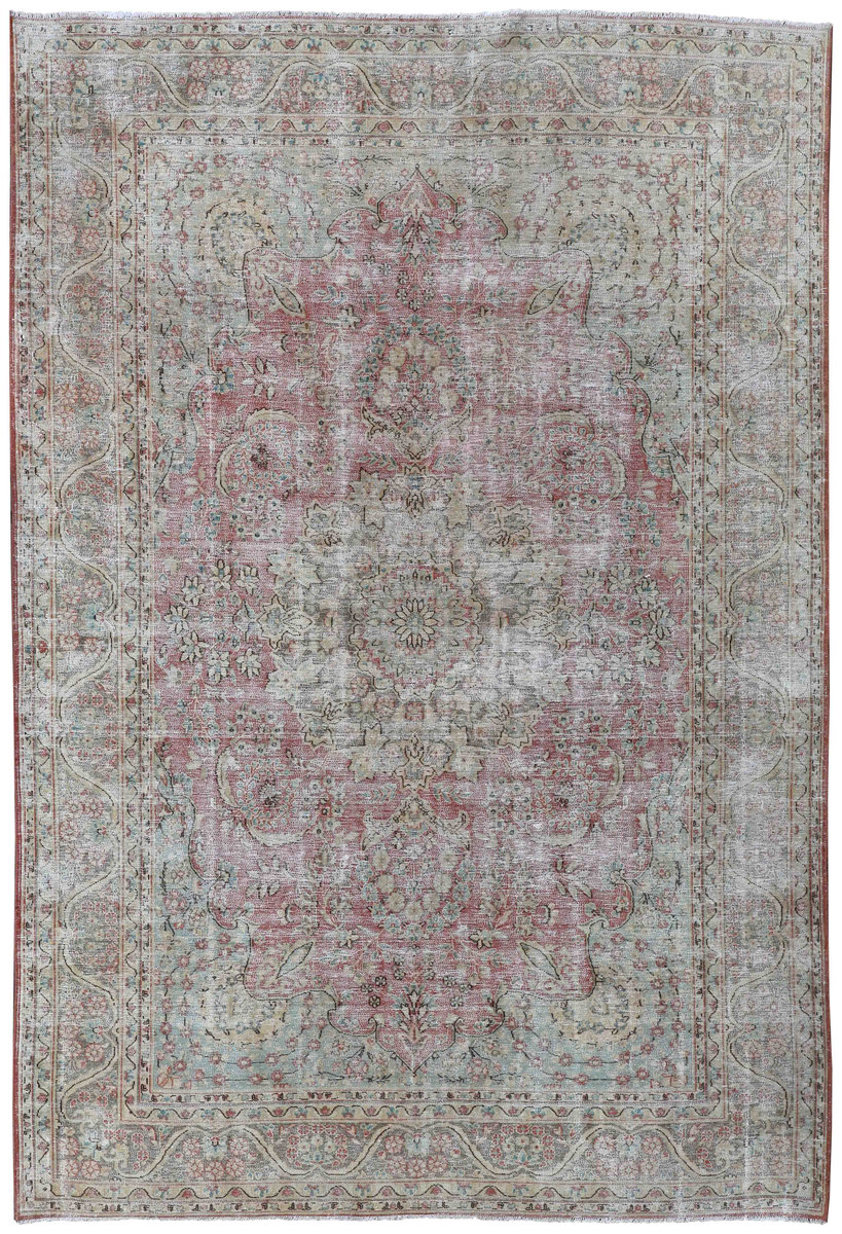
A soft rose medallion emerges from the pale floral field of this vintage Persian overdyed rug. Fine scrolling branches and small flower-like motifs spread around it, with muted blue-grey and warm cream details appearing through the lighter ground. Several narrow patterned bands enclose the rectangle. The central drawing is more concentrated than the surrounding field, yet its softened colour keeps the medallion connected with the broader surface rather than sharply isolated inside it.
Fine tonal variation makes parts of the floral framework clearer than others, giving the design different levels of visibility across its generous area. Persian carpet design includes a long tradition of central medallions, floral fields and layered enclosing borders. These elements organise ornament at different scales: the medallion supplies a focal point, smaller branches occupy the field, and border bands complete its setting. The overdyed designation describes a later colour treatment, but it does not by itself identify an original weaving centre or establish the rug's precise date. Here, the surviving medallion-and-border framework provides the relevant historical design context without requiring a more specific regional attribution.
This rug could complement cream upholstery, pale wood or warm grey walls. Dusty rose textiles would echo the central area, while blue-grey accessories could draw out quieter floral lines. An open seating arrangement would preserve the medallion, with visible outer margins allowing the fine borders to remain part of the complete decorative composition.