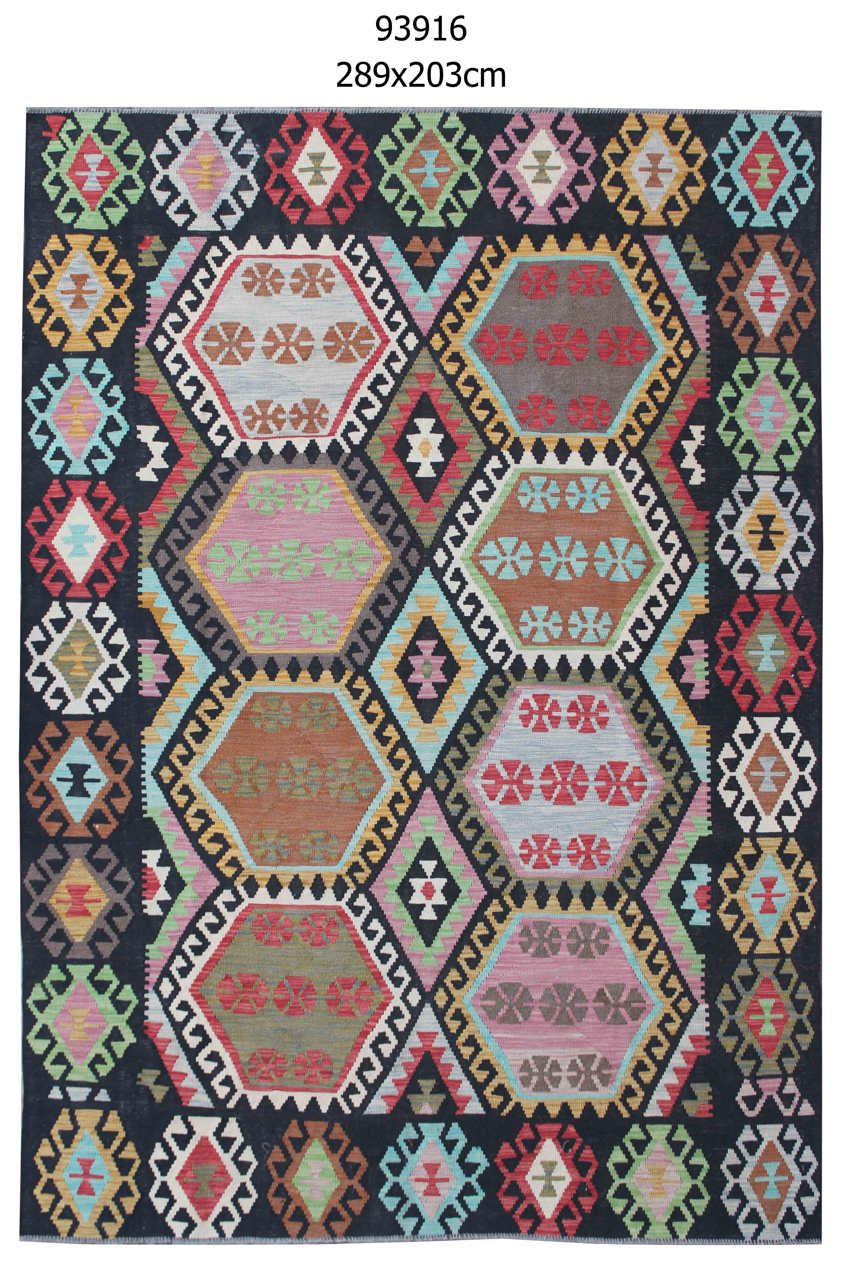
Eight pastel hexagons form two columns on this large Afghan kilim rug. Pink, green, cream, grey and turquoise interiors contain small repeated geometric figures. Cream hooks and coloured bands enclose each compartment against a black ground. A surrounding frame carries smaller angular units in many of the same shades. Fine horizontal colour changes add texture within the broad panels. Their consistent outlines establish a regular framework, while different interior colours and small motifs make every compartment individually recognisable within the overall paired arrangement. A divided field makes full use of repetition in kilim flatweaving.
Coloured wefts interlace with warp threads to create a patterned flat textile without knotted pile. Angular boundaries can become the framework of larger panels, with smaller units organised inside them. Afghan kilims use this relationship between enclosure and internal detail to balance an ordered composition with considerable local variation of colour and motif. This rug could define a generous seating area with plain cream fabrics and natural timber.
Dark wood would connect with the black intervals, while pastel accessories could echo selected compartments. An open table would preserve more of the small internal figures. Keeping the surrounding frame exposed would show the change of scale beyond the principal panels. Quiet walls would allow their different colours to remain distinct and give the finer cream hooks room to be appreciated nearby.