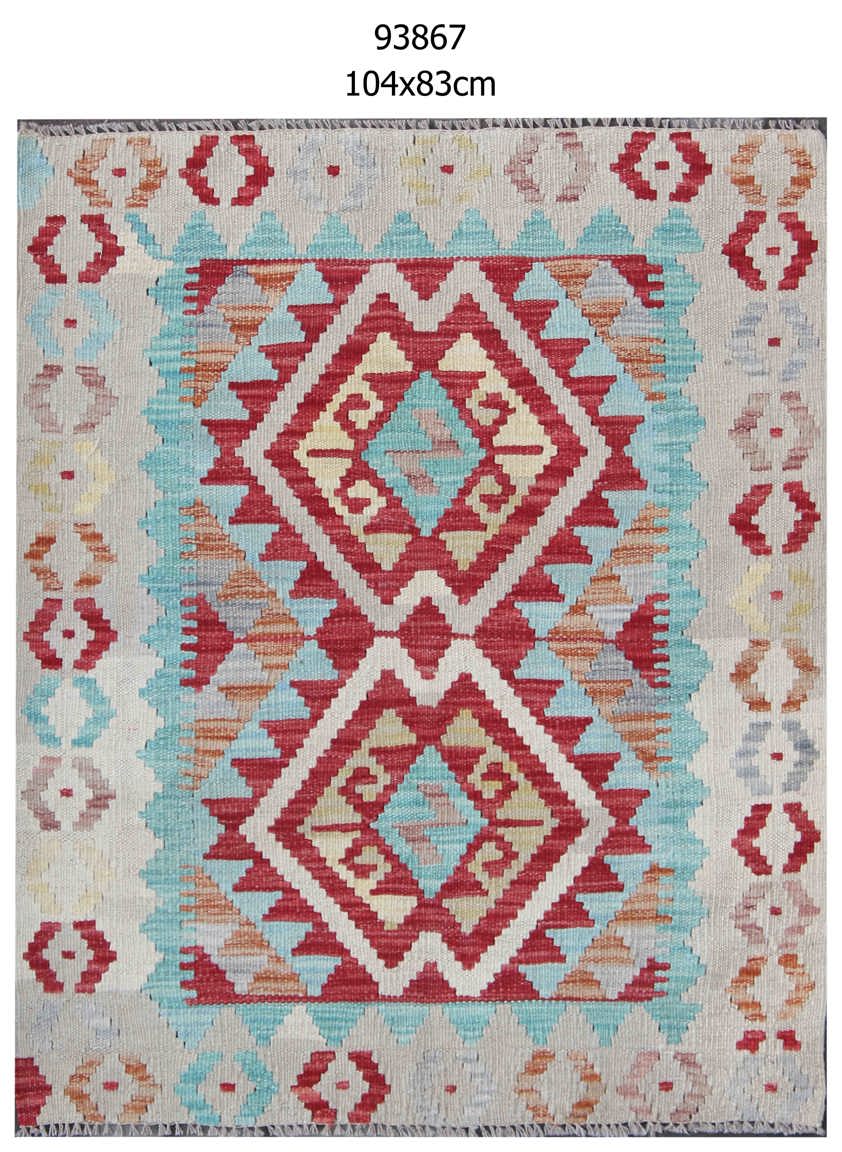
Red diamonds surround turquoise centres on this Afghan kilim rug. Cream bands separate the strong outlines from the smaller angular figures inside. A pale surrounding field carries compact geometric motifs in red, blue, pink and warm neutral tones. The two principal forms meet through a small central connection, giving the composition a clear vertical axis while leaving generous light intervals around the pair. Fine horizontal shading softens the blue and cream areas. Red is used both for the main enclosures and smaller perimeter units, connecting the field with its supporting details. The upper and lower centres differ slightly in internal geometry.
A narrow outer finish keeps the arrangement open, allowing the scattered side figures to provide the frame rather than a broad solid border. Kilim flatweaving forms pattern through coloured wefts interlaced with warp threads. This produces a flat textile without knotted pile. Nested angular boundaries can enlarge a small figure into a dominant medallion, while related units repeat more openly around it. Afghan kilims use this relationship between large centres and smaller details to balance a readable principal arrangement with variation across the lighter surrounding field.
This rug would complement pale wood, plain cream fabrics and softly coloured walls. A turquoise accessory could echo the centres, and muted red details elsewhere would connect with the outlines. Keeping both diamonds visible would preserve their balance. Quiet surrounding patterns would allow the smaller side motifs to remain legible and reveal their changing shapes when viewed nearby.