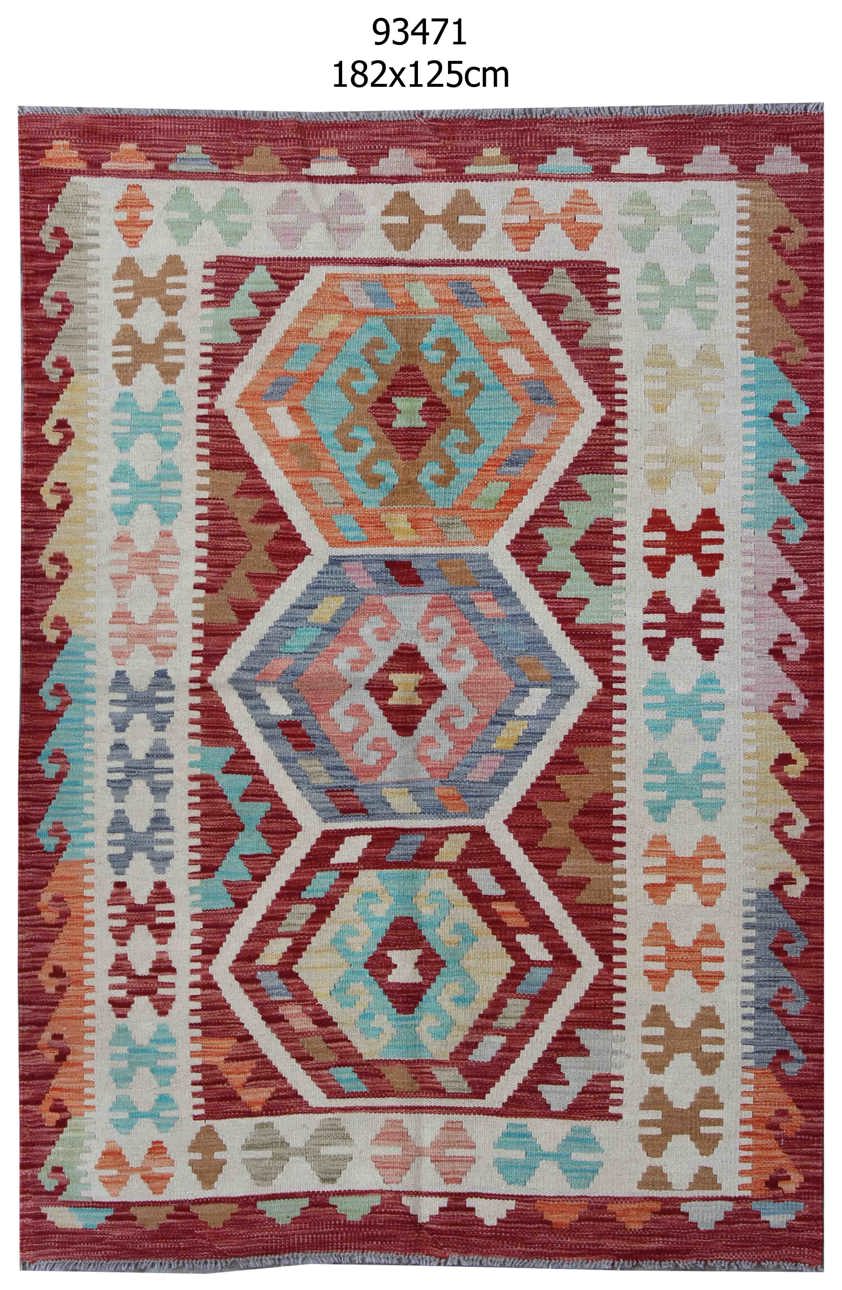
The upper hexagon of this Afghan kilim rug introduces orange and turquoise, followed by a cooler blue centre and a lower red-and-cream form. Their concentric outlines create three distinct colour studies within the warm field. Pale side bands are filled with small angular emblems, giving the bold central drawing a more delicate accompaniment. Fine patterned rows enclose the ends and connect the side details. The red background gives the layered outlines clarity. The upper hexagon is warmer, the middle cooler, and the lower form more strongly red and cream, creating a changing rhythm down the rug.
Fine horizontal tonal variation adds visual texture to the flat surface. Smaller side motifs offer another scale of detail without competing with the principal sequence. Coloured weft threads form the patterned face of a kilim as they pass through the warp. This flatwoven construction creates a surface without knotted pile. Afghan furnishing traditions use its angular possibilities in many ways, from repeated small units to larger connected medallions such as these. This rug would bring colour to a bedroom or intimate sitting area with plain fabrics.
Cream upholstery could echo the borders, while turquoise accessories would pick up the cooler centres. Warm timber would sit comfortably beside the red and orange. An uncluttered placement would preserve the three-part sequence and allow the changing internal colours to remain visible. A simple table with open legs could leave the broader forms legible while the pale side repeats continue to provide detail around the furniture.