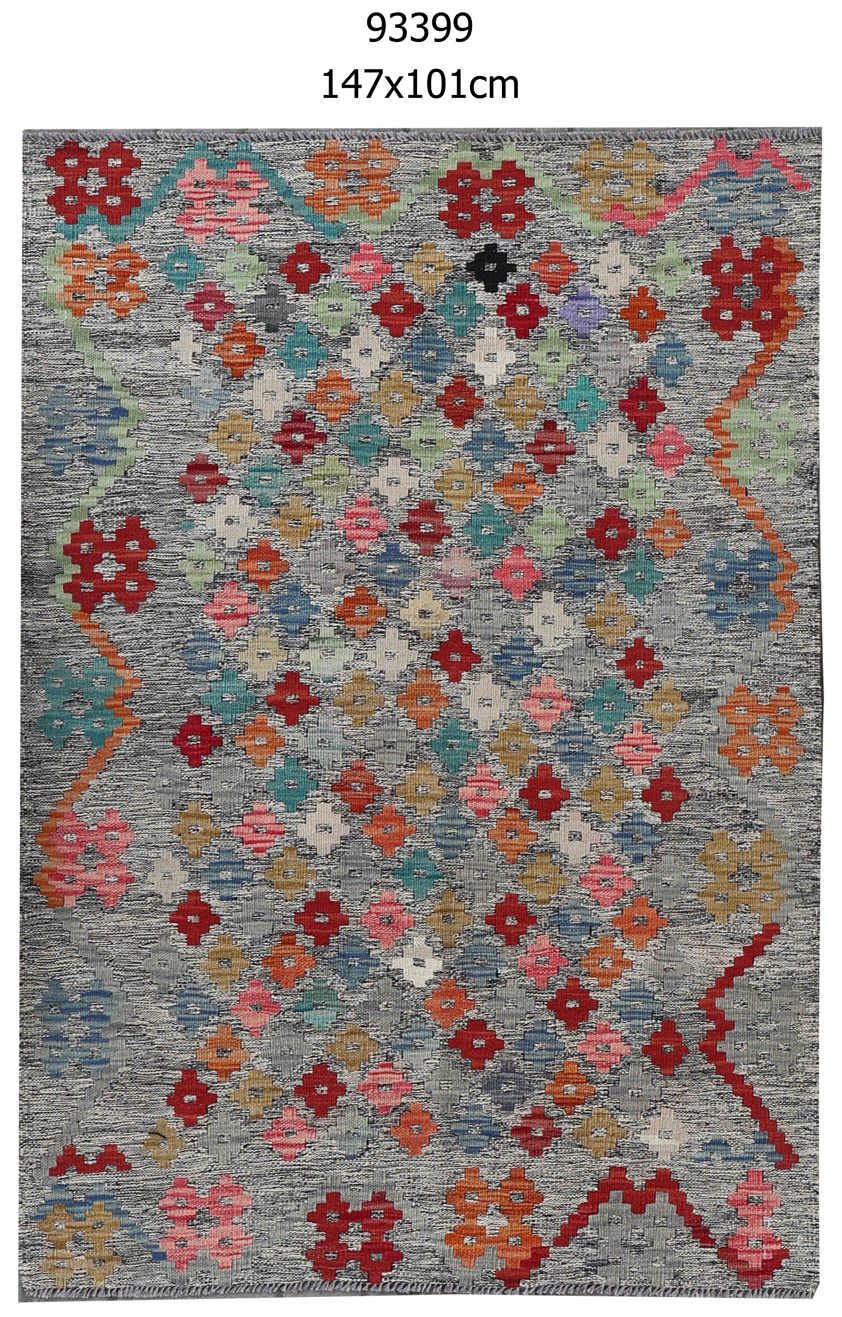
Small multicoloured motifs are scattered across the grey field of this Afghan kilim rug. Flower-like geometric units, little diamonds and angular marks appear in red, blue, pink, cream and muted yellow. The pattern is closely distributed but not rigidly gridded. Red angular lines near the sides introduce a larger scale of drawing, giving the fine central detail a more defined outer structure. The grey background has visible horizontal changes of tone, creating a shaded setting for the brighter motifs.
Some small forms stand out strongly, while others sit closer to the field colour. This variation gives the flat surface depth and makes the design interesting in sections. The red side lines help contain the scattered ornament without creating a broad, heavily patterned border. Kilim is a flatwoven textile form, produced by coloured wefts interlacing with warp threads. It differs from knotted pile construction. Small angular units can be combined into densely varied fields, one of many approaches found within Afghan geometric furnishing traditions.
This rug would suit a bedroom or smaller sitting area with plain fabrics. Its many accent colours offer several possible links to existing accessories, while the grey provides a relatively quiet foundation. Pale wood would lighten the setting, and darker furniture could connect with the shaded ground. An open table would leave the scattered motifs visible around it. Keeping nearby patterns restrained would allow the changing small forms and stronger red side details to remain the main decorative interest.