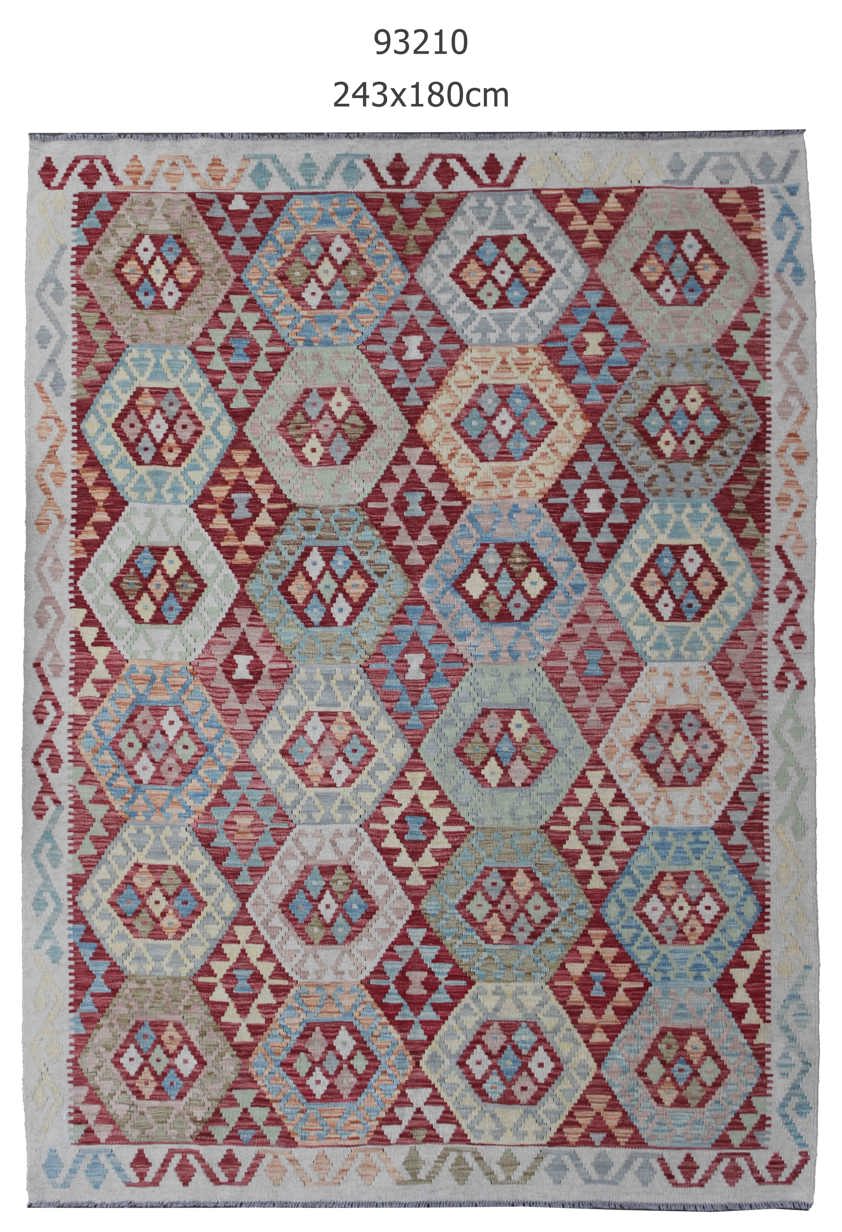
A pale hexagonal trellis gives this Afghan kilim rug its ordered structure. Within each compartment, smaller red and cream geometric forms create a changing internal pattern. Burgundy fills many of the spaces between the larger outlines, while soft blue and muted yellow details introduce a lighter range of accents. The result combines a clear repeat with considerable variation from one unit to the next. The large pale shapes are easy to recognise at a distance. Closer inspection reveals the smaller diamonds, stepped marks and subtle shifts of colour within them. Narrow border bands continue the angular drawing, keeping the frame closely related to the field.
Horizontal tonal variation adds visual texture across the flat surface, softening the regularity of the underlying grid. The word kilim describes a flatwoven textile in which coloured wefts cross the warp to produce the design. This is distinct from knotted pile construction. Repeated angular forms and stepped edges are well suited to the weaving method, though the range of possible arrangements is broad. Afghan kilims form part of a varied textile culture rather than following a single uniform palette or pattern.
This rug would work well with simple upholstery and natural wood, bringing pattern without requiring strong colours elsewhere. Burgundy accessories could echo the darker centres, while pale blue offers a softer connection. Its all-over repeat remains visually coherent around furniture, making it suitable for a bedroom or sitting room where only sections of the field may stay exposed.