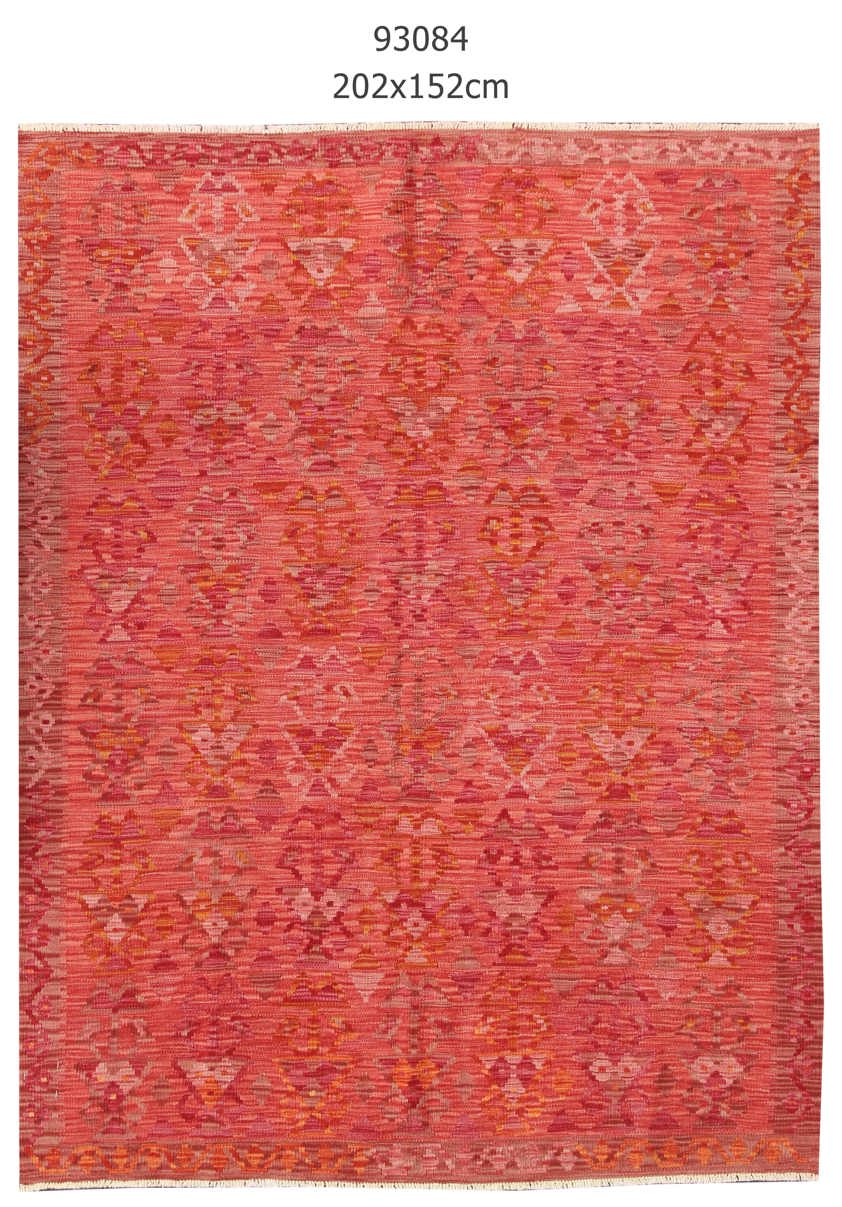
Layers of coral, orange and pink give this Afghan kilim rug an almost continuous field of warm colour. Geometric motifs remain visible within it, but their outlines sit close in tone to the surrounding ground. Small angular figures and larger repeated shapes emerge gradually, making the design feel softer and more atmospheric than a sharply contrasting medallion arrangement. The photographed surface is animated by fine horizontal changes. Some passages lean towards deeper red, while others introduce brighter orange or pale pink. These shifts carry the eye across the full width and length, giving the rug visual texture even where the pattern is least distinct.
The edges continue the same tonal language, so there is no abrupt separation between a heavy border and the central field. Afghan kilims belong to a wider domestic flatweaving heritage that includes patterned floor coverings and practical woven bags. Angular motifs and repeated lozenges are familiar within this repertoire, although related designs occur across many neighbouring textile traditions. That history provides a broad context for the geometry without identifying a particular local community.
Here, the design's character comes principally from its warm tonal relationships and the way pattern blends with colour. At 202 × 152 cm, this rug could give a compact sitting room or bedroom a concentrated source of warmth. Pale walls and natural linen would let the coral shades lead, while walnut or dark-painted furniture could provide definition. Dusty pink or terracotta accessories would extend the palette gently through the room.