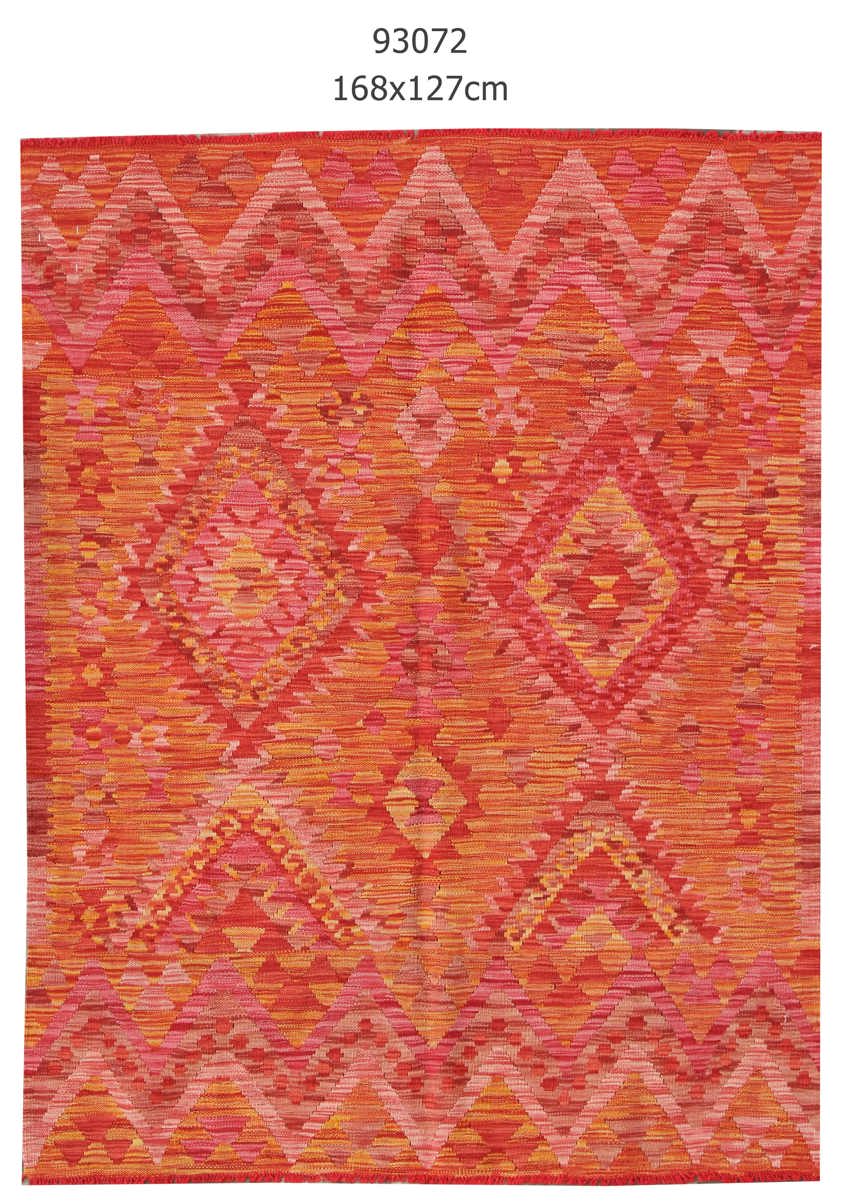
Orange-red and pink create a closely blended geometric surface on this Afghan kilim rug. Pale angular lines form a network of large diamonds, with smaller nested shapes appearing inside them. The design is more softly defined than a strongly contrasting medallion pattern, allowing the warm colours to carry much of its character. Small lighter marks add points of detail across the field. Horizontal colour variation is especially noticeable here. Coral, orange and deeper red passages move across the rug, sometimes strengthening an outline and sometimes allowing it to recede.
The pale geometry therefore changes in emphasis as the eye travels over the surface. Rather than a substantial enclosing border, the edges continue the same warm decorative language, giving the composition an open, all-over quality. Kilim belongs to a broad flatwoven textile tradition found across Afghanistan and surrounding regions. Afghan domestic furnishings also include patterned bags and other woven objects, where repeated lozenges and angular figures form an established vocabulary. These shared designs provide historical context, but cannot by themselves identify a particular community or symbolic meaning.
The photographed rug's individuality rests in its tonal warmth and the way the diamond network blends into the ground. Measuring 168 × 127 cm, this rug could add a concentrated wash of colour to a bedroom or small sitting area. Pale plaster and natural wood would offer a calm setting, while dusty pink fabrics could extend its softer tones. It would also sit comfortably beside darker furniture that gives the orange-red field a clear visual boundary.