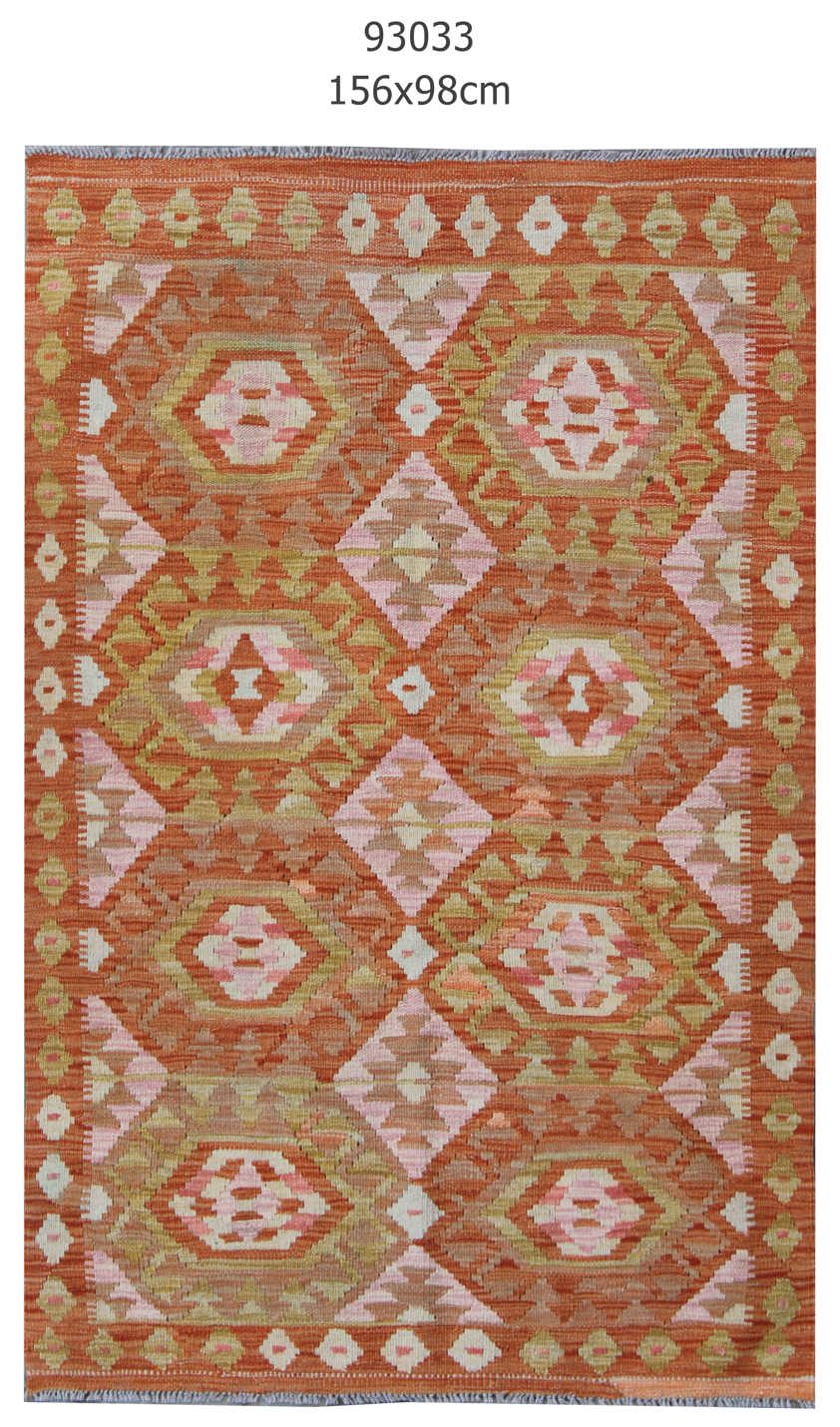
Warm terracotta spreads across this rug, carrying two vertical rows of broad octagonal motifs. Olive-toned outlines separate the larger shapes from their orange-red surroundings, while pale pink, ivory and muted blue details bring lighter points into the centres. Small diamonds gather between the principal figures and along the edges, making the whole surface feel patterned without losing its clear underlying order. Afghanistan's textile traditions encompass domestic rugs as well as woven bags and other practical furnishings. Geometric designs, including lozenges and stepped or polygonal forms, recur across this wider repertoire.
Kilims sit within the flatweave category, where pattern and the visible organisation of the woven surface have a close relationship. These broad connections help explain the directness of the design without identifying an undocumented regional workshop or maker. The colour changes within the ground are an important part of the design's appearance. They soften the strong geometry and allow the pale details to emerge at different levels of contrast. Across the top and bottom, a line of small light motifs gives a gentle finishing rhythm rather than a heavy enclosing frame.
At 156 × 98 cm, the composition remains easy to read within a relatively narrow rectangle. This rug could introduce warmth beside a leather armchair or along the side of a bed. Its terracotta foundation would sit comfortably with oak, plaster and natural linen, while olive cushions or a muted blue ceramic would pick up quieter colours already present in the pattern.