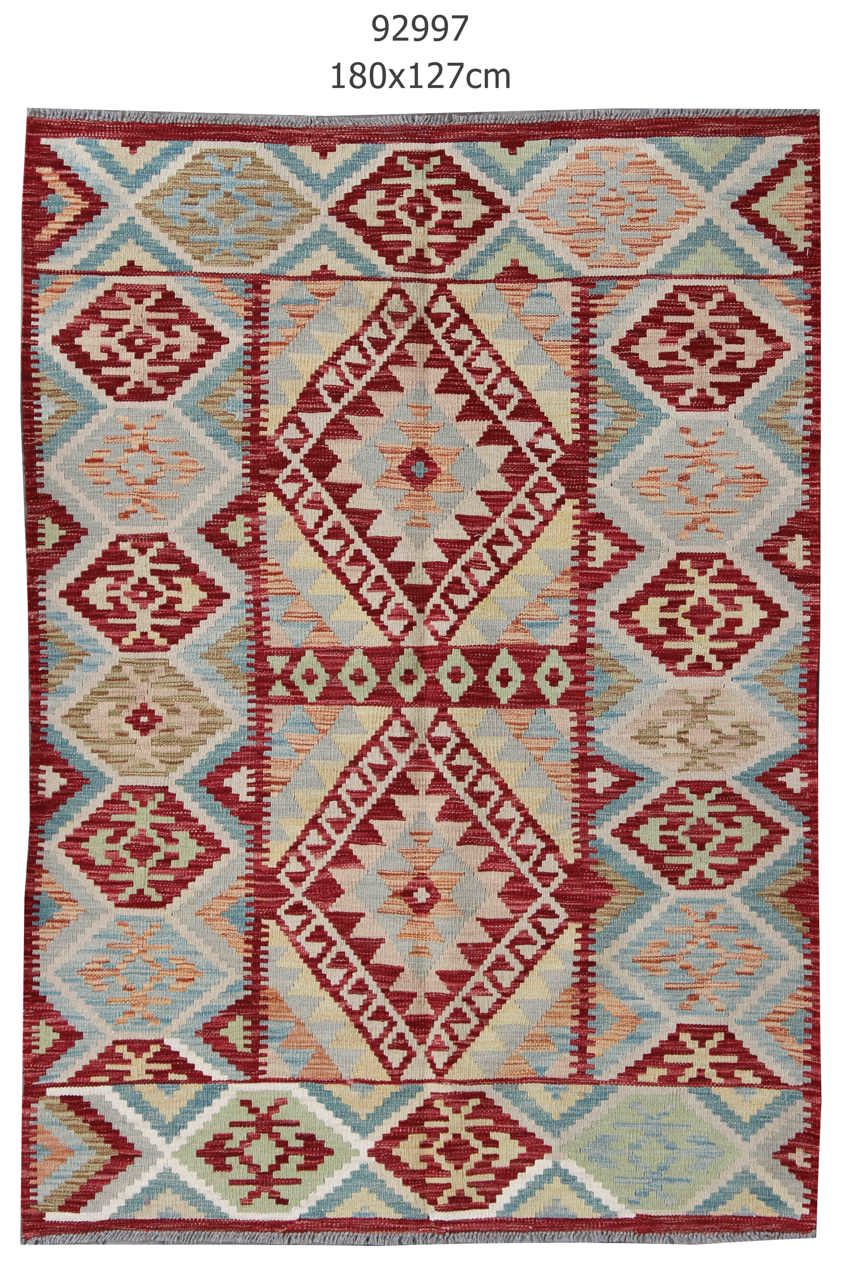
Two large cream diamonds establish the centre of this Afghan kilim rug, each set within a red rectangular area and surrounded by angular outlines. Pale blue and cream lozenges line the sides, while broader horizontal motifs finish the ends. The design therefore reads in distinct zones, with a strong central pair held inside an unusually active frame. Small ochre and blue details soften the red and cream contrast. The main medallions contain stepped inner shapes, while the surrounding lozenges use more open centres. Fine zigzags and narrow bands connect these different scales.
Subtle streaks within the pale areas add a gentle visual texture, giving the clear geometry a less severe appearance. Measuring 180 by 127 cm, this rug would suit a small seating corner or a position beside a bed. Pale blue fabrics could connect with the side panels, while red or warm wood would reinforce the central field. Leaving the ends exposed would show how their broad motifs complete the arrangement, adding detail beyond the principal medallions.
Geometric Afghan furnishings frequently develop a design through repetition and changes of scale. The same lozenge vocabulary can structure a central field, fill a side band or form a principal medallion. Kilims carry these relationships in flatwoven fabric rather than a knotted pile. Here, the use of broad side and end motifs gives the two-diamond composition a distinctive sense of proportion.