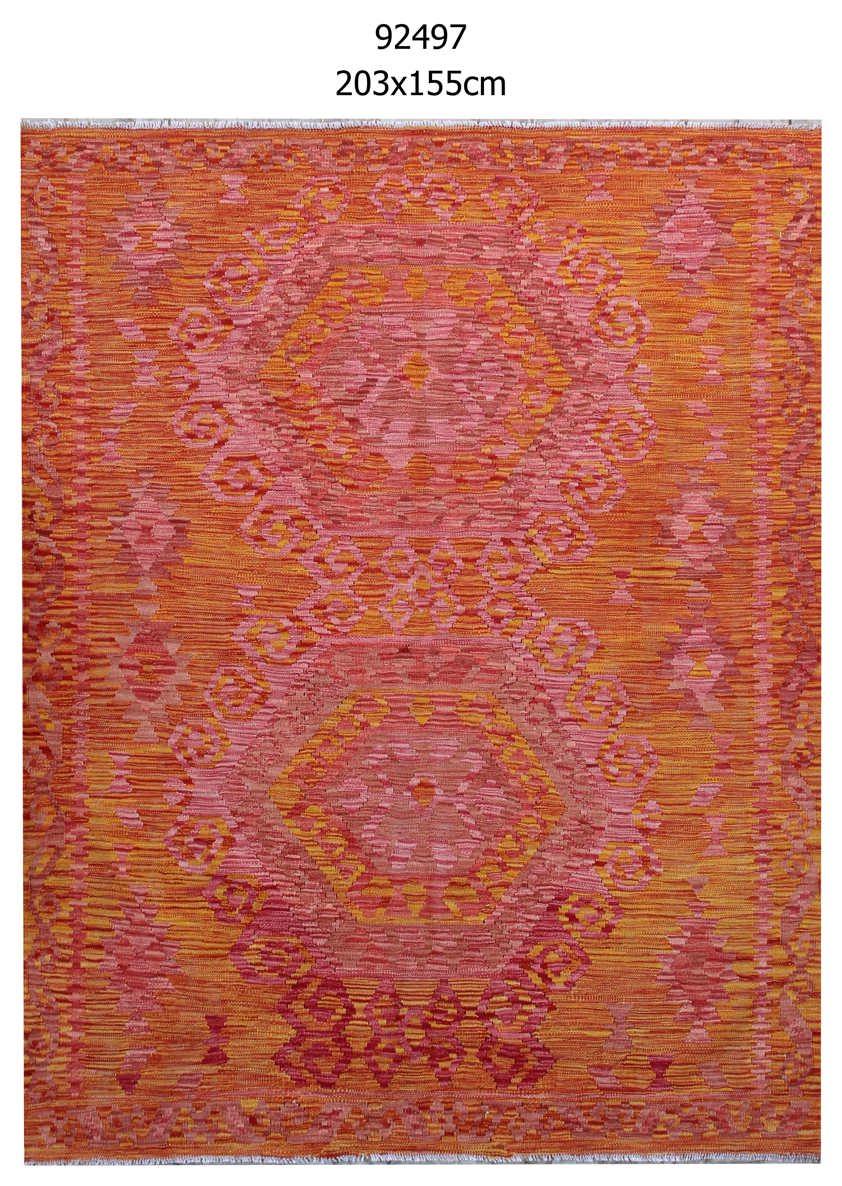
Two broad hexagonal centres emerge through the orange and pink field of this rug. Their nested interiors contain small light accents, while curled outlines surround the larger shapes. More compact diamonds and angular figures occupy the side areas. The colours stay closely related, making the drawing less emphatic than the generous scale of the two centres might initially suggest. Horizontal streaks run across the ground and the medallions, moving between yellow orange, pink and deeper red. Some sections of the curled outline appear stronger than others, and little pale marks create brief points of contrast.
A narrow patterned edge completes the composition without dividing it into sharply separate field and border areas. This rug measures 203 × 155 cm. It could bring warmth to a compact sitting room or a bedroom, especially with plain cream upholstery. Natural timber would relate to the orange passages, while muted pink fabric could answer the large centres. A quieter surrounding floor would allow the fine tonal outlines to remain visible.
Afghan geometric textile traditions encompass rugs and smaller household furnishings, with enclosed figures often developed through several nested bands. Their decorative character depends as much on the contrast between colours as on the outline itself. Here the hexagons provide structure within a predominantly warm surface. Leaving a section exposed beside the furniture would let the little side figures and curled boundaries reveal themselves gradually through the richly varied ground.