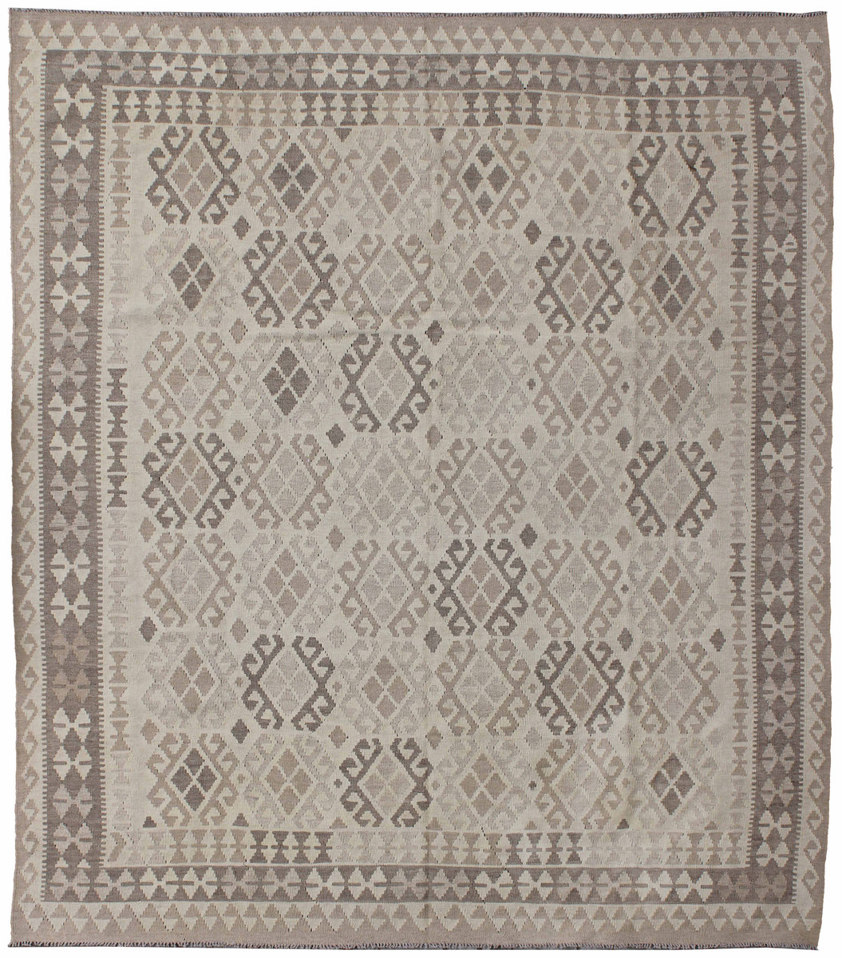
Hooked taupe motifs repeat across the ivory field of this rug. Their curled angular ends create larger open shapes, with little diamond groups occupying the spaces between them. Several narrow patterned bands make a layered border, introducing tiny triangles, lozenges and linked forms. The palette is restrained, but the drawing has a considerable range of scales and shapes. This rug measures 291 × 253 cm, a broad format that could work well beneath a substantial coffee table or between opposing sofas. Ivory upholstery would echo the ground, while taupe, stone and warm grey fabrics would relate to the pattern.
A darker timber piece could bring greater definition to the surrounding scheme without competing with the fine outlines. In Afghan kilims, geometric motifs can function as independent figures or as parts of an overall repeat. This flexibility belongs to a wider household textile tradition, where related angular forms decorate rugs, bags and other furnishings.
The design here gives the open hooked figures more prominence than a tightly interlocking lattice would, making the ivory ground an active part of the composition. Fine horizontal variations soften the neutral colours and lend the quieter areas a visible textile texture. The multiple border bands reward a closer look, with their little alternating units changing the pace around the field. An uncluttered room would allow that subtle variation to contribute detail without requiring strong colour on the floor.