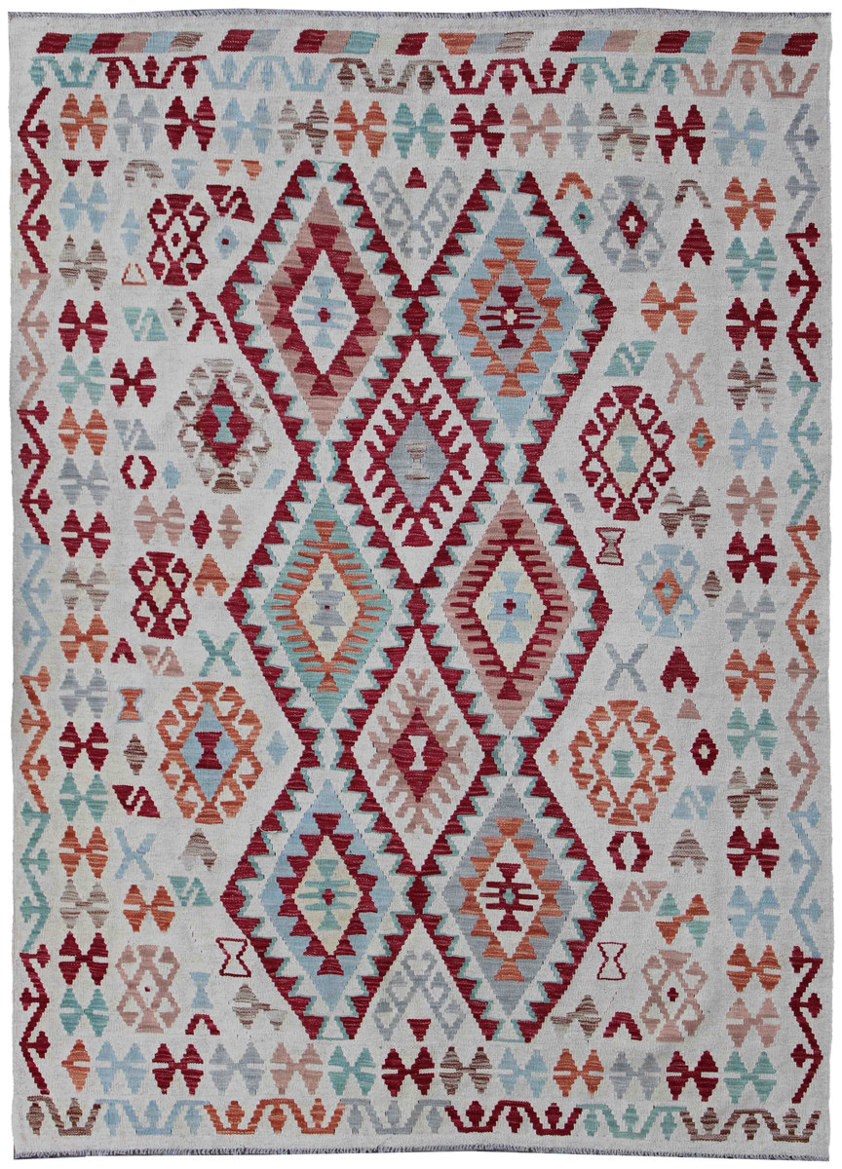
Pale blue gives this rug an airy appearance, even though its field is filled with geometric detail. Burgundy stepped outlines define a sequence of interlocking diamonds, each containing a smaller contrasting form. Light grey, muted peach and ivory introduce softer intervals around the principal figures. Scattered hooks, tiny lozenges and angular marks continue towards the edges, where a narrow patterned band closes the composition. The relationship between the large diamonds and the little surrounding motifs makes this design particularly engaging.
The central arrangement can be read immediately, while the smaller marks reward a closer look. Its pale ground would sit comfortably in a room with washed wood or cool stone colours; burgundy accessories could draw attention to the sharper outlines. At 238 × 170 cm, this rug could define a reading area or bring pattern to the open floor beside a bed. Afghan kilims form part of a wider flatwoven tradition in which geometry serves both as ornament and as a way of organising the textile surface.
Diamond outlines and repeated angular units are found in historic Afghan rugs and domestic bags, with considerable variation between individual pieces. This rug uses that familiar vocabulary in a notably light palette. The darker red details remain distributed throughout the rectangle, so the design keeps its coherence when furniture overlaps a portion of the field, and its fine visual texture is allowed to remain an active part of the room.