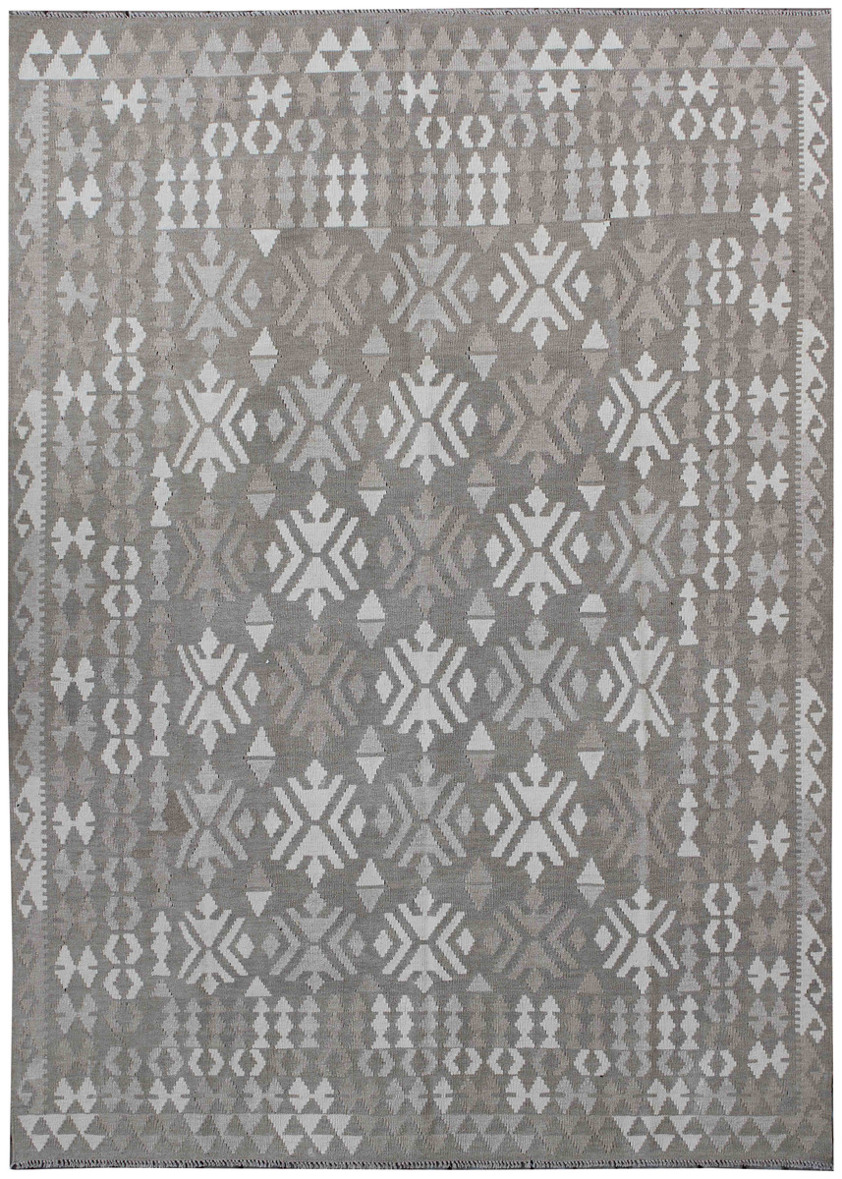
Ivory crossed shapes and small diamonds repeat across the grey field of this rug. Some units are open, with the ground showing through their centres; others are more fully defined by pale angular arms. Narrow columns of little lozenges run along the sides. A sequence of triangles and diamonds forms the outer frame, giving the field a clear rectangular boundary. Several units are more conspicuous than their neighbours, giving the otherwise orderly rows small shifts of emphasis. Near the border, the drawing becomes narrower and more continuous.
A close view reveals the difference between the broad crossed forms, their tiny accompanying diamonds and the delicate triangular marks that finish the outer edge. The use of linked geometry sits within the long history of Afghan kilims and neighbouring flatweave traditions. Small changes in a diamond, cross or stepped contour can create different relationships across a field. Enclosing bands then introduce another scale of repeat.
This rug uses close grey tones and pale outlines to make those differences apparent without a strong range of colours. The 284 × 201 cm dimensions would work well with a modest seating arrangement. Plain grey fabric could continue the ground, while ivory upholstery would pick up the stronger geometric marks. Dark timber would provide a firmer outline beside the softer neutral drawing. The repeated pattern would remain recognisable around the furniture without relying on an uncovered centre.