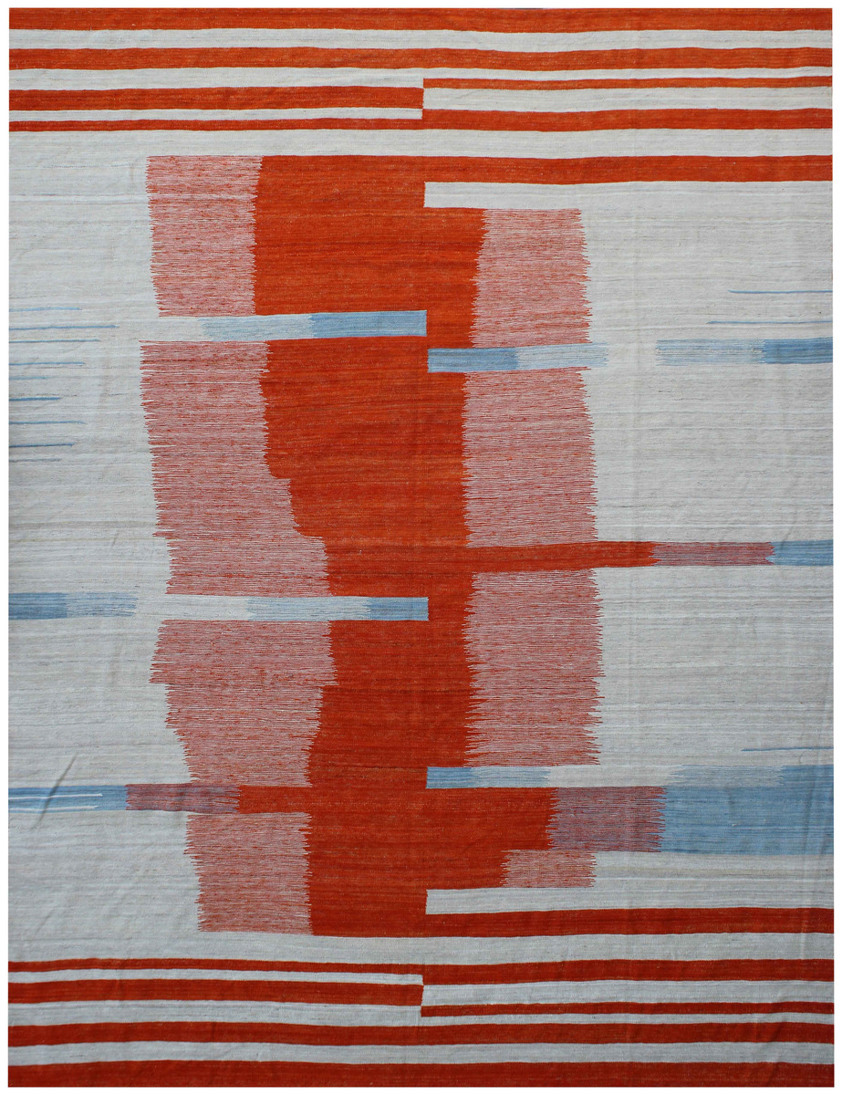
Red blocks form an irregular column through the light ground of this rug. Pink rectangular passages overlap the sides, and pale blue lines interrupt the stronger red at different heights. Narrow red stripes extend across the ends, with small offsets echoing the larger changes of direction in the centre. The composition is angular but deliberately uneven, without a conventional medallion or symmetrical field. The distinction between solid looking red and finely streaked pink is particularly effective. Pale spaces cut into the larger shapes, and small blue sections reach across the ground towards them. These details make the central column feel less enclosed, allowing its boundaries to shift as the eye follows it through the rug.
At 385 × 297 cm, this is a substantial piece for a large sitting room or an open interior. Plain cream seating could leave the red as the main colour, with a restrained blue accent answering the smaller interruptions. Furniture with an open base would preserve more of the overlapping shapes and their relationship to the pale ground. Contemporary Afghan kilims sit alongside a much older culture of geometric domestic textiles. Angular line and repeated bands can be developed into abstract compositions as readily as more traditional medallions. This rug makes that change of emphasis clear: its interest lies in the varying width of the red column, the different lengths of the blue interruptions and the broad light passages that separate the central arrangement from the striped ends.