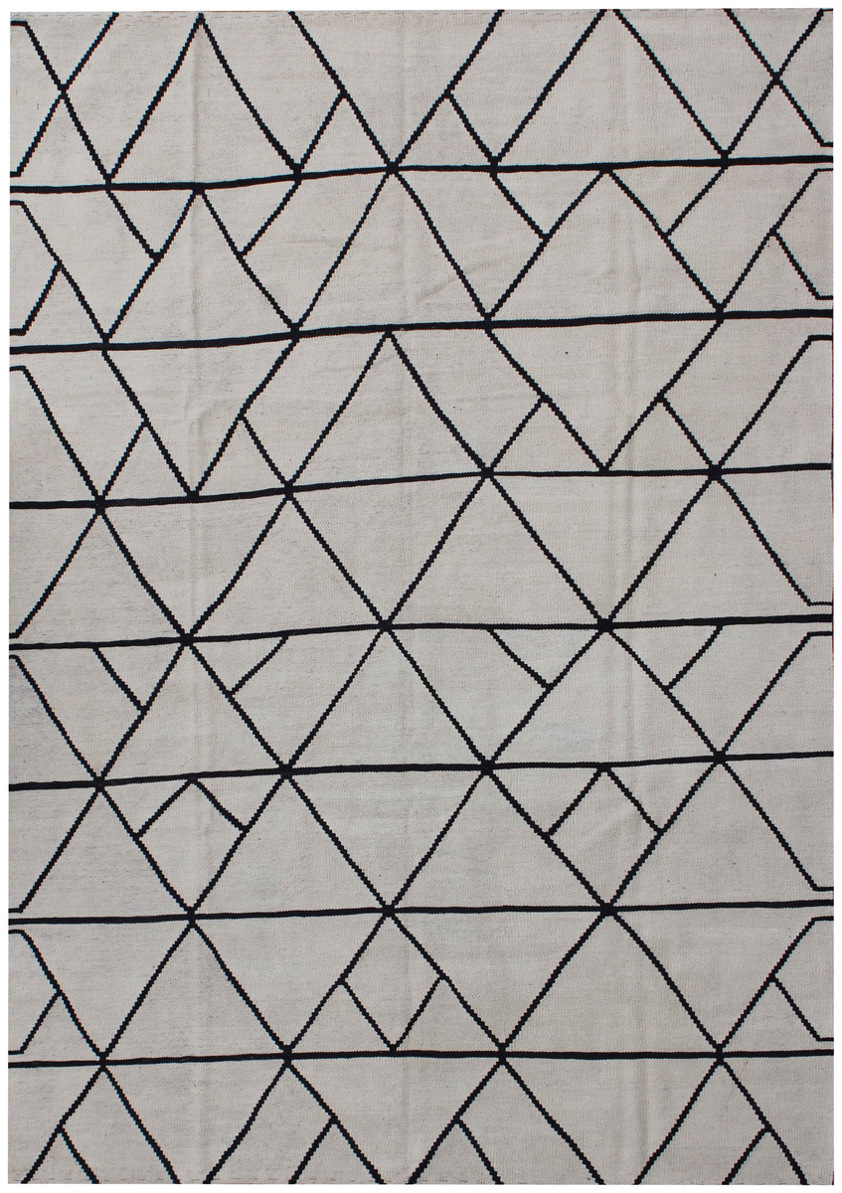
This contemporary Afghan kilim rug combines open triangular compartments with a pale ivory ground. Charcoal lines run horizontally and diagonally, meeting at points that vary across the width. Some compartments remain large and empty, while others contain a smaller angular outline. These changes of scale give the network a lively rhythm despite its restricted palette. The dark drawing has a gently uneven course, lending character to the otherwise simple geometry. Pale space is the dominant element, so the rug feels open rather than densely patterned.
The lines reach the edges without a separate border, making the whole surface read as one continuous arrangement. Small differences within the ivory add a quiet background texture. The triangle, diamond and repeated band are familiar tools within the geometric traditions of Afghan kilims. Contemporary designs can combine them through a much sparer vocabulary, leaving outlines to suggest the larger pattern. Here the horizontal divisions provide order, while the changing diagonal angles introduce movement between one row and the next.
At 286 × 201 cm, this rug could define a sitting area with plain upholstered furniture or bring pattern to a bedroom in soft neutral colours. Dark metal and painted wood would relate to the lines, while warm oak would soften their contrast. A table placed over part of the field would still leave the surrounding geometry visible, allowing the rug to connect the furniture without relying on a central medallion.