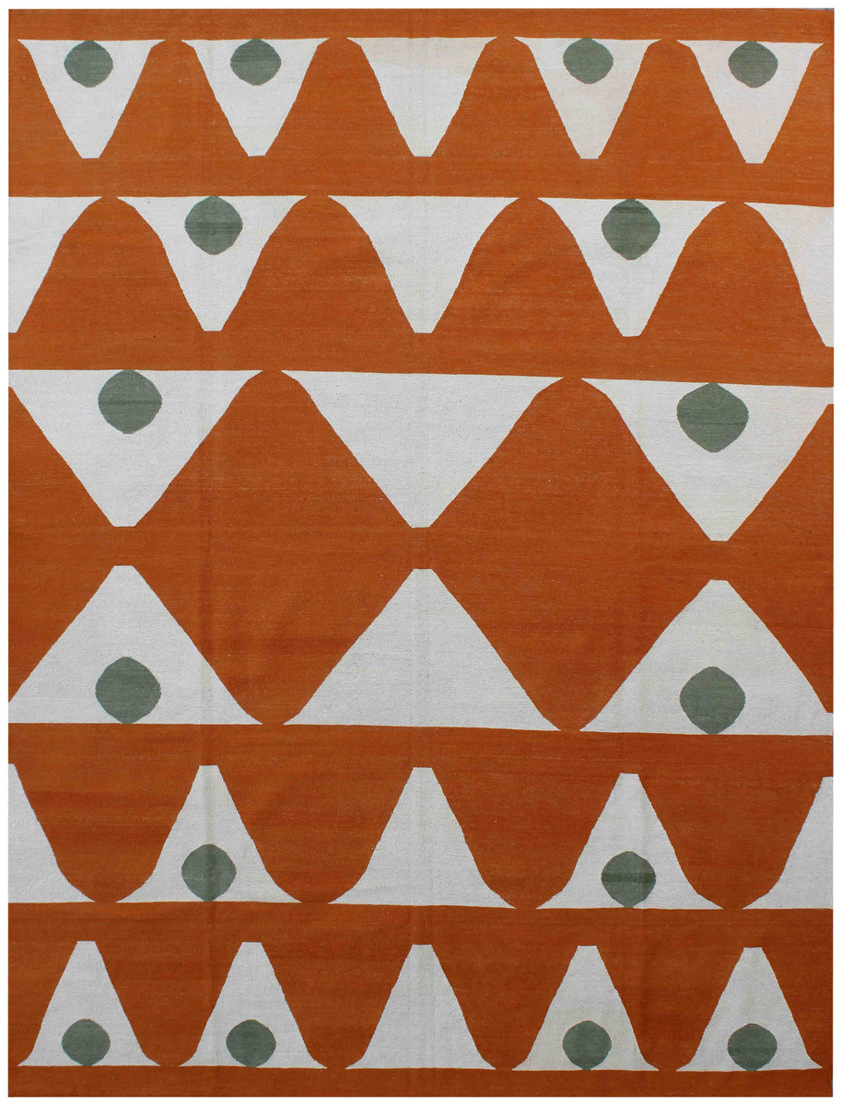
Orange and ivory divide this large rug into bold horizontal sequences. Triangular forms widen or taper between rounded peaks, with muted green circles placed inside selected pale sections. The widths change from one band to another, so the central shapes are much broader than those near the ends. A narrow orange perimeter holds the graphic field together.
The 395 × 298 cm size gives these simple elements considerable presence. It could establish a strong floor pattern beneath a generous seating group in plain fabrics. Cream upholstery would answer the ivory shapes, while a muted green chair could refer to the circles. Furniture with a spare outline would allow the changes between wide and narrow triangular bands to remain apparent around it. Kilim is a flatweave category with a long history across Afghanistan and neighbouring regions.
Geometric divisions are an important part of that wider design vocabulary, from small repeated lozenges to broad bands. This contemporary Afghan rug enlarges the elements and reduces their number, using the relationship between orange ground, pale triangles and isolated circles as its main decorative structure. The circles soften the otherwise angular scheme, and their green is quieter than the surrounding orange. Slight variations in the contours keep the divisions from appearing perfectly mechanical. Across the middle, the broad ivory points create large light intervals; towards the ends, smaller repeated forms introduce a closer pace. The design remains readily legible even where furniture interrupts part of the field.