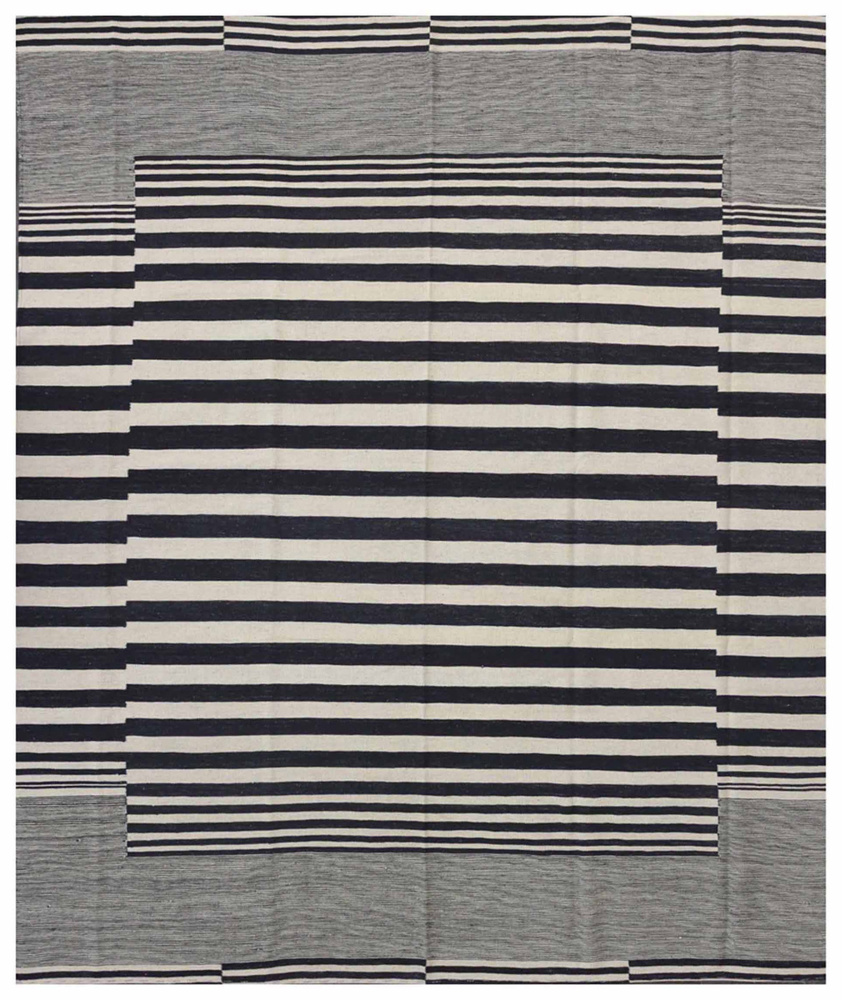
Black and cream stripes occupy the broad centre of this rug, widening towards the sides before returning to narrower bands near the ends. A grey surround gives the striped area a clear setting, with fine black-and-cream lines continuing around parts of the perimeter. The stepped edges are essential to the composition, creating a relationship between the central panel and the quieter outer field.
This rug has a broad 250 by 294 centimetre format that would work well beneath a dining table or within a generous seating group. Simple furniture would allow the striped structure to remain readable. Pale timber could soften the black, while charcoal upholstery would connect with the darker bands. The grey outer areas provide room for the design to settle around the furniture. Kilims belong to a widespread flatweaving tradition across Afghanistan and neighbouring regions, where strong divisions of colour can create clear geometric patterns.
This contemporary Afghan kilim rug uses a limited vocabulary of horizontal lines and stepped outlines. Its interest comes from changes of width and spacing rather than floral detail or a central medallion. Look towards the ends, where the striped panel contracts: those shifts keep the design from becoming a simple block of parallel bands. Seen as a whole, this rug combines the directness of black and cream with a more measured grey frame, giving a bold pattern a spacious overall balance.