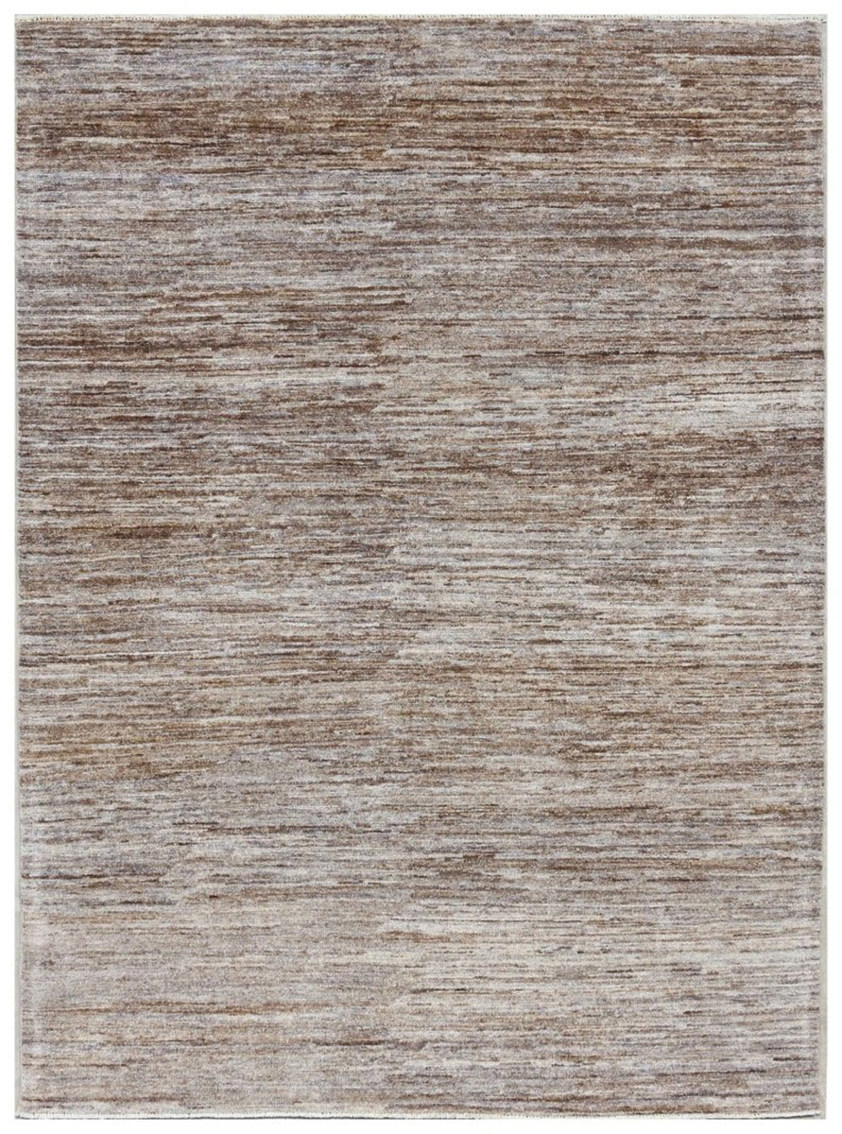
Fine pale lines run across the warm brown field of this rug, creating a softly striated appearance. Some passages are almost ivory, while others contain deeper taupe and darker brown marks. Their changing density gives the surface more variation than a plain neutral ground, without introducing an emphatic geometric or floral motif.
The 154 by 210 centimetre proportions would suit a modest seating area or an open bedroom floor. This rug could sit with painted furniture, oak or darker timber, depending on which part of its palette is emphasised. Plain cream fabric would relate to the pale lines, while a warmer wall colour could bring out the brown beneath them. Gabbeh design is associated with a tradition rooted in western and southwestern Iran, often giving colour and simple organisation a leading role. This contemporary Afghan rug takes a particularly restrained approach. Short horizontal changes provide the ornament, allowing the rectangle to remain visually consistent when viewed from different directions or partly covered by furniture.
Look near the middle and the lighter marks gather into irregular passages, then thin again towards darker areas. The transitions are gentle enough for this rug to remain quiet across the room. Nearby, the individual lines become clearer, revealing differences of length and spacing within the neutral field. Its appeal lies in that balance between an uncomplicated overall colour and a finer, less predictable drawing that rewards a closer view.