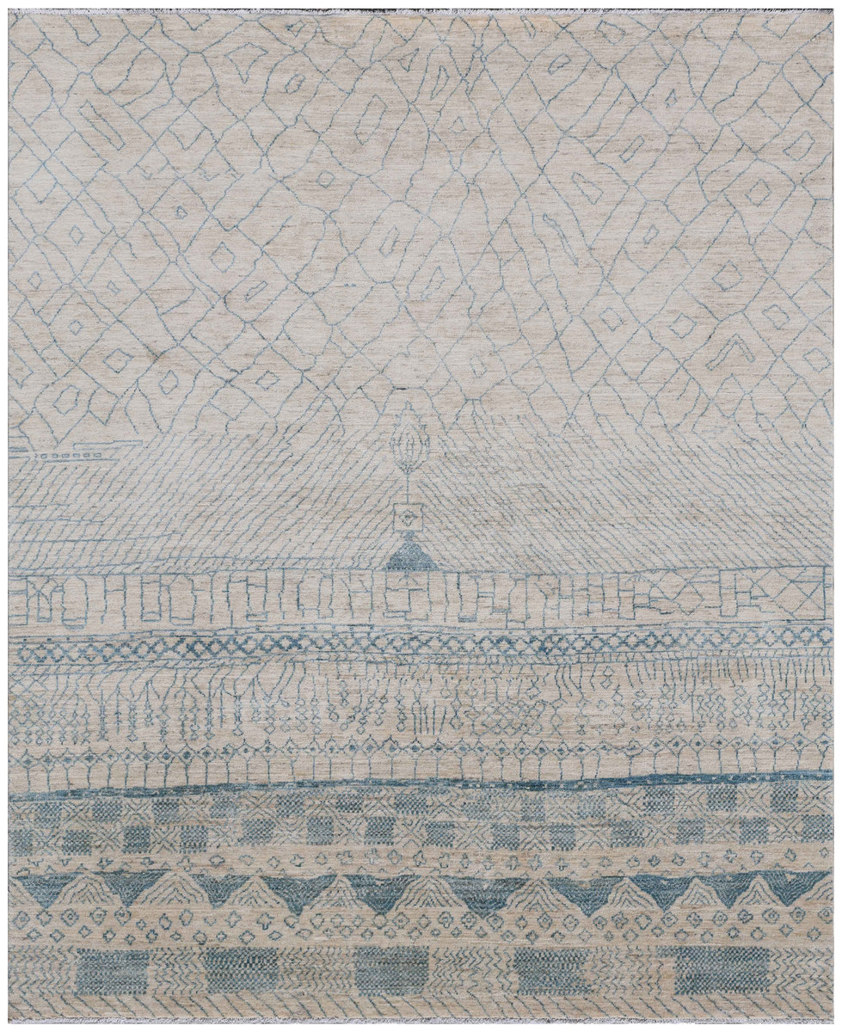
Fine blue-grey lines sketch a loosely ordered geometric landscape across the pale surface of this contemporary Afghan Berber style rug. In the upper section, diamonds and angular paths overlap with generous intervals between them. Lower down, the drawing becomes more concentrated, passing through closely spaced diagonal marks, narrow lattice bands and blocks of small repeating shapes.
This change in density is central to the design. Rather than presenting an identical pattern from end to end, the rug moves between airy space and detailed ornament. The quiet contrast keeps the whole composition restrained, while the shifting horizontal divisions give it a distinct sense of direction. Its pale ground remains visible through the linework, preventing the more densely patterned areas from feeling heavy. Berber style is a design description here, separate from the rug's Afghan attribution. Morocco's Amazigh textile traditions encompass varied regional approaches to geometry; contemporary designers often respond to their expressive lines and open compositions. That broad visual connection does not assign this rug to a Moroccan weaving community.
At 298 by 235 cm, this rug offers substantial coverage for a sitting room, where its understated palette could sit comfortably with limestone, pale timber and textured upholstery. Positioning the denser bands at an exposed end would make the changing composition easier to appreciate. Blue-grey accessories could draw attention to the linework, while warmer natural finishes would soften the overall scheme without competing with its delicate drawing.