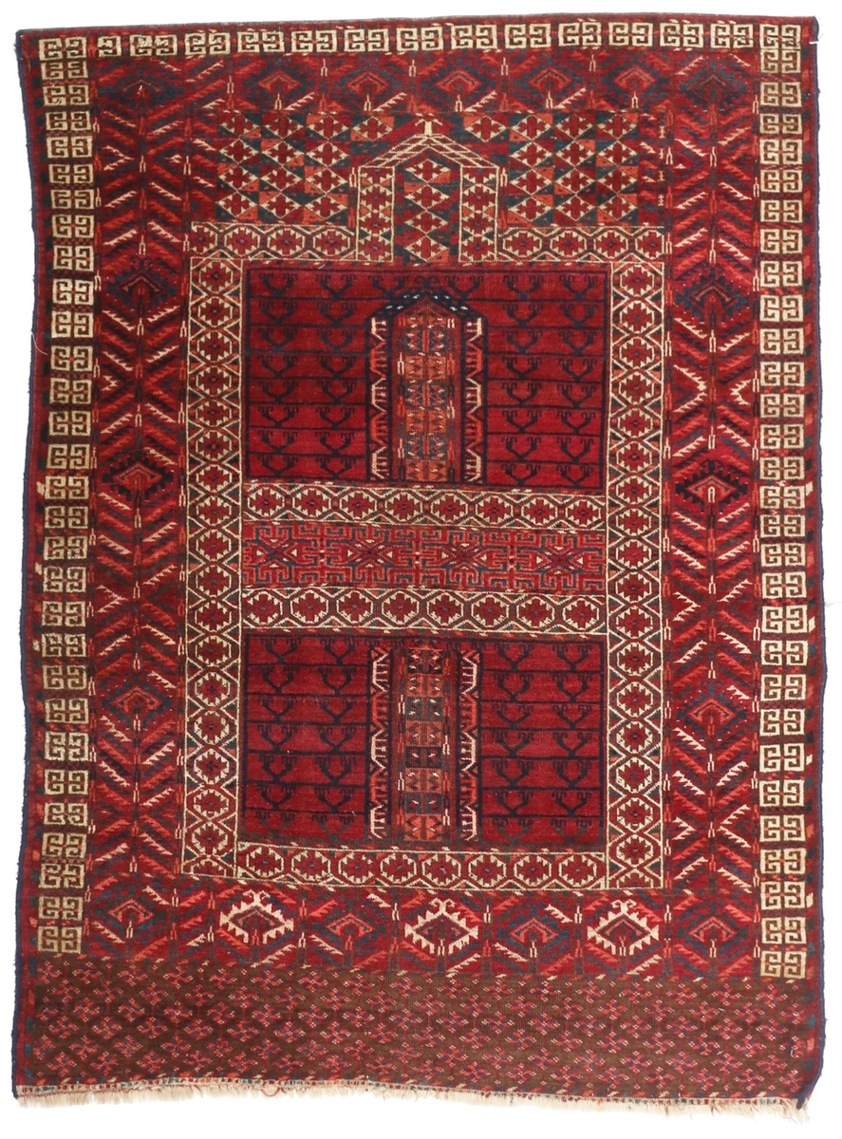
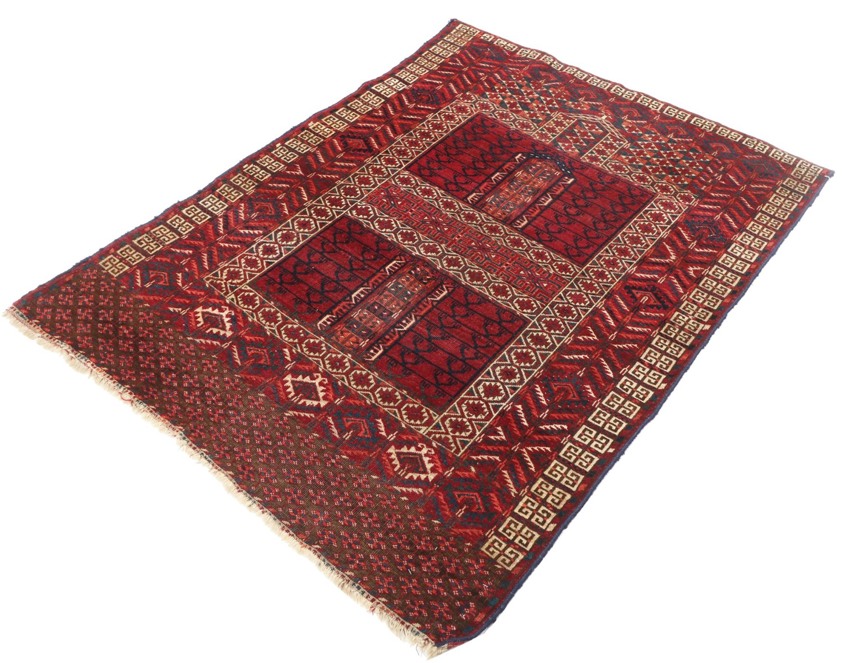
This Antique Turkman Tekke ensi, dating to circa 1900, represents a highly traditional form of Central Asian weaving, originally used as a tent entrance hanging. Distinguished by its architectural composition, the design is divided into panels framed by intricate borders, symbolising both protection and transition within nomadic life.
The rich madder red field is adorned with finely drawn geometric motifs and stylised tribal elements, rendered in deep indigo, ivory, and subtle brown tones. The precision of the drawing reflects the disciplined craftsmanship of Tekke weavers, while the natural dyes have matured beautifully over time, producing a soft, harmonious patina.
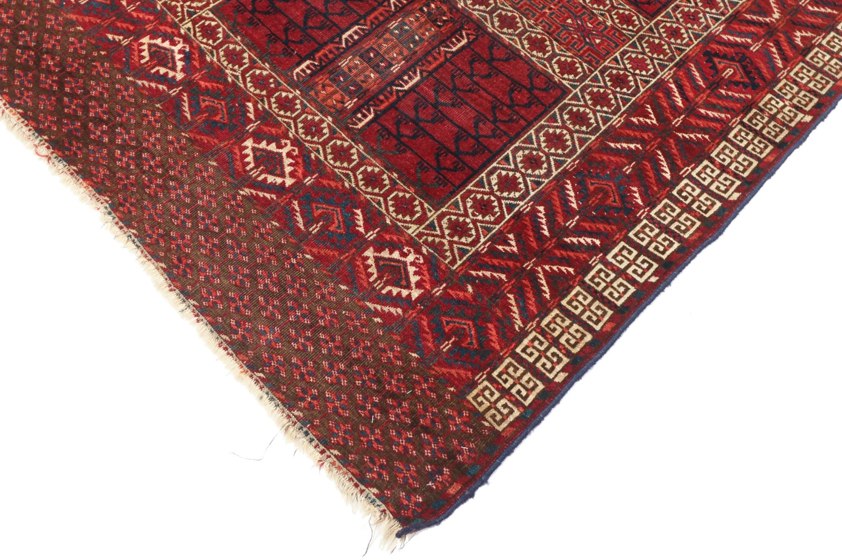
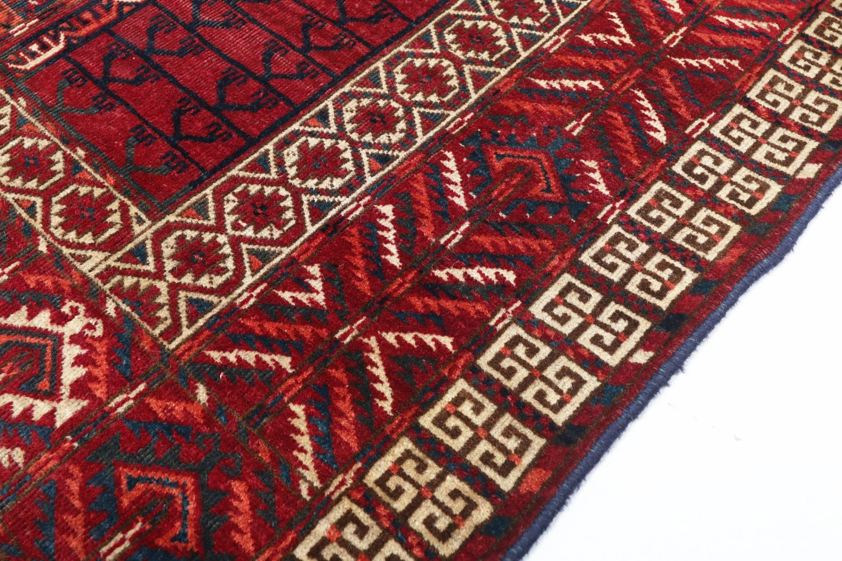
Characteristic elem motifs and repeating patterns fill the lower field, grounding the composition with rhythm and balance, while the upper sections introduce more structured, almost architectural detailing. The borders are particularly refined, featuring classic meandering and angular motifs that frame the piece with clarity and depth.