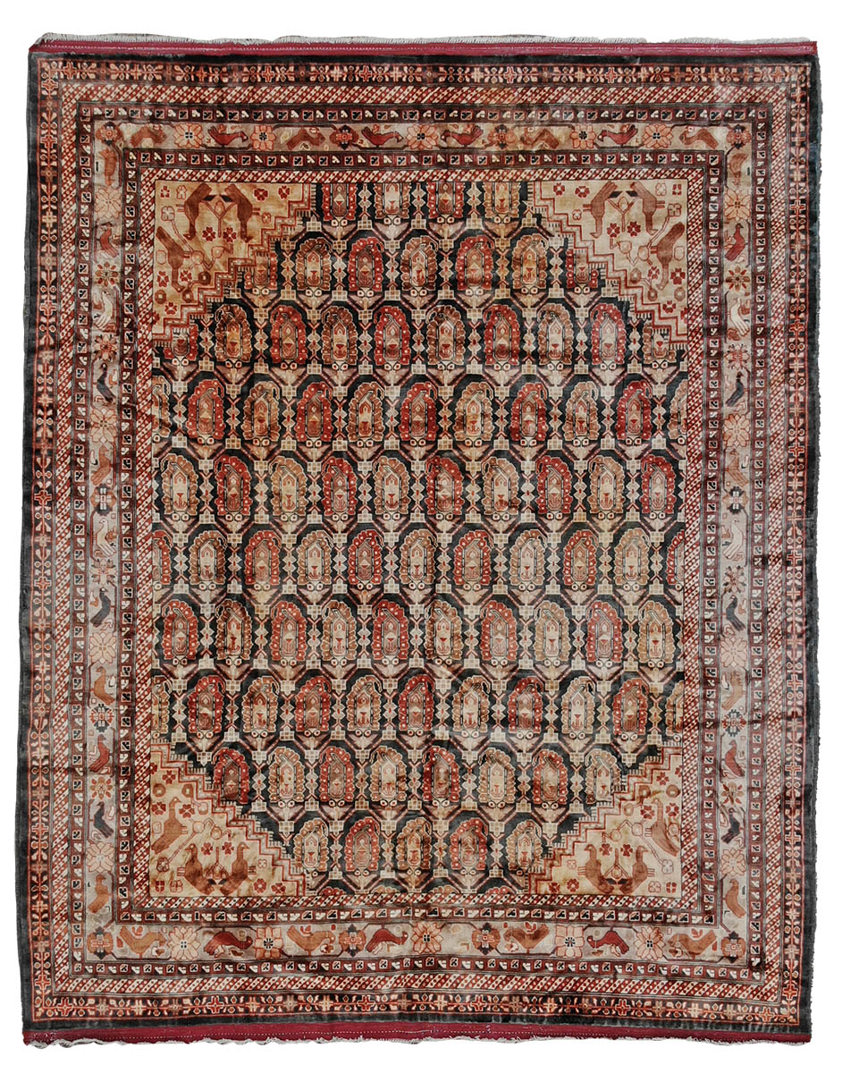
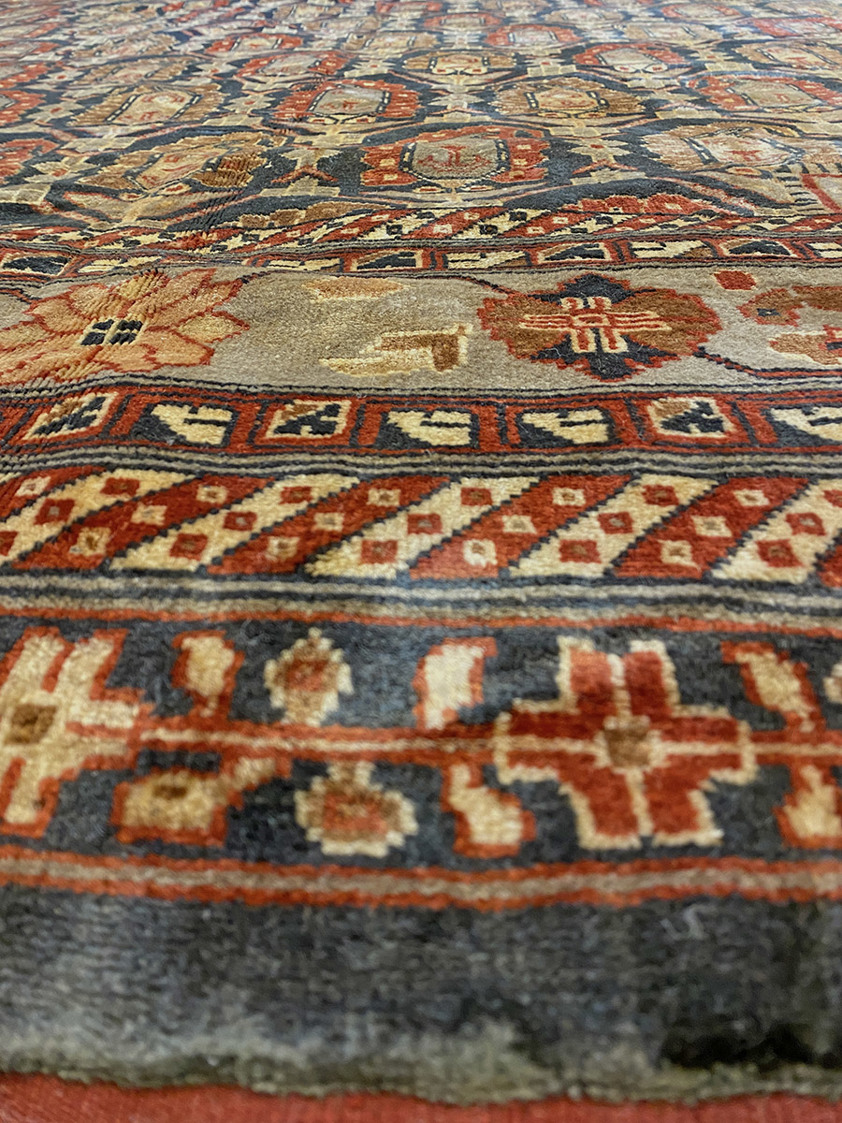
A masterwork of tribal artistry and refined execution, this antique Persian Afshar rug marries traditional motifs with painterly elegance and rare structural finesse. Likely woven between 1900 and 1920 by Afshar nomads or settled weavers in southeastern Iran, the piece stands apart not only for its composition but for the extraordinary quality of its materials—fine, lustrous wool that shimmers subtly as light dances across its surface.
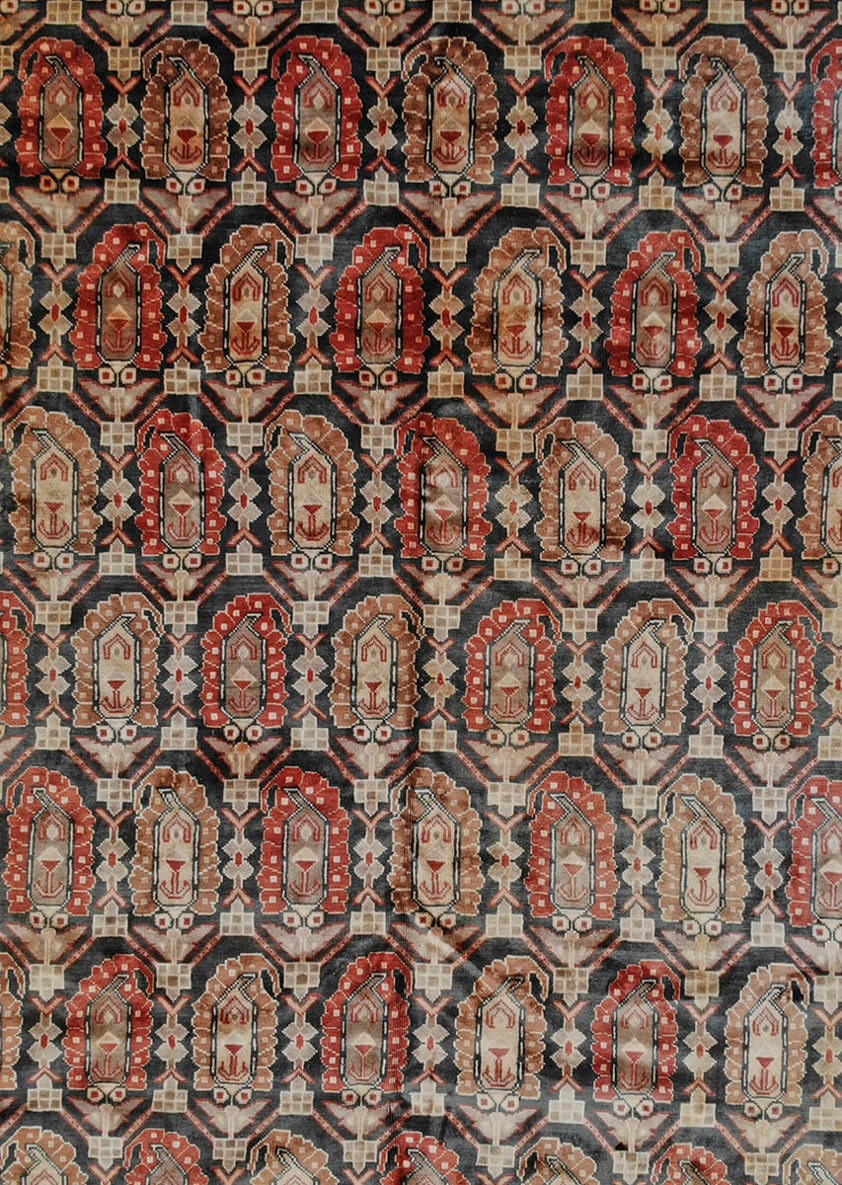
At first glance, the field reveals a rhythmic allover Botteh (paisley) pattern, yet the arrangement cleverly gathers into a visual nucleus, conjuring the impression of a loose medallion without relying on formal symmetry. This abstracted centralisation offers a beautiful tension between tribal spontaneity and deliberate design—an unmistakable hallmark of the most sophisticated Afshar weaving.
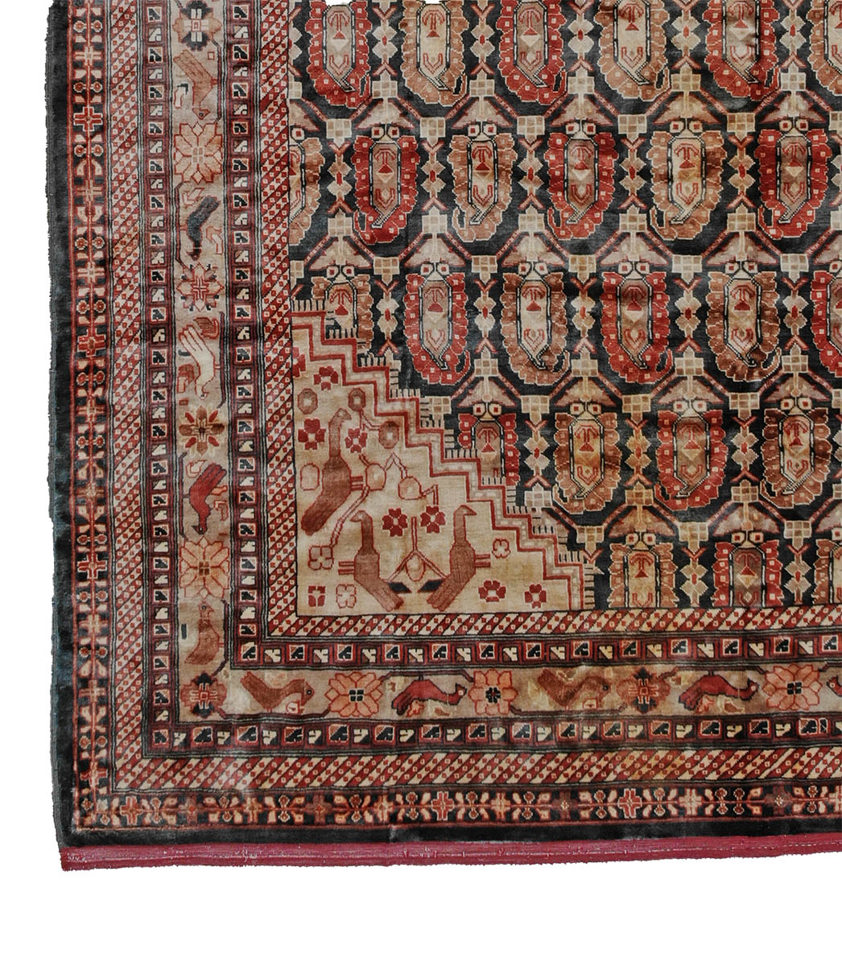
Each Botteh motif is minutely articulated, outlined in inky indigo and filled with stylised latticework, suggesting layers of symbolic meaning. The composition then transitions into each of the four corners, where the weaver has rendered pictorial vignettes of birds in the wild, delicately perched among flowering branches and geometric trees. These naturalistic touches are exceptionally rare in Afshar weaving and lend this piece a narrative quality, evoking themes of serenity and watchful observation.
The first border continues this avian motif, with birds migrating outward into the enclosing frame, where multiple narrow borders—rendered in contrasting geometric forms—signal a distinct Caucasian influence. The interplay of Persian elegance and tribal geometry is at its most harmonious here, culminating in a rug that is both technically masterful and emotionally expressive.
The palette is equally compelling: patinated reds, rusted saffron golds, and creamy parchment hues dominate, creating an aged yet luminous atmosphere. Unlike the more saturated tones common in other Persian pieces, this rug exhibits a pared-back warmth, enhancing the quiet dignity of its form. Its natural dyes have mellowed over time, giving it a gentle abrash that speaks to its age and authenticity.