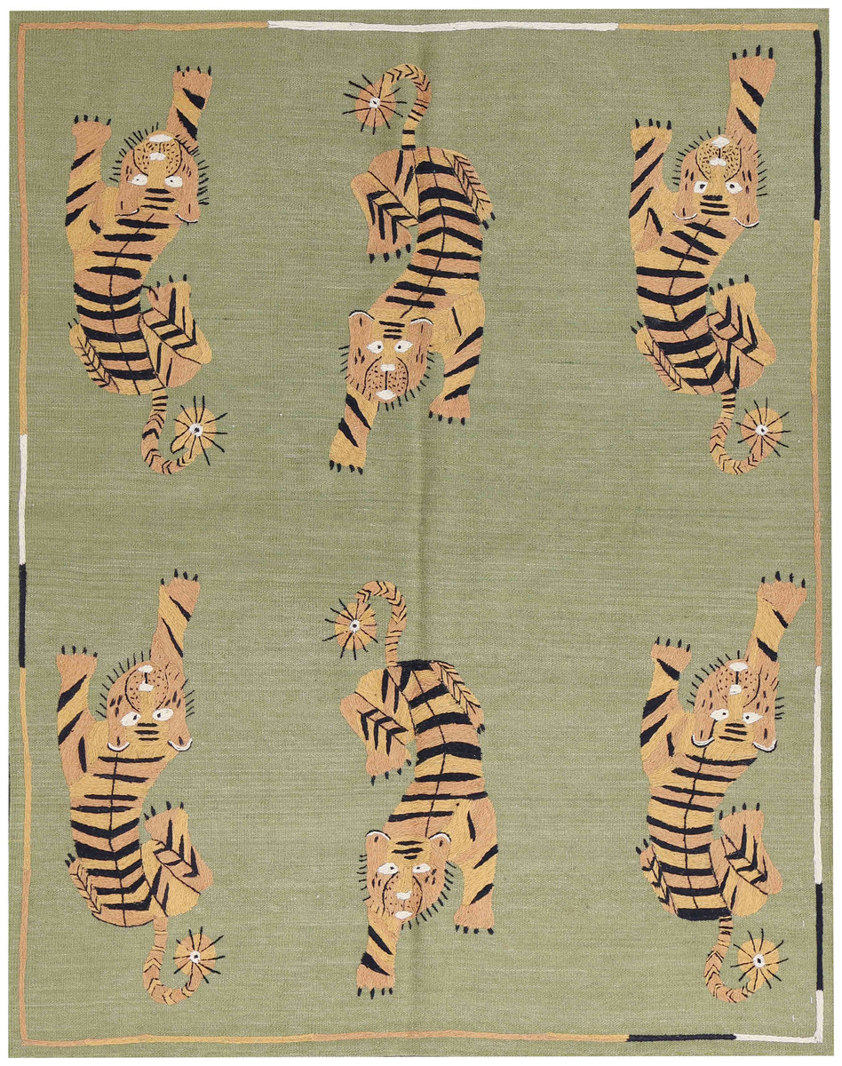
Two rows of golden tigers occupy the green field of this rug, their striped bodies alternating in direction. The inverted centre figures create a visual pause between the upward-reaching animals beside them. Fine dark lines articulate the paws and faces, while curved tails lead to small radiating shapes. The subject is emphatic, but the generous space around each tiger gives the arrangement a measured pace.
The frame is deliberately slight in visual effect. A thin line runs around the perimeter in changing pale, gold and dark segments, containing the field without introducing a second patterned band. Green remains the largest continuous area, and its visible tonal changes add depth beneath the repeated figures. Nearby, the pale facial details become more noticeable than they are at room distance. Historically, suzani describes Central Asian embroidered household textiles, including large decorative covers and hangings.
Their use of an expansive ornamented surface provides a reference for contemporary Afghan kilims bearing the name. Here that surface is organised through animals and open ground rather than a floral medallion. The design can be understood through its visible structure without assigning unverified meanings to the tigers or claiming a particular embroidery method. Consider it for a seating area with simple, solid-coloured upholstery. Olive or moss accents could connect with the field, while natural oak would echo the warmer figures. Leaving the two complete rows exposed will preserve the pattern's balance and changing directions.