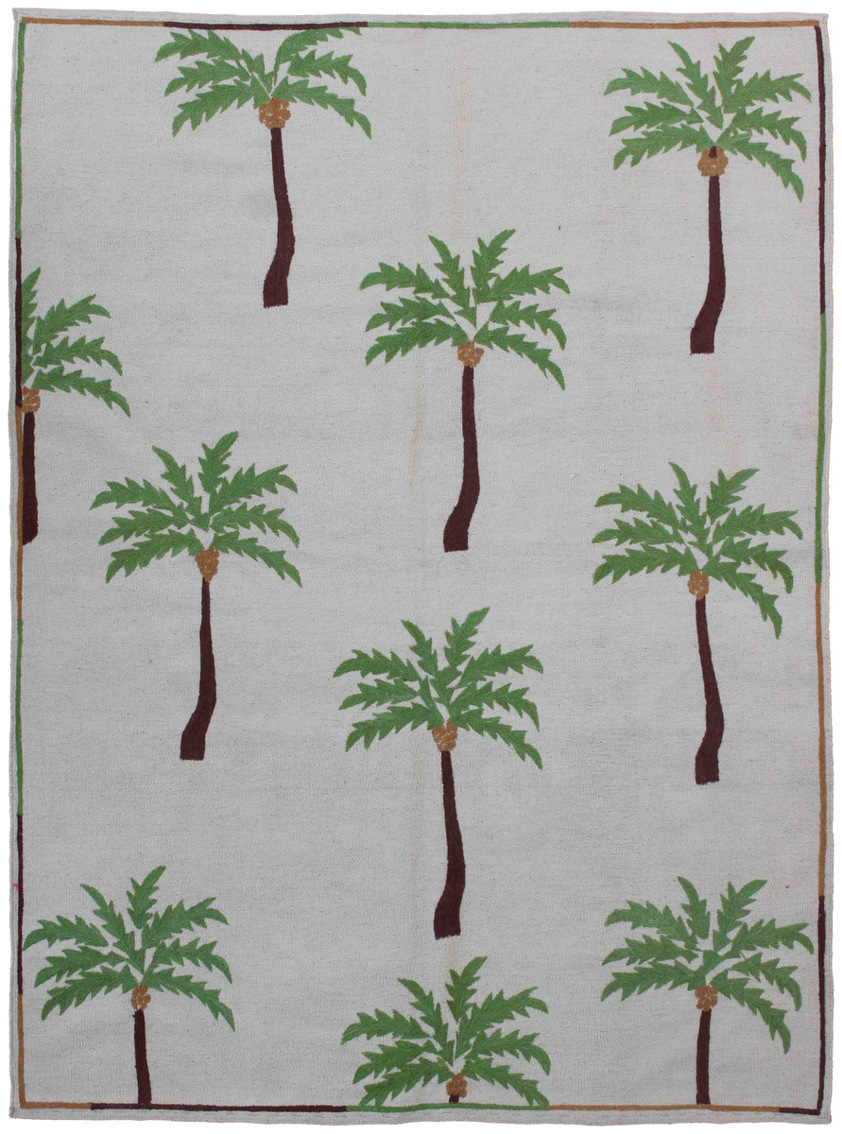
Eight palm trees stand across the ivory field of this Afghan Suzani kilim rug. Their green fronds spread widely from small ochre crowns, while slender brown trunks bend slightly as they rise. The trees are arranged with generous space between them, allowing each silhouette to remain distinct. A fine, changing line of green, ochre and brown runs around the edge. The open composition is a large part of this rug's appeal.
There are no small flowers filling the gaps and no broad ornamental border competing with the palms. The pale ground gives the green leaves a fresh, clear outline, and the varying curves of the trunks introduce movement into an otherwise simple arrangement. Its surface has a lightly textured visual character beneath the pictorial forms.
Suzani is a decorative name rooted in the embroidered furnishings of Central Asia, where plants and flowers have long provided important imagery. In Afghan rugs it can describe an adaptation of that wider ornamental repertoire. This example takes a particularly spare approach, concentrating on repeated trees rather than a crowded floral garden or a large central disc. At 235 × 174 cm, this rug could make an engaging centre for an informal sitting area or a bedroom. Green fabrics and warm timber would relate directly to the palms, while pale walls would continue the open ground. Furniture with slender legs would help keep the individual trees visible and preserve the spacious arrangement that gives the design its character.