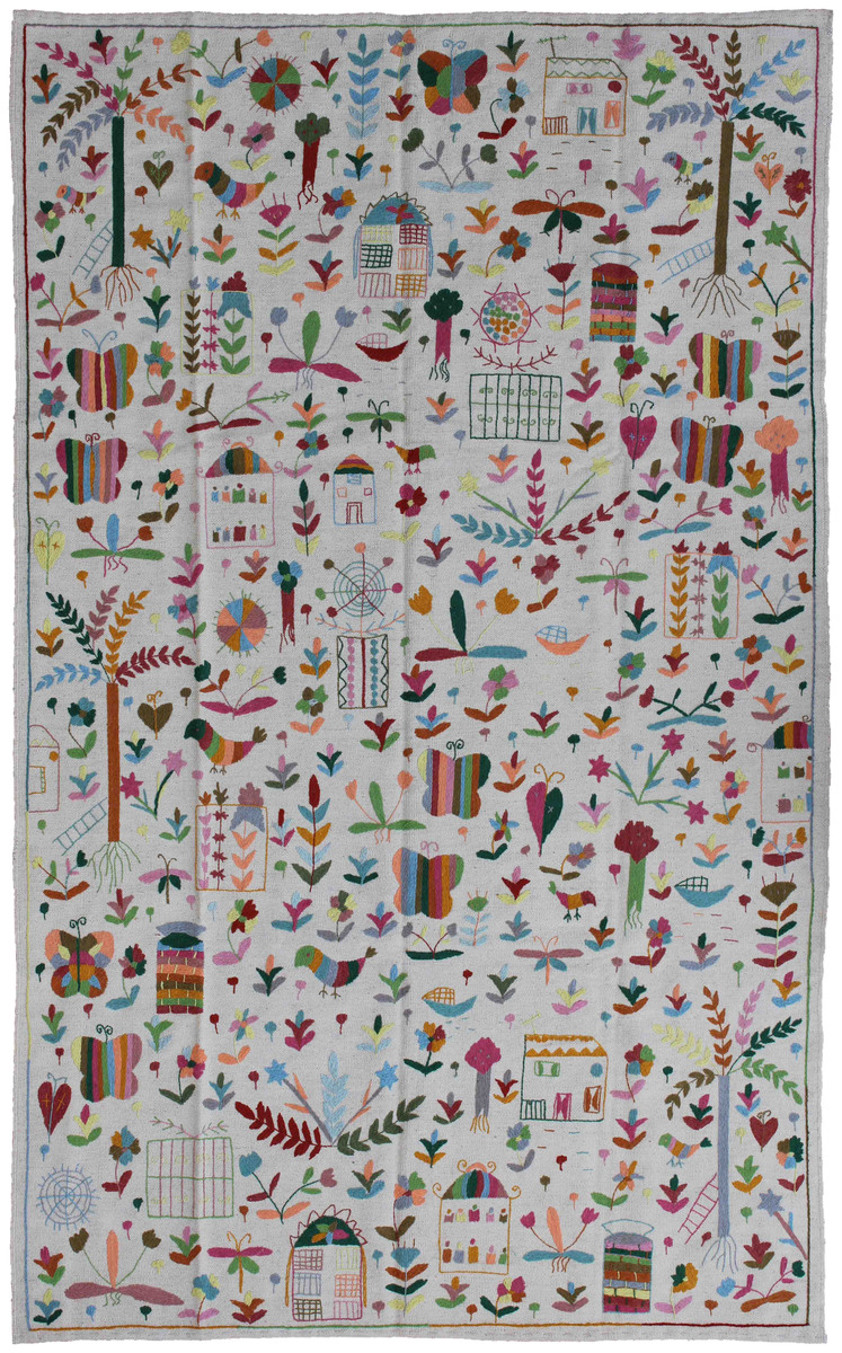
Small garden figures continue along the long pale field of this rug. Rooted trees supply taller accents, while striped butterfly forms, little birds and roofed panels occupy the intervening spaces. Fine flowers and leafy sprigs create a much closer drawing around them. Blue, green, pink, yellow and red appear in short, separate passages rather than broad uninterrupted areas. At 297 × 182 cm, this rug could suit a longer seating arrangement or an open bedroom area where its length can remain apparent.
Plain fabrics would let the smaller figures stay legible. A single blue or red accessory could answer one selected detail. The pale ground would keep the extensive pattern relatively light beside the furniture. An exposed run along one side would show how the little plants, panels and birds change from one part of the composition to the next.
The proportions allow the assortment of subjects to develop over an extended rectangle. Some panels enclose little plants, others grids or coloured compartments, and rounded wheels introduce another shape among the stems. In Central Asia, Suzani embroidery formed part of the furnished domestic interior, particularly within Uzbek communities, through covers, hangings and related textiles. The relationship between main motifs and finer supplementary detail was an important decorative resource. This Afghan kilim gives that relationship a pictorial direction, using many little incidents to maintain interest along the field.