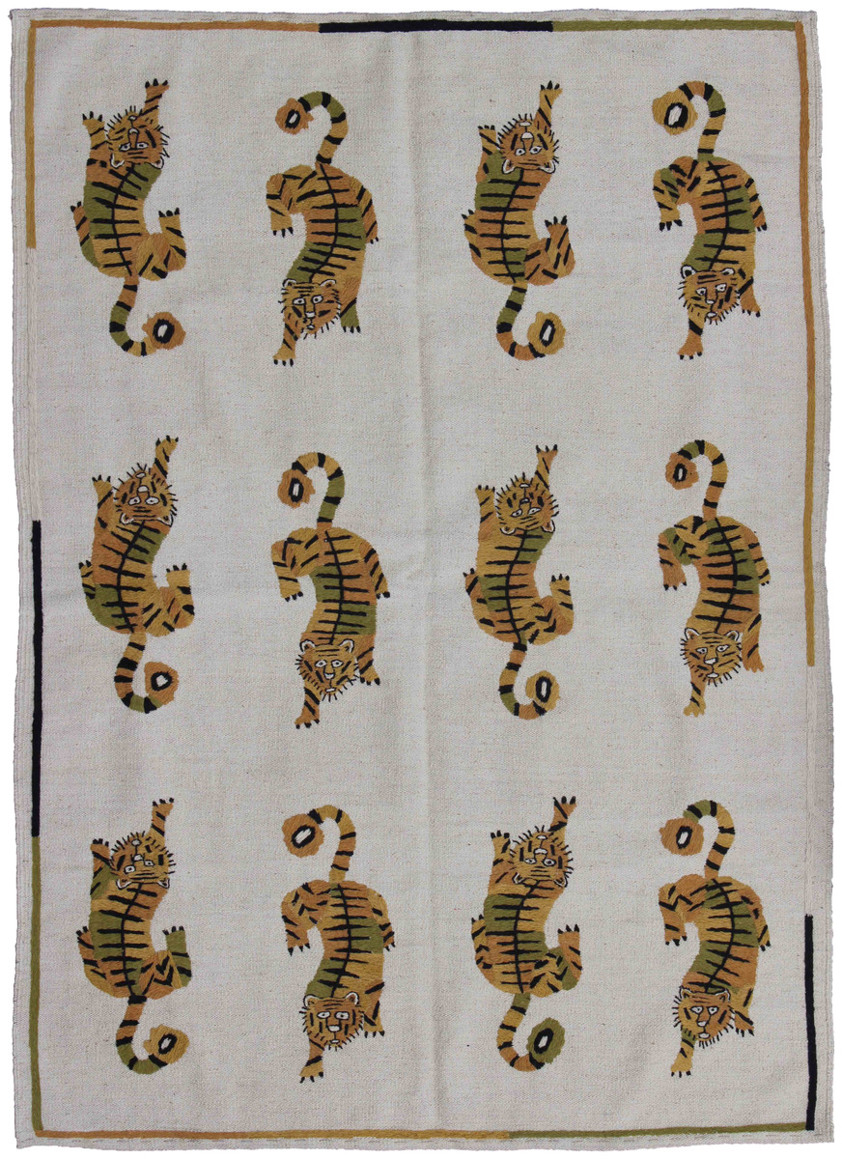
Rows of striped ochre cats give this rug a direct and characterful subject. The figures alternate in direction, with some upright and others inverted, creating a lively relationship across the pale ground. Dark stripes run over their bodies and curled tails. Fine whisker-like marks and pointed ears add smaller details, while the spaces between the figures remain largely open. The paired changes of direction give each row its own rhythm.
The palette is restrained: ochre and muted orange provide warmth, dark outlines give definition, and pale grey supplies the surrounding field. A fine edge changes between dark and warm tones. The repetition is clear, but the cats differ slightly in shape and gesture. Central Asia’s Suzani needlework traditions produced richly decorated furnishings for homes, with particularly important developments within Uzbek communities. Here, the Afghan kilim reduces that decorative variety to a repeated cat figure, making placement and direction the main sources of change across the pale ground.
The 194 × 140 cm rectangle could enliven a clear floor area near an armchair, where the cats would remain readily visible. Plain furniture would let the rows remain easy to follow. Warm wood could relate to the ochre, and a dark accessory could answer the stripes. The open ground keeps the overall composition relatively light. Seen nearby, the curved tails and little changes around the faces would distinguish the individual figures within their repeated arrangement.