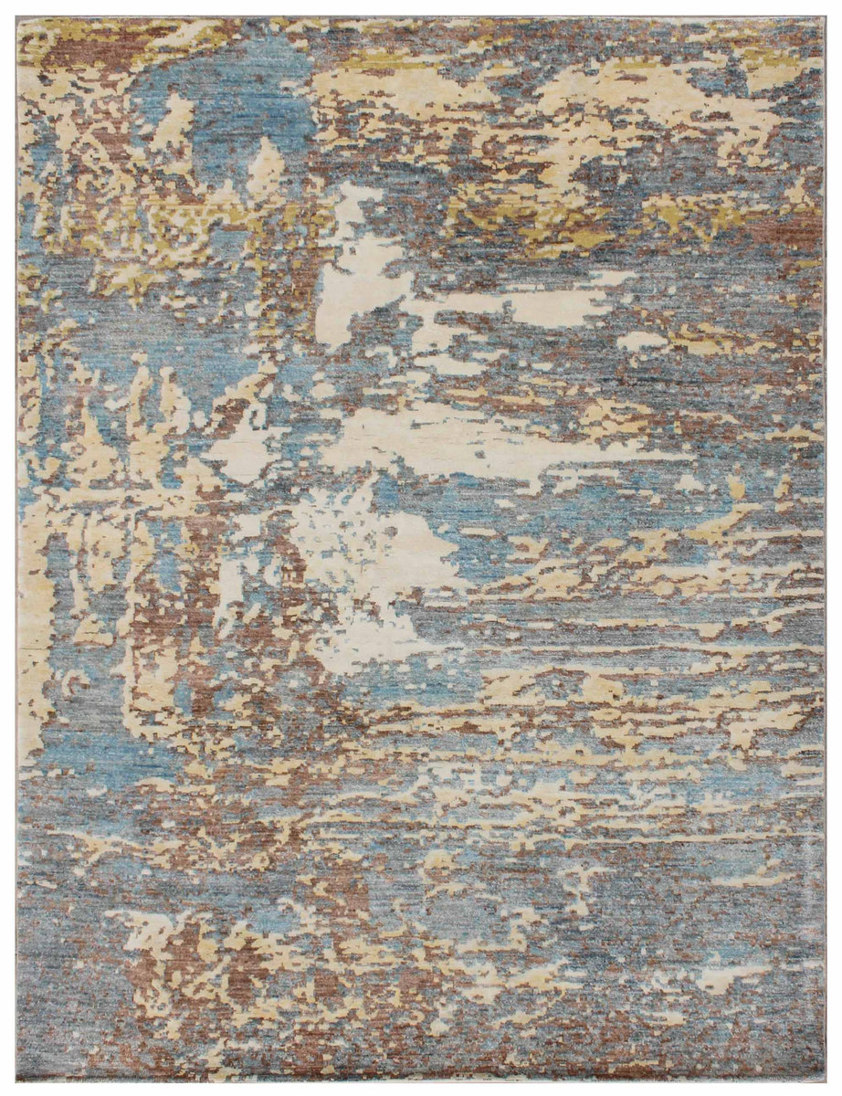
Pale blue and cream passages meet soft golden fragments across this rug. Brown-grey lines give several areas greater definition, while broader pale shapes open up the centre and sides. The drawing is finely broken, allowing the colours to overlap visually rather than forming sharply enclosed blocks. This rug would suit a room that needs pattern while retaining an overall lightness. Its 170 by 236 centimetre proportions could define a modest seating group or occupy open floor in a bedroom. Warm white fabric would connect with the cream, and darker timber would bring the pale blue into clearer focus.
A small golden accessory could acknowledge the warmer details. This part silk Afghan transitional rug uses the relationship between open colour and fragmented drawing as its main structure. The field does not depend on a complete floral repeat or central medallion. Larger pale passages establish the design across the room, with the finer horizontal marks providing closer interest within them. The warm notes are especially effective where they meet blue near the upper and lower areas.
Elsewhere, cream creates quieter intervals between more densely marked passages. This rug rewards different viewing distances: from further away, the pale palette remains the main impression; nearby, the small changes of line and tone become more apparent. Leaving part of the middle uncovered would preserve that balance, allowing the broader open shapes and the finer golden fragments to be appreciated together across the surface.