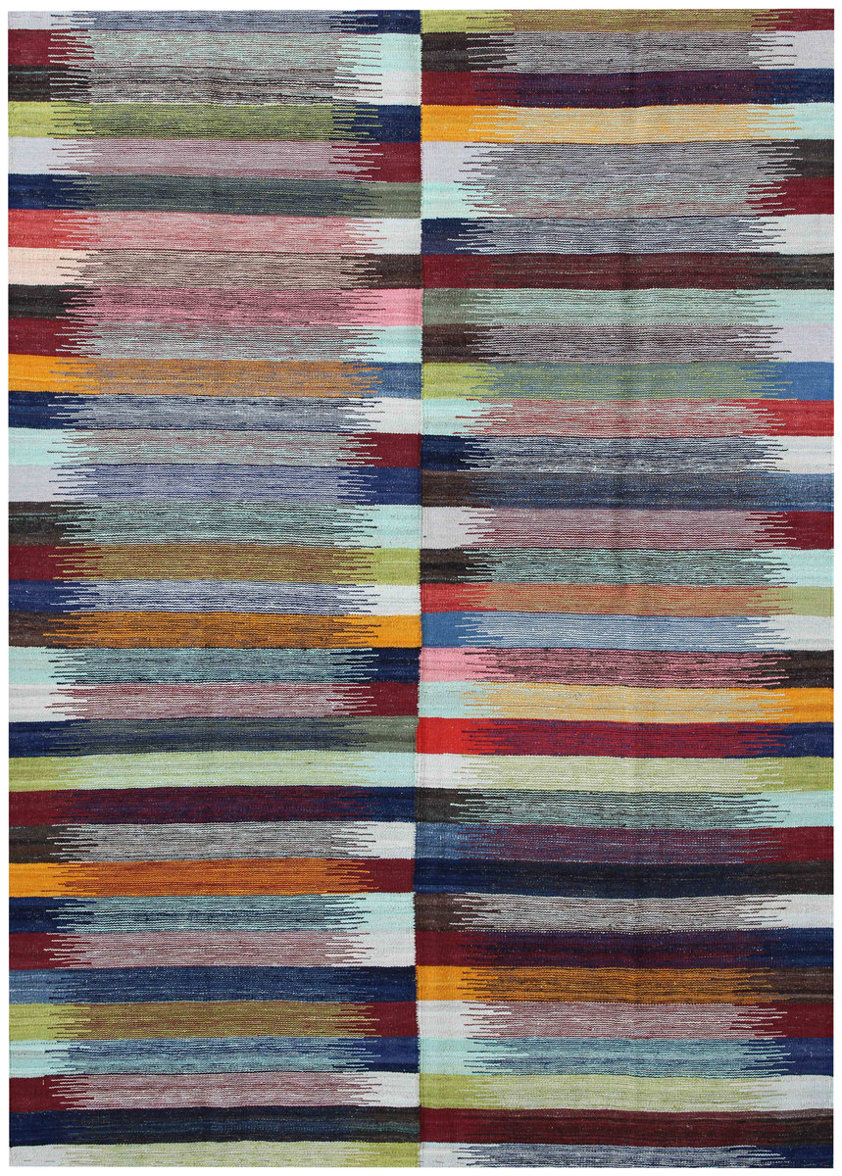
Two broad panels divide this rug, each filled with irregular horizontal stripes. The bands change colour and thickness as they descend, introducing deep blue, burgundy, ochre, pale green, pink and grey. Across the central division, one colour gives way to another rather than continuing in an uninterrupted line. Fine streaks at many of the transitions soften the meeting points and give the field a layered appearance. This contemporary Afghan kilim measures 239 × 174 cm. Its varied palette would work well with a simple sofa or timber table, where the narrow stripes can supply detail around larger plain surfaces.
Dark blue upholstery could pick up one of its deeper tones, while a pale green wall would emphasise the quieter passages. There is enough contrast to make the rug distinct without requiring every colour to be repeated elsewhere. Within Afghanistan’s wider textile culture, bands and angular repeats have long organised rugs and domestic furnishings. Kilims can make those simple elements expressive through proportion and colour, with different arrangements yielding very different visual rhythms.
The two panel division here gives a particularly clear framework to the changing stripes. Seen close to the surface, fine horizontal marks break up the broader colour areas. They bring a softer visual texture to the pattern and allow the pale and dark bands to relate gradually. This rug would lend movement to a room whose main furniture has uncomplicated, solid forms.